Results

Adobe launches Firefly Video Model as GenStudio for Performance Marketing goes to GA

Adobe launches Firefly Video Model as GenStudio for Performance Marketing goes to GA

Adobe launched its Firefly Video Model in beta, added Adobe GenStudio for Performance Marketing and layered generative AI features throughout its suite of products.

The news, announced at Adobe's flagship Max conference in Miami, includes the following:

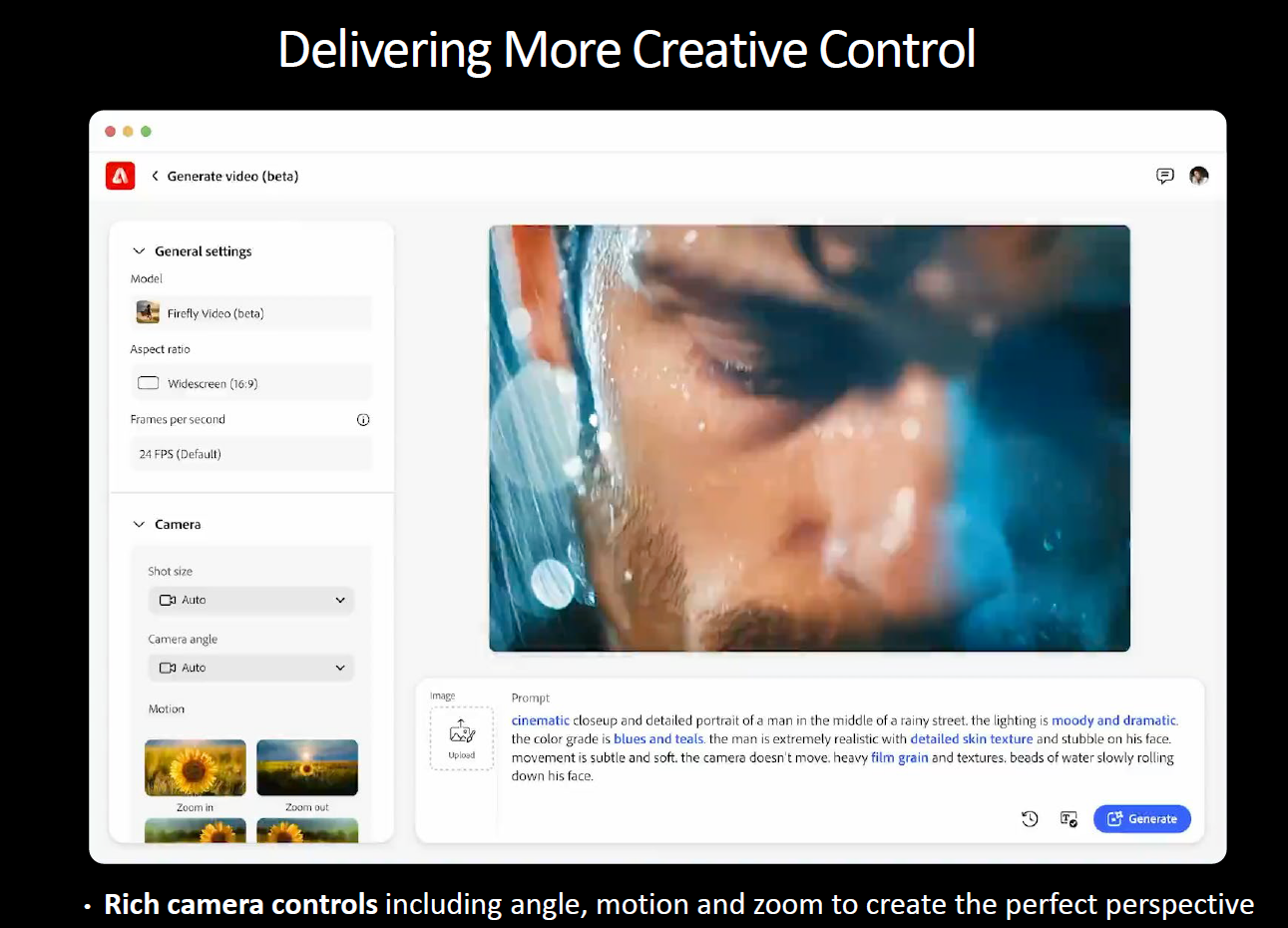
  • Firefly Video Model, which will debut in beta. The Firefly Video Model will power Generative Extend in Premiere Pro in beta, Text to Video in Firefly and Image to Video in Firefly. The features will now enable creators to speed up production and ideation with the ability to generate video by text descriptions and images. Like the Firefly Image Model, Adobe is focused on commercial usability, integration into workflows and quality of output.
  • Adobe GenStudio for Performance Marketing, which aims to bring creatives and marketers together in one workflow. The workflows include genAI, brand approved assets, the ability to create and remix content and insights to measure effectiveness across social, email, paid media and marketing.
  • More than 100 innovations across Creative Cloud. A few headline features include Firefly-powered Generative Extend in Premier Pro, a new version of Frame.io, Firefly Image 3 Model in Photoshop including a bevy of generative AI features and enhancements for Adobe Illustrator, InDesign and Lightroom. Adobe Express also enables creators to work seamlessly with Photoshop, Illustrator, InDesign and Lightroom files.
Constellation Research analyst Liz Miller put the Adobe moves at Max in context:

"Adobe is putting AI into the tools that creatives live in every day. This isn't about doing the creators job. This is contextual and practical AI where creators want it most. Creators aren't learning a new tool or technology. They can click a button, ask a question, identify a space and take hours of work off their plate. Take Generative Expand. That's a complex series of actions that once required highly creative and skilled designers to spend hours copying, brushing, smoothing or stamping at pixel levels. These Firefly models and AI workflows collect all those tiny actions and execute them, giving creators time back to create instead of mask.

Firefly Video Models: when you take a step back and look at how Adobe is changing the work of creation, it starts at that moment of capture on camera. The Firefly video model delivers amazing results all with simple text prompts but the security it delivers is in line with Adobe's overarching vision of trusted enterprise ready AI content, which is not trained their customers' creations and uses assets creators have permission to use. It is one thing to create a video of flying down street and creating a video you can reliably use in business applications."

Here's a look at the main takeaways from Max and a deeper dive on the news.

Firefly Video Model. By integrating Firefly Video Model with Premiere Pro, Adobe is addressing common pain points for video creation. For instance, Generative Extend will extend video and audio clips to cove gaps in footage, smooth out transitions and hold shots longer. Content is credentialed in all outputs.

Adobe said that the Firefly Video Model can take still shots, images and illustrations and turn them into live action clips.

Firefly Video Model use cases will be able to create animation in 2D and 3D, text graphics and B-roll from reference images. The model will also be able to add atmospheric elements to videos and understand complex scenes when prompts are long.

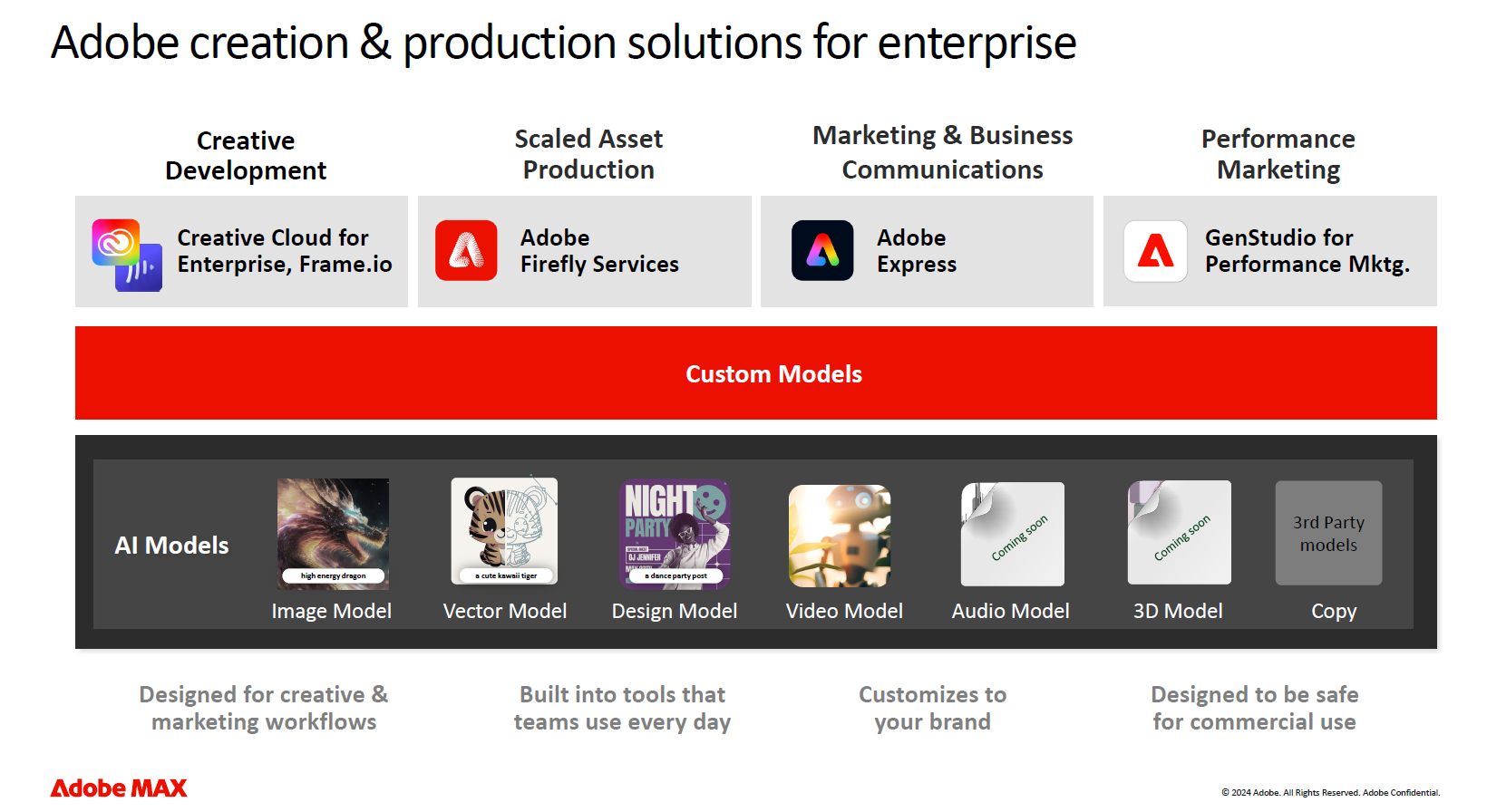
Adobe GenStudio for Performance Marketing is now generally available. Adobe's approach to enterprise content creation is to layer genAI in multiple products, enable brands and creative development to free up time for ideation, scale asset production, remix marketing and business communications and stay on brand and edit, experiment and activate content in one workflow.

The company cited a bevy of enterprise customers driving returns on genAI across the Adobe platform. For instance, Pfizer upped content volume 5x, Densu saw 70% faster delivery time, Pepsi scaled 540,000 on-brand images in 5 days and IBM saw 26x higher engagement from Firefly content.

Adobe said that Adobe GenStudio for Performance Marketing is a single app to create, measure and personalize on-brand campaigns with AI embedded throughout workflows. The headliner of GenStudio for Performance Marketing is a series of native integration with ad platforms including Met, Amazon Ads, Google, Microsoft Advertising, Snap and TikTok and Adobe Experience Cloud.

Scaling models throughout the Adobe stack. In addition to the features outlined at Max, Adobe highlighted how it sprinkling Firefly services and custom models throughout its platform. These additions include everything from Dubbing and Lip Sync APIs to personalize local video content, InDesign APIs to automate workflows, new image APIs for object composites and the ability to create user interfaces in bulk.

Data to Decisions Future of Work Marketing Transformation Matrix Commerce Next-Generation Customer Experience Innovation & Product-led Growth Tech Optimization Digital Safety, Privacy & Cybersecurity adobe ML Machine Learning LLMs Agentic AI Generative AI AI Analytics Automation business Marketing SaaS PaaS IaaS Digital Transformation Disruptive Technology Enterprise IT Enterprise Acceleration Enterprise Software Next Gen Apps IoT Blockchain CRM ERP finance Healthcare Customer Service Content Management Collaboration GenerativeAI Chief Information Officer Chief Marketing Officer Chief Data Officer Chief Executive Officer Chief Technology Officer Chief AI Officer Chief Analytics Officer Chief Information Security Officer Chief Product Officer

BT150's Ashwin Rangan on CIO evolution, technology curves and what it means for genAI deployments

BT150's Ashwin Rangan on CIO evolution, technology curves and what it means for genAI deployments

Ashwin Rangan, who has been in the CxO game for three decades at ICANN, Rockwell International, Walmart and Bank of America, has seen his share of technology cycles and generative AI is just the latest.

In an interview, Rangan, currently Managing Director of the Insight Group and BT150 member, outlined the progression of the CIO role and connected the dots between today's AI-driven technology inflection points and past innovation curves.

Here's a look at some of the takeaways from our chat.

How the role of CIO has changed. Rangan said 30 years ago, the CIO was thought of as a back-office automation role. "The need at the time was the implementation of global ERP. In the mid-1990s, the Internet was just starting to become available. Networking was inordinately expensive, but for the first time you had the ability to leverage one global ERP working in multiple currencies, regions and customer types with different formats and invoices," said Rangan. "Harmonizing these basic business transactions had everything to do with back-office automation."

He said today, the CIO is more front facing. "Today, most of the action for CIOs is in the front of the house where it's about customer engagement and value delivery and understanding product development," said Rangan. "You still have to be cognizant of being an efficient, lean operation, but the CIO is with the business leaders now understanding what drives the business."

Business alignment. Rangan said CIOs became more aligned with the business over time, but the dotcom boom and the emergence of the Internet pushed tech and business alignment forward.

"Right around the 2003-2008 timeframe technology and business started to have conversations that were more value driven and purpose driven. The most progressive of companies now are starting to have conversations about strategy, where the business strategy and the IT strategy conversations are the same. You can't have a business strategy conversation without also having an IT strategy conversation at the same time."

AI budgets and choosing when to ride new technology waves. Rangan said it's early days for generative AI, but not AI and machine learning. He noted that a lot of generative AI will be consumed in existing enterprise technology applications. That won't be new budget per se. On the other end of the spectrum there will be enterprises that see how generative AI can differentiate their businesses. They'll spend it if the conditions--data, culture, talent--are in place. When budgeting for AI, enterprises need to focus and think through their FOMO and sometimes choose to hang back.

"If the ROI was clear up front, I would be quick out the gate," said Rangan, who noted he chose to be an early mover at Rockwell with SAP. "In other cases, I've chosen to wait with new technologies because while the technology looked promising, the return on investment was not necessarily as promising."

Rangan said genAI is developing so fast that first mover advantages may not last long because the roadblocks today may be resolved quickly. "The price you pay for waiting will not be high because we are all learning at the same time," he said.

Vendor management. During his time as a CIO, Rangan said he took a portfolio management approach to his enterprise technology vendors. "You may have a large vendor that has the promise of delivering something compelling for your business," explained Rangan. "In that case, it makes sense to have some of your bets with that vendor. But you need your hedges. You can also have startups that are narrow and deeply focused on your specific domain. There could be potential for strategic alignment and partnership, perhaps even an investment. You need a careful analysis of the chessboard and not put all of your chips in one square."

More from the genAI field:

Data to Decisions Next-Generation Customer Experience Tech Optimization Innovation & Product-led Growth Future of Work Digital Safety, Privacy & Cybersecurity ML Machine Learning LLMs Agentic AI Generative AI AI Analytics Automation business Marketing SaaS PaaS IaaS Digital Transformation Disruptive Technology Enterprise IT Enterprise Acceleration Enterprise Software Next Gen Apps IoT Blockchain CRM ERP finance Healthcare Customer Service Content Management Collaboration Chief Information Officer Chief Executive Officer Chief Technology Officer Chief AI Officer Chief Data Officer Chief Analytics Officer Chief Information Security Officer Chief Product Officer

The art, ROI and FOMO of 2025 AI budget planning

The art, ROI and FOMO of 2025 AI budget planning

Artificial intelligence budgets will surge again in 2025, but good luck tracking expenditures with any precision as generative AI spending is lumped into other categories and driven by multiple departments.

Yes folks, it's 2025 budget season and the biggest question from CxOs on our BT150 meetup in late September revolved around whether there will be a dedicated budget for AI. Like 2024, 2025 AI budgets will be spread across multiple departments and tucked away in other areas like compliance and cybersecurity.

Why is AI spending so murky? CxOs in our BT150 meetup noted that traditional budget processes and frameworks don't align with AI science projects and unpredictable costs.

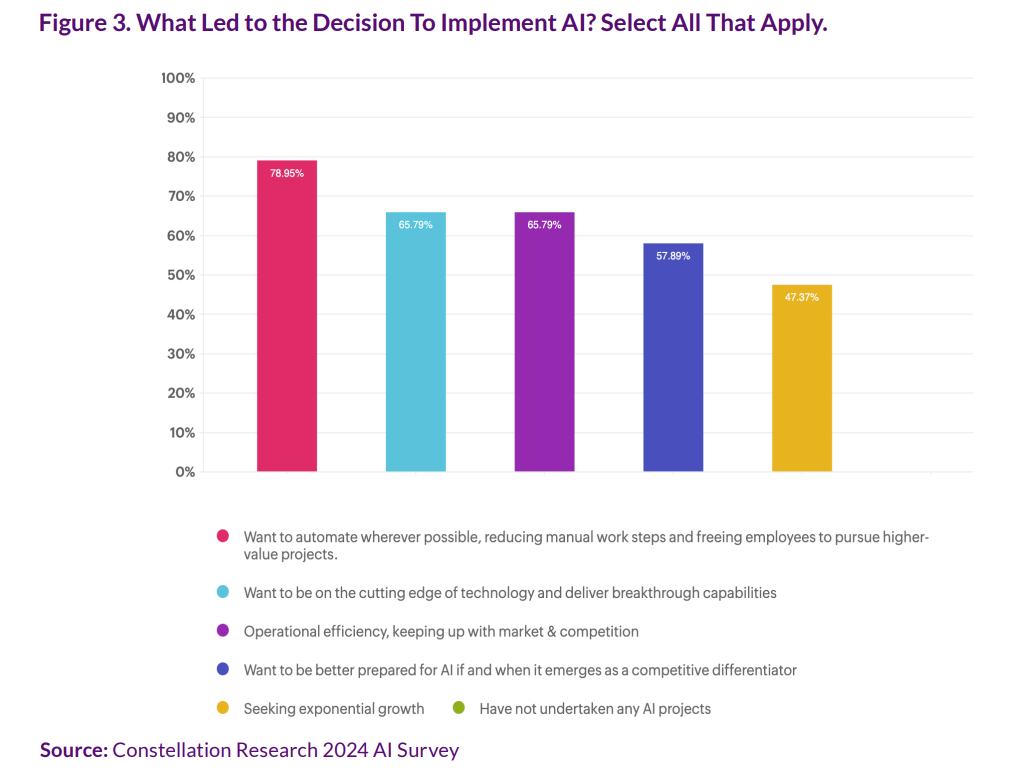
Constellation Research's BT150 meetup highlights how AI budgets are evolving. The only certainty is that enterprises plan to spend more. Constellation Research's AI Survey of 50 CxOs found that 79% of respondents are increasing AI budgets and 32% see budgets increasing 50%.

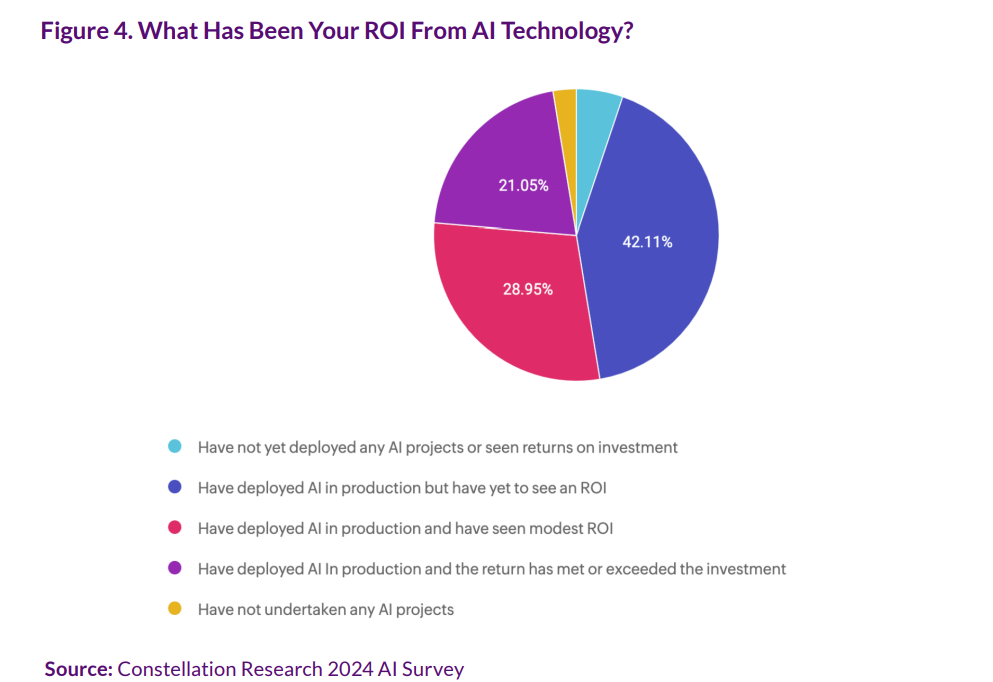
These budget increases are coming even though returns on investment have been spotty. Forty-two percent of respondents said they have deployed AI in production but haven't seen ROI. Another 29% said they've seen modest ROI.

But what is an enterprise going to do? Are companies really going to go on record saying they aren't going to spend on AI? Fears of missing out on AI and worries about forever falling behind the innovation curve are real. However, FOMO isn't much of a strategy just like hope isn't.

13 artificial intelligence takeaways from Constellation Research’s AI Forum

Rational AI spending and dedicated budgets will be a 2026 story. For now, CxOs in our network (in meetups under Chatham House rules) are noting the following:

  • Companies are not creating separate AI budgets, but incorporating components into existing business cases and projects.
  • There's a trend toward allocating enough funds to continue AI initiatives without committing massive, dedicated budgets that would require extensive justification and scrutiny.
  • The focus in 2025 is practical AI applications with ROI.
  • Funds for AI are being allocated from other areas such as regulatory compliance that may have decreased in priority.
  • There's an emphasis on information gathering and staying informed about AI developments. Companies are investing time and resources in discussions, debates, and learning about AI capabilities and risks, even if this doesn't directly translate to large dollar expenditures.
  • AI learning and training is getting more budget as enterprises look to upskill.

Simply put, AI budgets in 2025 will either poach from existing areas or be lumped into broader spending efforts. This game won't be as easy as it was in 2024 where CxOs could AI-wash damn near any project.

For context on budgets, I recently caught up with BT150 member Ashwin Rangan, who has been in the CxO game for three decades at ICANN, Rockwell International, Walmart and Bank of America. Rangan has seen his share of technology cycles. Here's what Rangan, currently Managing Director of the Insight Group, said about AI budgets and riding new technology waves.

First, Rangan noted that a lot of generative AI will be consumed in existing enterprise technology applications. That won't be new budget per se. On the other end of the spectrum there will be enterprises that see how generative AI can differentiate their businesses. They'll spend if the conditions--data, culture, talent--are in place. When budgeting for AI, enterprises need to focus and think through their FOMO and sometimes choose to hang back.

"If the ROI was clear up front, I would be quick out the gate," said Rangan, who noted he chose to be an early mover at Rockwell with SAP. "In other cases, I've chosen to wait with new technologies because while the technology looked promising, the return on investment was not necessarily as promising."

Rangan said genAI is developing so fast that first mover advantages may not last long because the roadblocks today may be resolved quickly. "The price you pay for waiting will not be high because we are all learning at the same time," he said.

Here is an early read from the BT150 and Constellation Research analysts on what'll drive the AI budget in 2025.

CRM. Salesforce's Agentforce pivot is going to garner some budget. The economics could be compelling. It'll be unclear whether Agentforce will be tucked into marketing, sales, customer experience or some other function, but AI agents are going to be everywhere.

Data management and analytics. Generative AI is seen as the big data quality and data management bailout. Enterprises, as always, need to find a way to extract value from datasets where quality might be low.

Compliance. If you want a project funded, just make sure it has some compliance component. This strategy worked well in 2024 and you'll rinse and repeat in 2025 to get AI funds.

Automation and efficiency. AI hasn't always delivered on streamlining processes and automation, but reducing manual work and boosting productivity will always get you more funding. IT efficiencies are being actively explored, but product development is also a priority to optimize processes.

Cybersecurity. AI is being integrated into security infrastructure for automation, threat detection and responses. It's likely that cybersecurity will claw back the budget that was lost to fund AI pilots.

Bottom line: 2025 budgets are just being formed and enterprises are actively trying to separate AI marketing hype and real impact. Enterprises are also concerned about integration, AI agent and generative AI sprawl and scalability. Nevertheless, enterprises are positioned to spend on AI because the risk of not investing is too great. There will be an enterprise AI spending reset at some point, but not today.

Insights Archive

Data to Decisions Innovation & Product-led Growth Future of Work Tech Optimization Next-Generation Customer Experience Digital Safety, Privacy & Cybersecurity AI GenerativeAI ML Machine Learning LLMs Agentic AI Analytics Automation Disruptive Technology Chief Information Officer Chief Executive Officer Chief Technology Officer Chief AI Officer Chief Data Officer Chief Analytics Officer Chief Information Security Officer Chief Product Officer

HPE launches AMD powered AI system and highlights broader strategy

HPE launches AMD powered AI system and highlights broader strategy

Hewlett Packard Enterprise launched an AMD-powered system designed for complex AI model training. The HPE ProLiant Compute XD685 leverages 5th Gen AMD EPYC processors and AMD Instinct MI325X accelerators.

AMD launched its latest CPUs and GPUs at its AI event. A bevy of systems makers appeared on stage with AMD CEO Lisa Su.

HPE, which also had its own AI day with a focus on cooling and scaling generative AI, said its HPE ProLiant Compute XD685 is optimized for AI clusters for large language model training, natural language processing and multi-modal training. The system is available to order today and generally available in the first quarter of 2025.

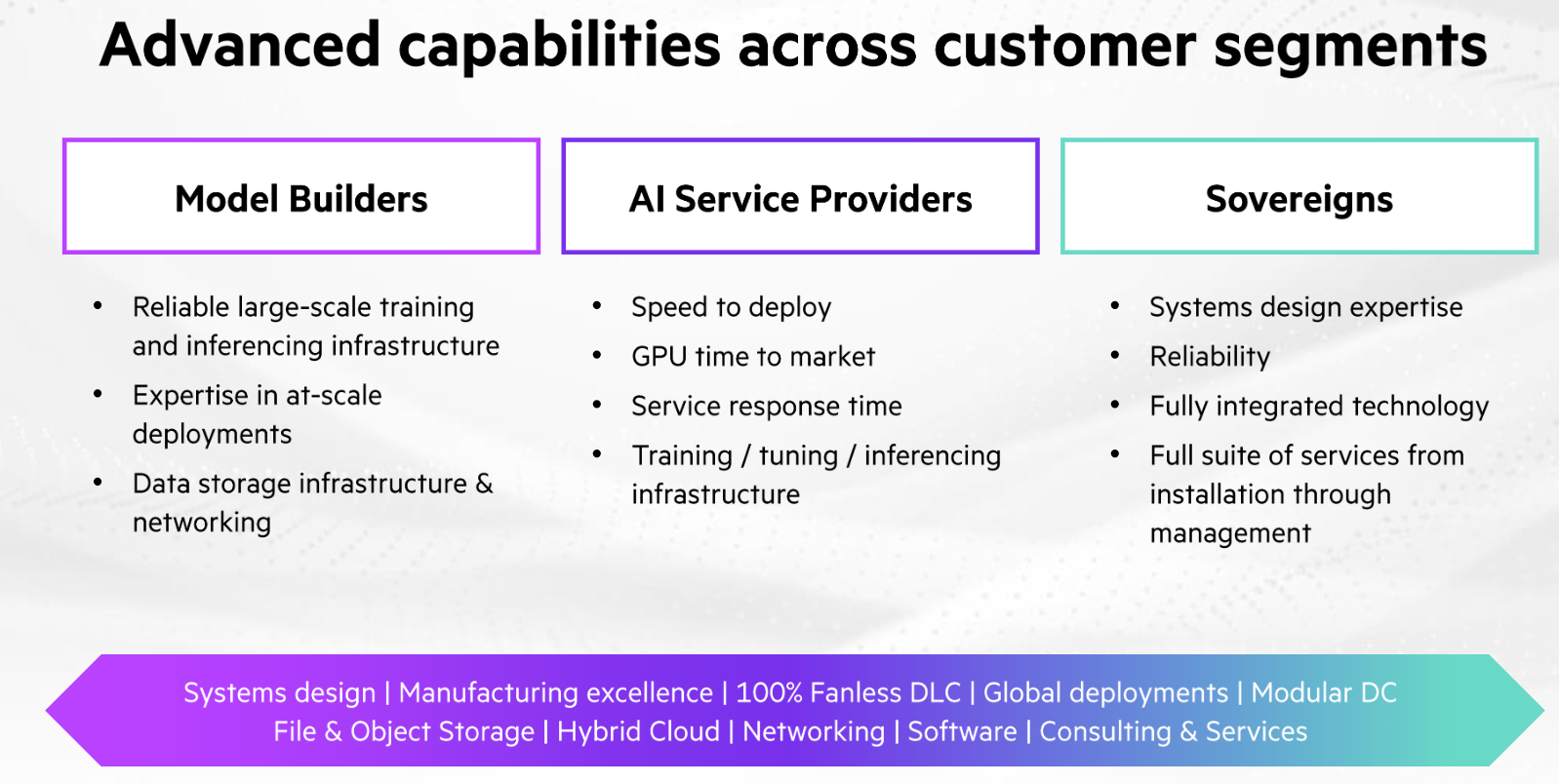
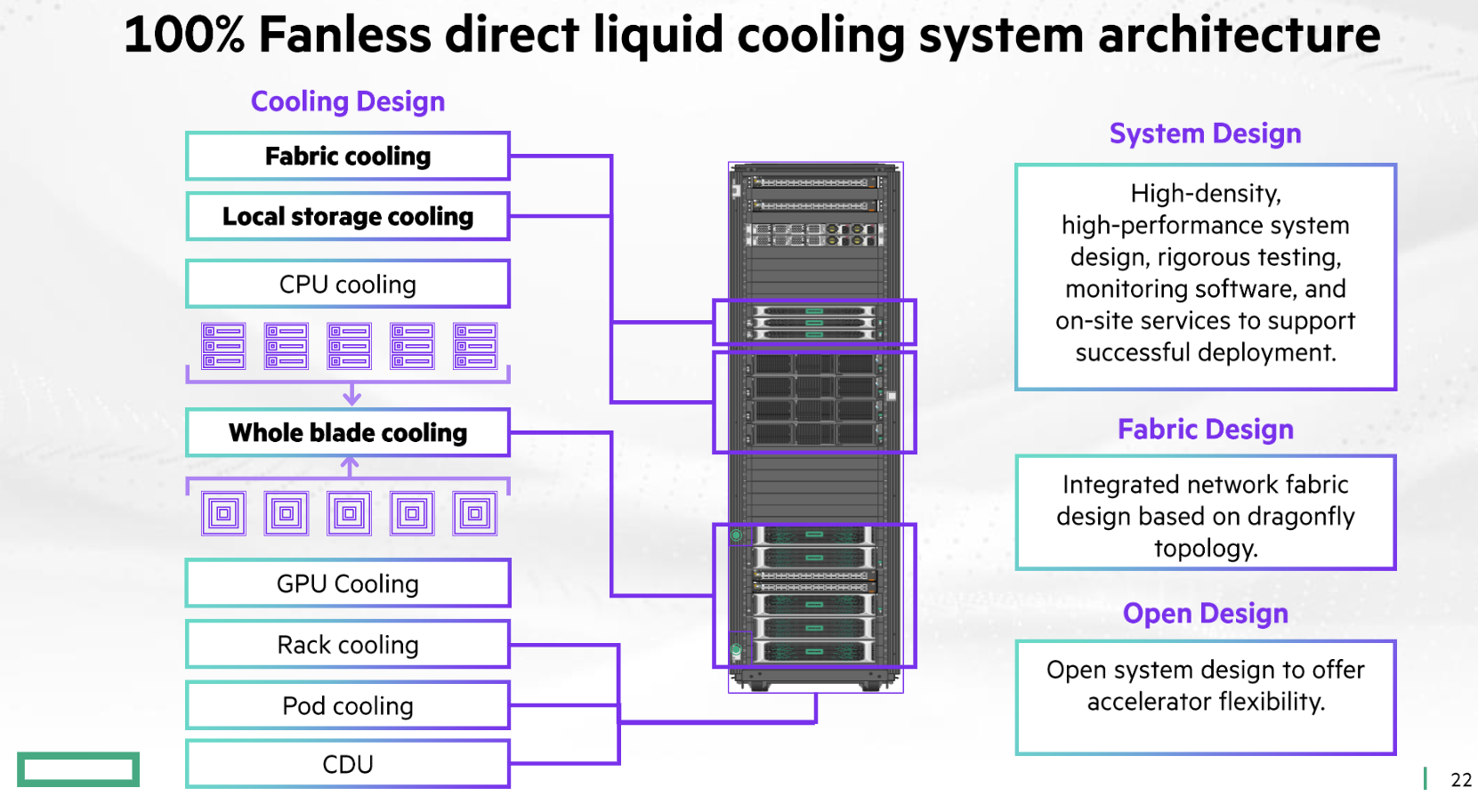
The system highlights HPE's broader AI strategy, which revolves around targeting model makers and scale deployments with governments and enterprises and a focus on liquid cooling innovation and cluster management.

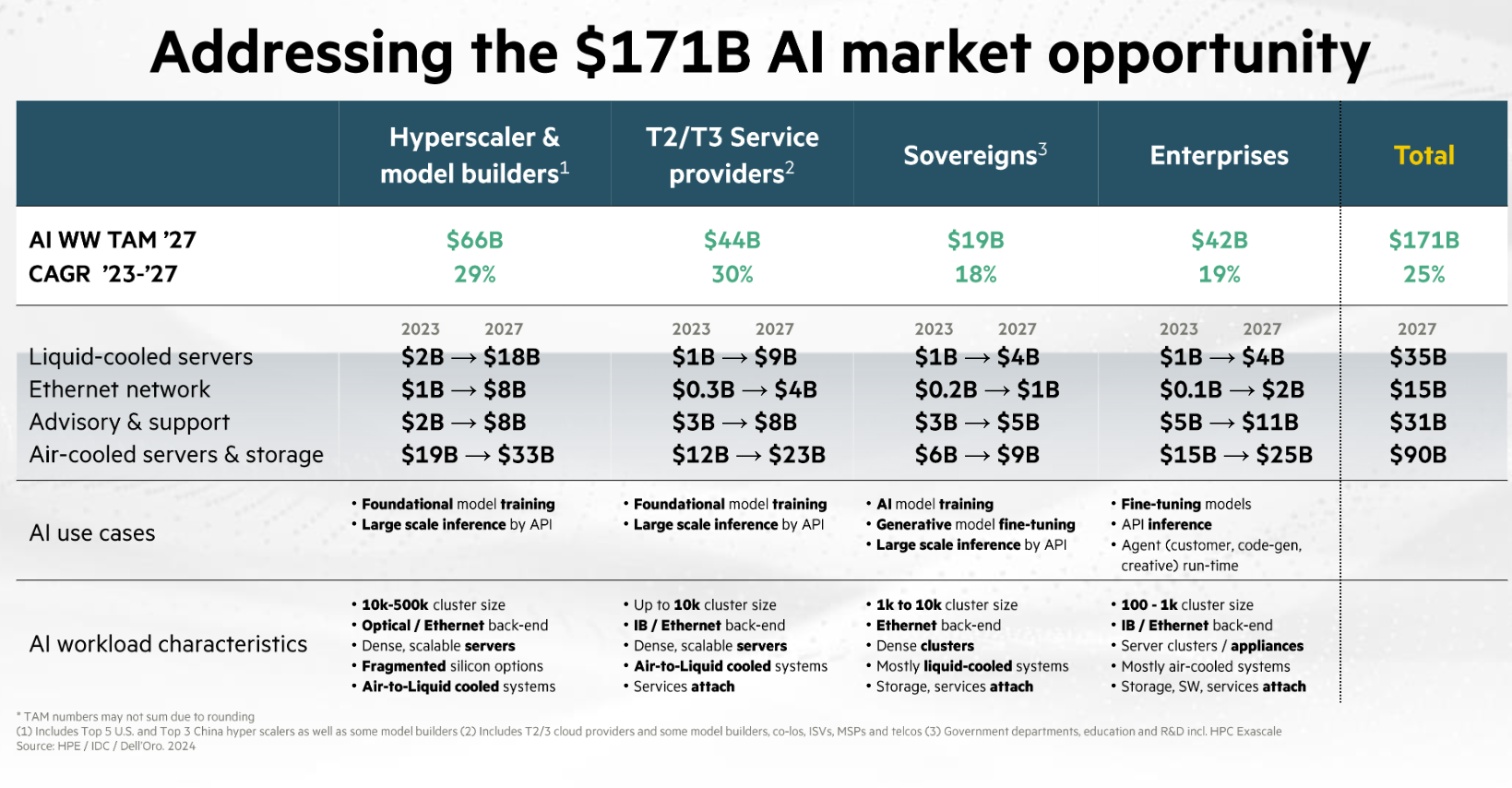
HPE said its AI market opportunity is $171 billion and that it can gain with liquid-cooled servers, Ethernet network systems, support and air-cooled servers and storage.

According to HPE, HPE ProLiant Compute XD685 supports eight AMD Instinct MI325X accelerators and two AMD EPYC CPUs. It also offers both air and direct liquid cooling options. HPE is leveraging its Cray high performance computing knowhow as it expands into the AI market.

Trish Damkroger, senior vice president and general manager, HPC & AI Infrastructure Solutions at HPE, said its latest AMD system is designed to apply to multiple use cases and industries.

Key points about the HPE ProLiant Compute XD685:

  • The system has a modular 5U chassis that can accommodate a range of GPUs, CPUs, software, components and cooling.
  • HPE ProLiant Compute XD685 has AMD's CDNA 3 architecture along with MI325X accelerators.
  • The system has a compact 8-nodes-per-rack arrangement to maximize rack density for 8-way GPU systems.
  • HPE Performance Cluster Management is included with automated setup.

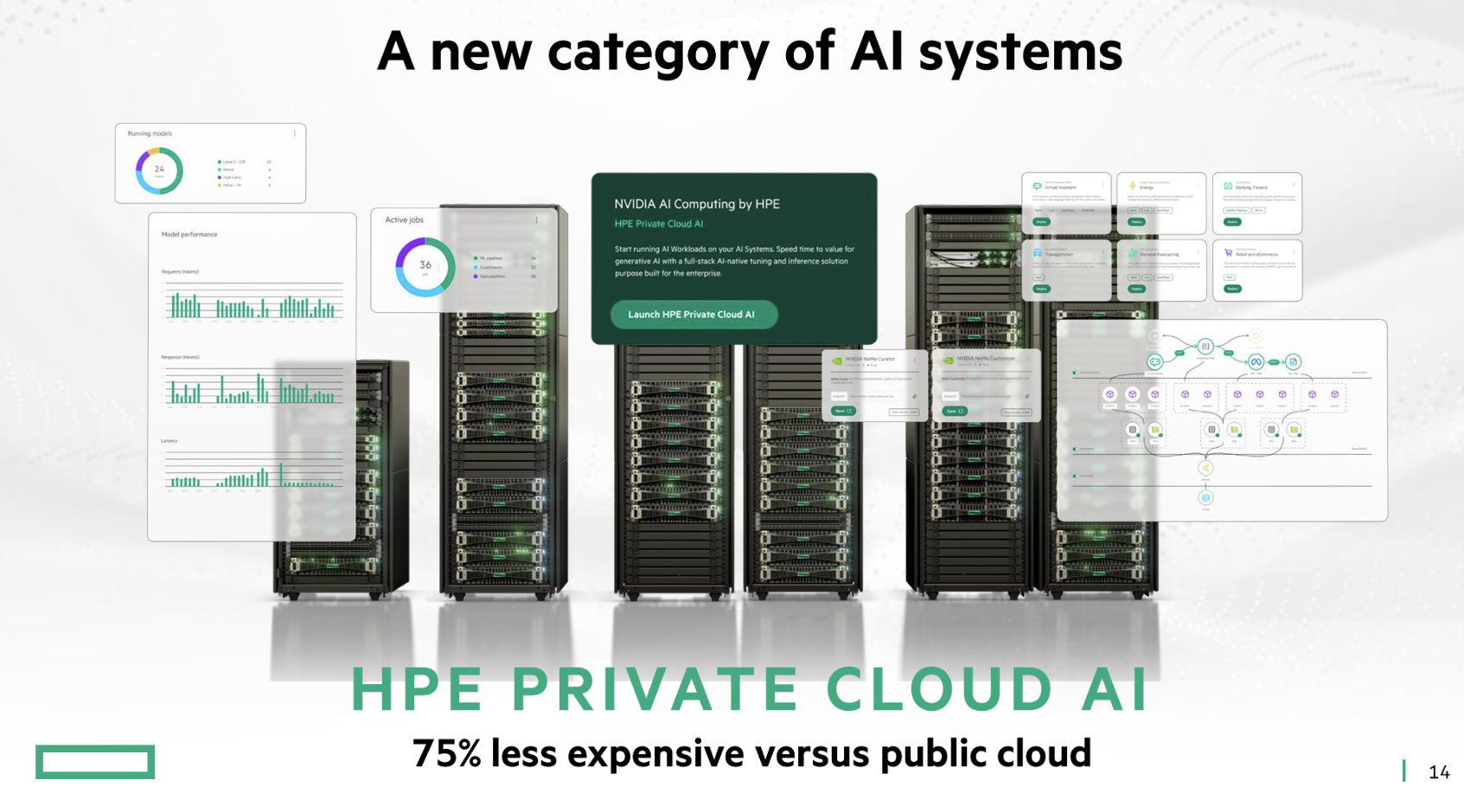
At an investor event, HPE outlined its AI stack including its private cloud offering with Nvidia as well as GreenLake and architectures that scale well with energy efficiency.

HPE outlined how it will lean into its cooling innovation throughout its portfolio. This new AMD AI system is the first installment in how HPE will leverage cooling options to move gear.

In addition, it's likely that HPE may offer a similar Private Cloud AI offering powered by AMD. Dell Technologies has already announced an AMD AI factory stack.

Tech Optimization Innovation & Product-led Growth Data to Decisions Future of Work Next-Generation Customer Experience Digital Safety, Privacy & Cybersecurity HPE AI GenerativeAI ML Machine Learning LLMs Agentic AI Analytics Automation Disruptive Technology Chief Information Officer Chief Executive Officer Chief Technology Officer Chief AI Officer Chief Data Officer Chief Analytics Officer Chief Information Security Officer Chief Product Officer

Event Report: Teradata Possible LA | With Constellation Analyst Doug Henschen

Event Report: Teradata Possible LA | With Constellation Analyst Doug Henschen


During its October event - Teradata Possible LA - Teradata announced BYO-LLM and GPU acceleration options, giving customers flexibility for #generativeAI #innovation.

Hear from Doug Henschen, VP & Principal Analyst at Constellation Research, as he gives an in-depth report LIVE from the event and unpacks the implications of Teradata's big announcements.

On Event Update <iframe width="560" height="315" src="https://www.youtube.com/embed/APtQbN9FZfw?si=Or6lEz3bh2_vEJOQ" title="YouTube video player" frameborder="0" allow="accelerometer; autoplay; clipboard-write; encrypted-media; gyroscope; picture-in-picture; web-share" referrerpolicy="strict-origin-when-cross-origin" allowfullscreen></iframe>

Dell lays out AMD genAI systems, services

Dell lays out AMD genAI systems, services

Dell Technologies launched new systems powered by AMD's next-generation EPYC server processors and PowerEdge XC9680 system powered by AMD Instinct MI300 and 300x AI accelerators. Dell is also surrounding those AMD powered AI systems with services and the chipmaker's software stack.

With the moves, Dell is basically providing AMD AI factory building blocks along with its Nvidia systems. Dell, HPE and SuperMicro are all benefiting from AI system demand and looking to differentiate on energy consumption, cooling and overall efficiency. AMD launched its next-generation EPYC and Instinct processors at its AI event. 

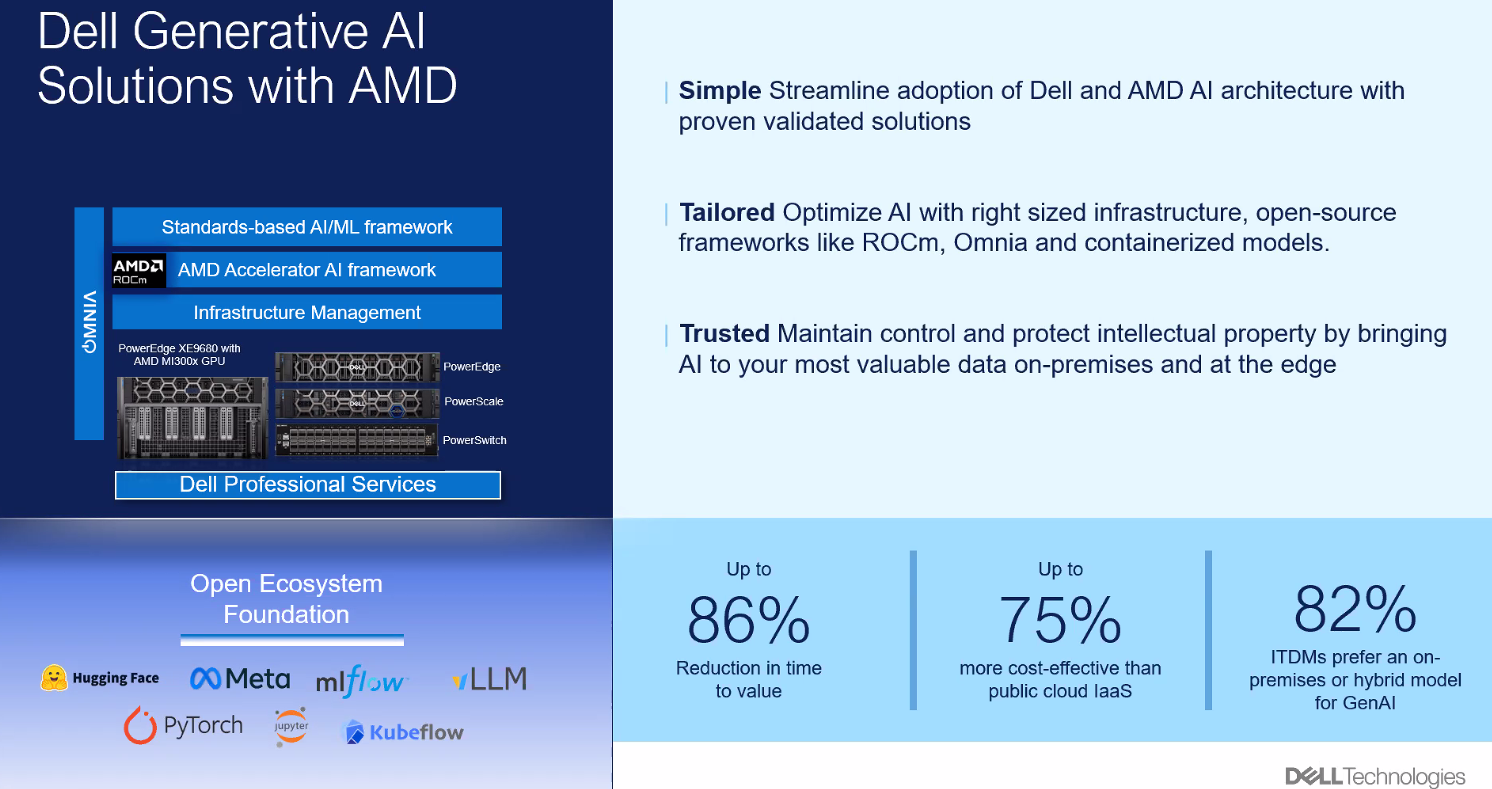
"We're trying to make sure that customers are able to take advantage of the most common AI toolsets and software that they'll use for their AI workloads," said Varun Chhabra, senior vice president of Dell's ISG and Telecom unit. He added that Dell and AMD have already tested and validated the new genAI systems to cut the time to value.

Chhabra said Dell is also surrounding those AMD systems with services to implement them. Dell is also expanding its Hugging Face partnership, which gives enterprises model choices for on-premises deployments, to AMD systems.

Here's a breakdown of Dell's AMD AI announcements.

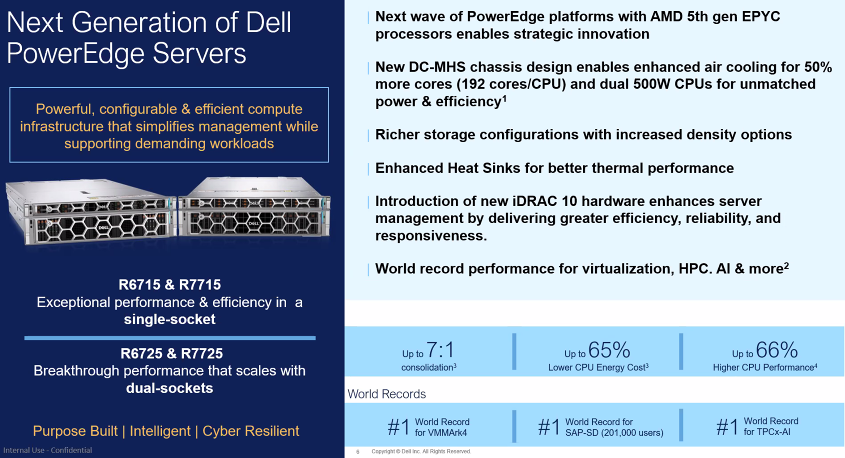
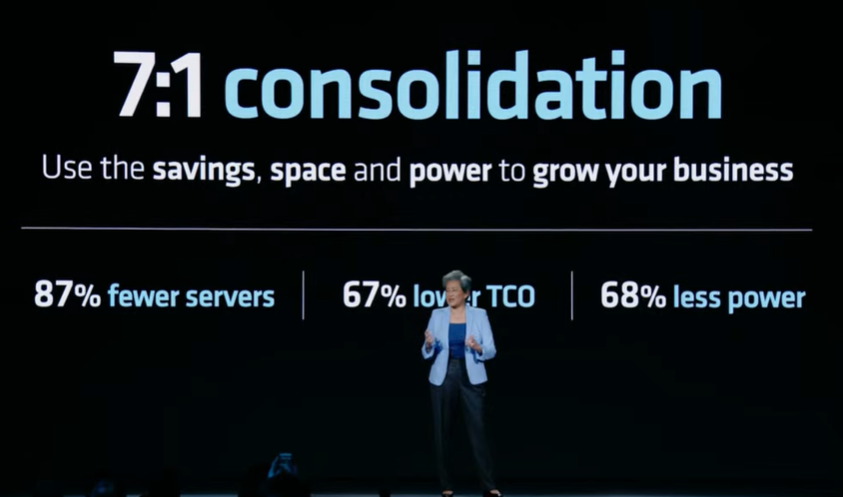
  • Dell PowerEdge R6715 and R7715 servers with AMD 5th gen EPYC processors. A new chassis design provides enhanced air cooling for 50% more cores (192 cores/CPU) with dual 500W CPUs. Dell also added larger storage configurations and enhanced heat sinks. The company said the new systems provide a 7:1 consolidation ratio from the previous generation systems and up to 65% lower CPU energy cost.

  • Dell PowerEdge XE7745. These enterprise AI systems provide more GPU density in an air-cooled 4U chassis. The system adds twice the PCIe GPU capacity with options for a diverse set of AI accelerators and optimized cooling for up to 600W GPUs.
  • Dell Generative AI AMD systems. Dell said it will package AMD's AI accelerators with its ROCm and Omnia software as well as standards-based AI and machine learning frameworks. This stack will include the PowerEdge XE9680 with AMD MI300x GPUs and services.

Data to Decisions Tech Optimization Digital Safety, Privacy & Cybersecurity Innovation & Product-led Growth Future of Work Next-Generation Customer Experience dell SaaS PaaS IaaS Cloud Digital Transformation Disruptive Technology Enterprise IT Enterprise Acceleration Enterprise Software Next Gen Apps IoT Blockchain CRM ERP CCaaS UCaaS Collaboration Enterprise Service Big Data AI GenerativeAI ML Machine Learning LLMs Agentic AI Analytics Automation Chief Information Officer Chief Technology Officer Chief Information Security Officer Chief Data Officer Chief Executive Officer Chief AI Officer Chief Analytics Officer Chief Product Officer

AMD launches next-gen Instinct AI accelerators, 5th gen EPYC as it fortifies position as Nvidia counterweight

AMD launches next-gen Instinct AI accelerators, 5th gen EPYC as it fortifies position as Nvidia counterweight

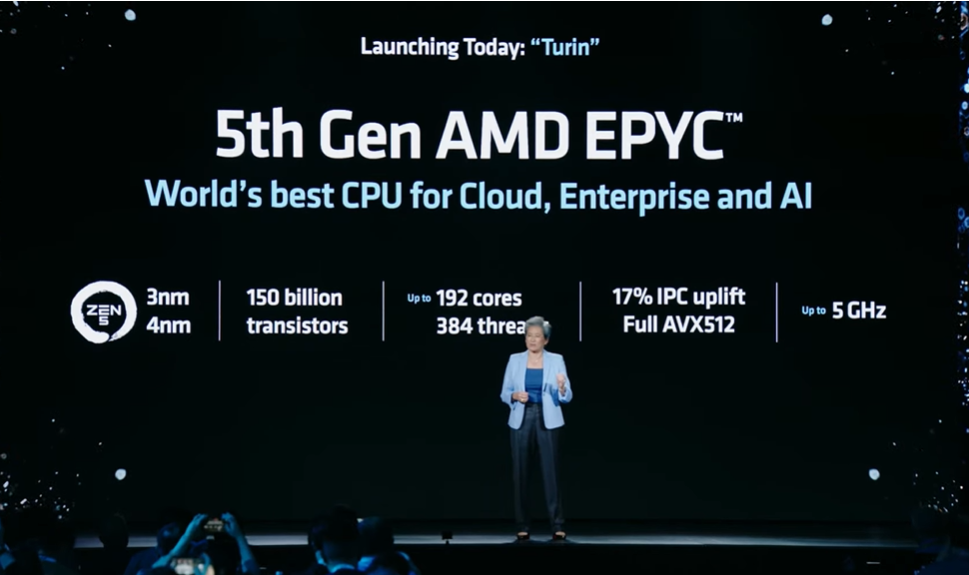
AMD launched its 5th Gen EPYC processor as well as its latest Instinct MI325X accelerators as it aims to gain AI workloads from inference to model training. The big takeaway is that AMD is well equipped to give Nvidia competition for AI workloads. 

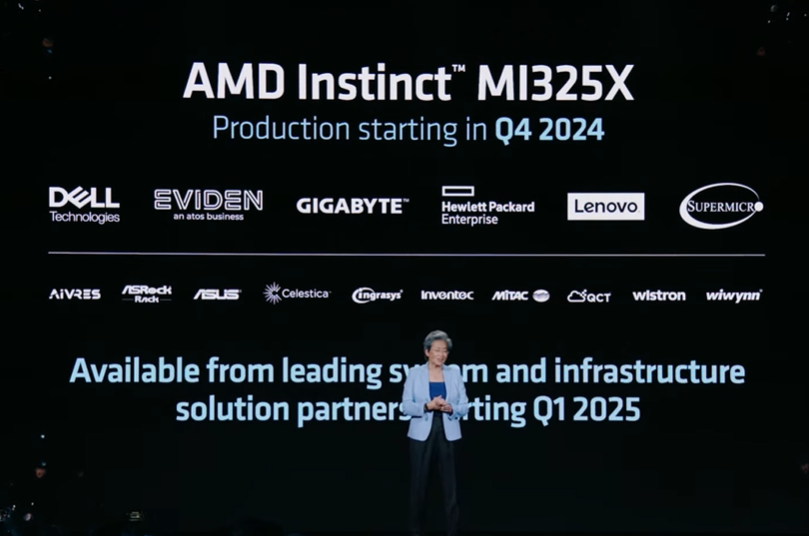
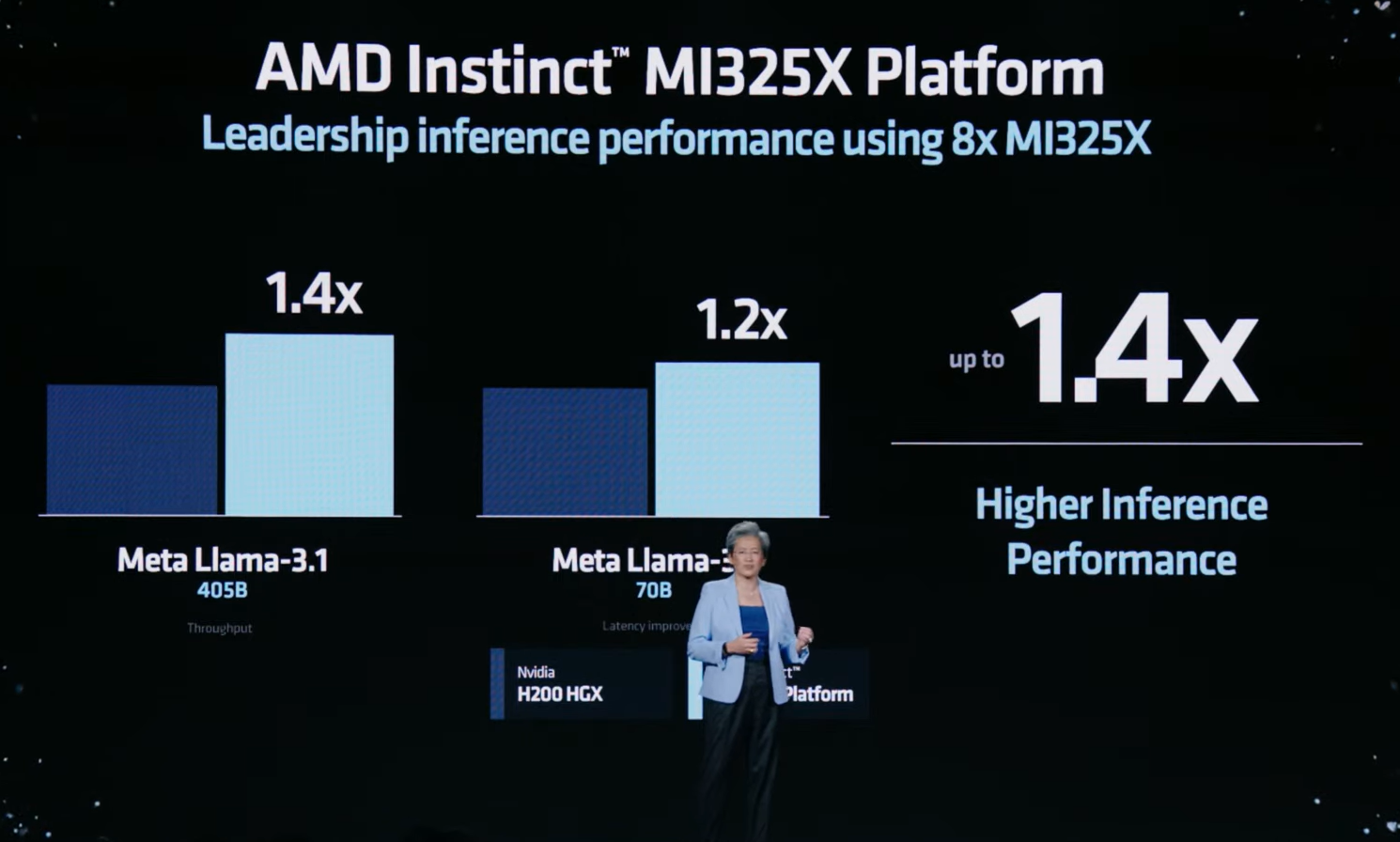
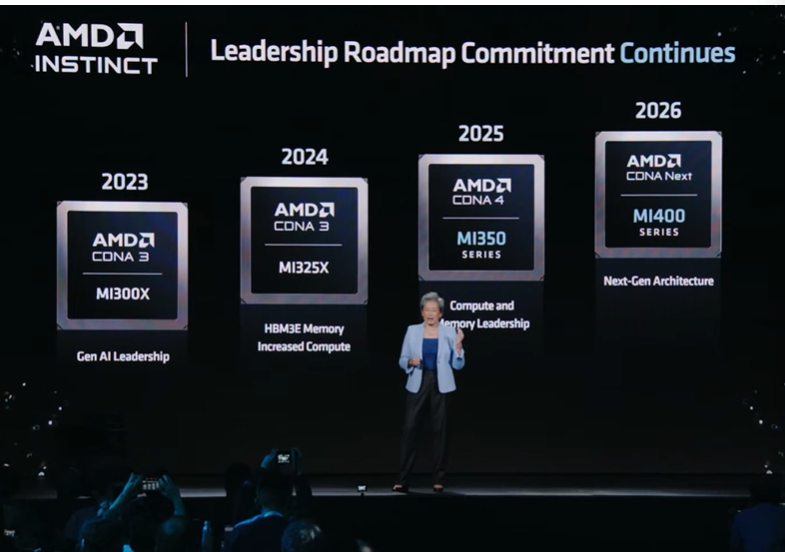
The chipmaker said its MI325X platform will begin production in the fourth quarter with favorable performance vs. Nvidia's H200 GPUs. AMD also outlined its annual cadence as well as the roadmap head into 2025.

Lisa Su, CEO of AMD, gave a closely watched keynote at its Advancing AI 2024 event. The launch of AMD's new enterprise CPUs and GPUs are critical given the chipmaker is the best positioned to compete with Nvidia, which has dominated AI infrastructure. Su said that the data center AI accelerator market can hit $500 billion by 2028. "The data center and AI represent significant growth opportunities for AMD, and we are building strong momentum for our EPYC and AMD Instinct processors across a growing set of customers," she said. 

AMD Instinct MI325X and what's ahead

Su said the next-gen Instinct GPU will have 256GB HBM3I, 6TB/s and better performance overall compared to the previous MI300.

AMD added that the MI325X platform outperforms Nvidia H200 HGX for Meta Llama inference workloads and matches it for 8GPU training.

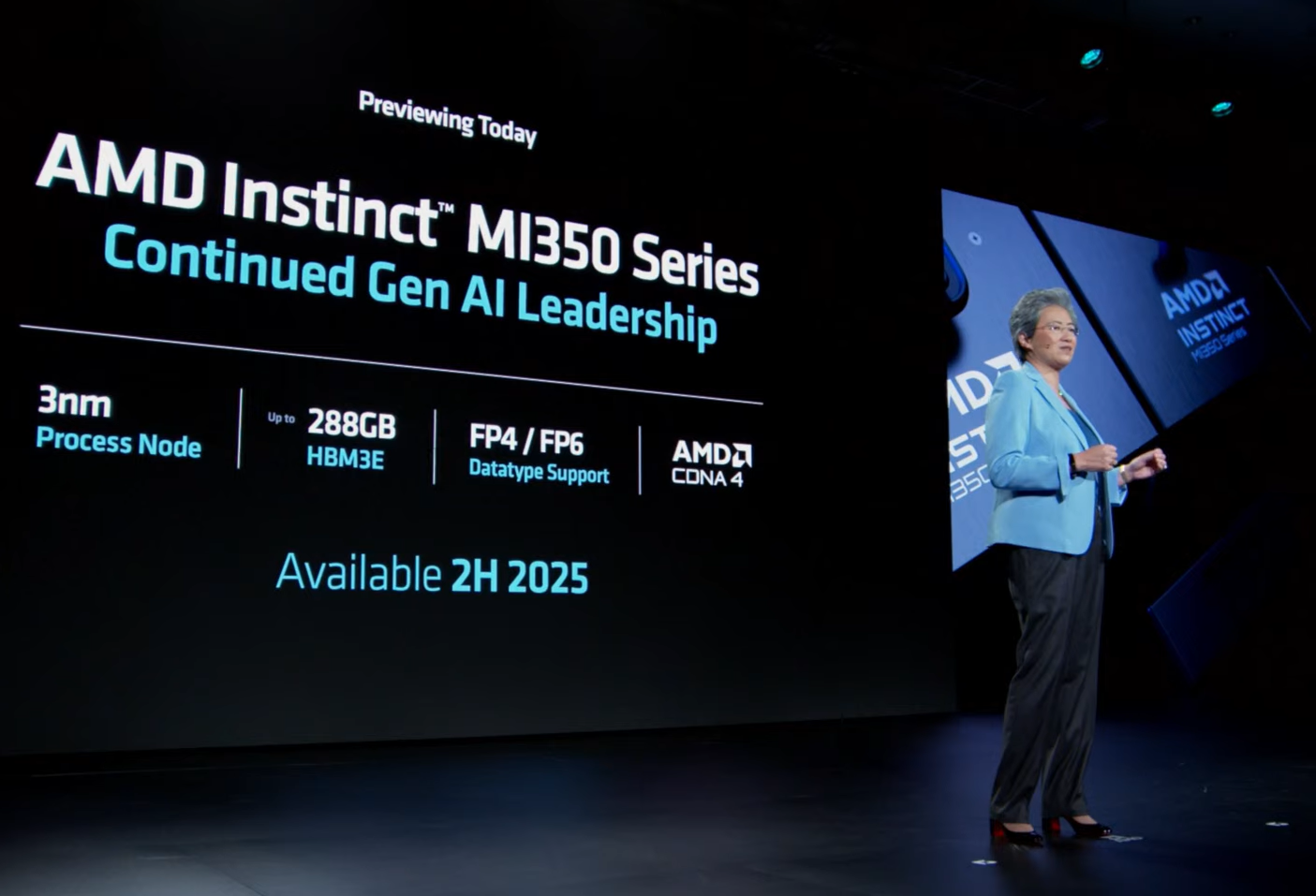
Su also said that its AMD Instinct MI355X Accelerator is in preview for launch in the first half of 2025.

For AMD, the game is getting its GPUs in the hyperscale clouds--Google Cloud, Microsoft Azure and Oracle were on stage with Su live or by video--as well as with key infrastructure providers such as Dell Technologies, HPE and SuperMicro. These infrastructure providers are creating data center designs that can accommodate AMD and Nvidia with future proofed infrastructure. AMD also highlighted partners such as Databricks.

Making the EPYC case for the enterprise

Su's keynote focused on a key theme for the 5th Gen EPYC processor in the data center: Enterprise returns due to lower total cost of ownership as well as taking on inference workloads.

The latest EPYC server processor is billed as the best CPU for cloud, enterprise and AI workloads. The processor, formerly code-named Turin, has 150 billion transistors, up to 192 cores and up to 5GHz built on 3nm and 4nm technology.

For the enterprise, Su said the latest EPYC has up to 1.6x performance per core in virtualized infrastructure and up to 4x throughput performance for open-source databases and video transcoding.

As for inference workloads, Su said the latest EPYC processor has up to 3.8x the AI performance for machine learning and end-to-end AI.

The broader portfolio

  • Although Instinct and EPYC were the headliners, AMD had a bevy of other offerings to round out its AI portfolio. Here's a look:
  • AMD's CDNA Next architecture will be available in 2026. AMD also touted its AMD ROCm software stack. 
  • AMD also expanded its DPU processor lineup with AMD  Pensando Salina DPU and AMD Pensando Pollara 400, the first Ultra Ethernet Consortium ready NIC.
  • AMD launched AMD Ryzen AI PRO 300 Series processors, powering Microsoft Copilot+ laptops.
     

Data to Decisions Tech Optimization Innovation & Product-led Growth Future of Work Next-Generation Customer Experience Digital Safety, Privacy & Cybersecurity AMD Big Data AI GenerativeAI ML Machine Learning LLMs Agentic AI Analytics Automation Disruptive Technology Chief Information Officer Chief Technology Officer Chief Information Security Officer Chief Data Officer Chief Executive Officer Chief AI Officer Chief Analytics Officer Chief Product Officer

How Climate Tech and AI can Address Environmental Challenges | CR Sustainability Convos

How Climate Tech and AI can Address Environmental Challenges | CR Sustainability Convos

During #ClimateWeekNYC, Constellation Research, founder R "Ray" Wang had an engaging conversation with Sol Salinas, EVP, and Sustainability Lead for Capgemini Americas on the role of #sustainability, climate #tech, and #AI in addressing environmental challenges.

The discussion explored:

📌 Capgemini's significant partner ecosystem that supports clients in their sustainability efforts.
📌 The increasing commitment and investment in sustainability by organizations globally.
📌 The focus on circularity, waste reduction, and #technologies like small modular nuclear reactors and AI to drive sustainability.
📌 The importance of regulation, transparency, and overcoming greenwashing concerns around sustainability claims.

Watch the full interview to learn more about leveraging strategy, technology, and partnerships to advance sustainability goals.

On CR Conversations <iframe width="560" height="315" src="https://www.youtube.com/embed/BxvdD5WUcfo?si=aHhtj97JB84P5iiD" title="YouTube video player" frameborder="0" allow="accelerometer; autoplay; clipboard-write; encrypted-media; gyroscope; picture-in-picture; web-share" referrerpolicy="strict-origin-when-cross-origin" allowfullscreen></iframe>

How Seattle Seahawks are approaching genAI, model choices with AWS

How Seattle Seahawks are approaching genAI, model choices with AWS


The Seattle Seahawks are using Amazon Bedrock, generative AI and other AWS services to distribute video and content faster with a focus on quick returns as well as long-tail opportunities. Here's a look at the project and lessons learned so far.

The generative AI project, which started with this season, is part of a multi-year extension between the Seahawks and AWS, the team's official cloud, machine, AI and generative AI provider. Under the deal, the Seahawks are automating content distribution as well as transcribing, summarizing and distributing press conferences across multiple channels and languages.

AWS and the Seahawks will also integrate generative AI throughout business operations. The Seahawks and AWS first partnered in 2019 on NFL Next Gen Stats, insights on player health, performance and scouting. Lumen Field, home of the Seahawks, is also a showcase for Amazon's Just Walk Out technology.

I caught up with Kenton Olson, Seattle Seahawks Vice President of Digital & Emerging Media, to walk through the generative AI content project and what's next.

The project. Olson said the Seahawks will publish more than 1,000 videos throughout the year. The goal was to speed up the time it takes to get videos from the creation team and editors to production. After the 2023 season, the Seahawks looked to accelerate the process with Olson's content team of 11, which focuses on digital content and platforms.

"We use multiple AWS products for everything from encoding and transcribing video to hosting," said Olson. "We were excited to use Amazon Bedrock to provide some automation to the videos we're shooting to save time and get stuff out faster."

For now, the Seahawks are focused on media availability of videos and press conferences. The Seahawks will do about 300 press conferences throughout the year with plays and coaches.

In the future, Olson said generative AI will provide an assist for podcasting and entire video workflow. "As we move forward, we'll train the AI and make sure we tune it because every video is a little bit different," said Olson. "We started with press conferences and are learning."

    The process before and after. Olson said the previous process took about 45 minutes to an hour to create a video to publishing and streaming to various channels. The video processing and publishing process had 60 steps. "We're now in a situation where once the video is submitted it's published in about 10 minutes in a worst-case scenario," said Olson. "That includes things like translating and providing a summary that would have taken us hours before."

    Returns on investment. Olson said the initial return is time saved that frees his team up to think of new types of content to create. "We'd like our people thinking of new types of content not necessarily pushing buttons to publish something," said Olson.

    By the end of the season, Olson expects save hours "so that our content creators can focus on creating other things for our fans and exposing that content."

    Another early return is that the Seahawks can provide more in-depth information with generative AI summaries that can give fans more opportunities to discover content in unique ways. "We're also excited to see how our search engine referrals and various components are improved by providing more rich metadata," said Olson.

    Longer term, Olson said generative AI can boost the returns of the Seahawks video archive, which will be critical since the franchise will soon enter its 50th season. Olson said:

    "We have done a good amount of work over the past couple of years to take old Betamax tapes off the shelf and digitize those. We don't have a lot of real good data on all those, and so we're working with AWS right now to figure out how to process them and get a lot more data about who's in the video and what did they talked about. In the future, we could say here's a Jim Zorn video of him talking about something and do it within seconds. Today that would be a lot of manual scrubbing. As we move forward, there will be opportunities to talk about our history."

    More from the genAI field:

    Model choices. Olson said the plan from the beginning was to test multiple models and analyze them based on quality of output without human intervention. The Seahawks have already swapped a few models based on use cases. Olson noted that his team has swapped models out as the company moved from pilot to production. "It definitely took us some tinkering to understand what model makes sense and which doesn't. The tremendous thing about Bedrock is that we can use many different models," he said. "When we built this process, we knew these models are all changing. The model we're using now is really great, but for all we know there's some model in six or seven months that we'll want to move to."

    Humans in the loop. Olson said the primary goal of the genAI project was to focus his team on more content and new ideas. The process for the video team is to bookend video production with human oversight. At the end of the process, humans make the quality checks and decide to publish, but the models have gotten to the point where "we're hitting publish more than having to make edits," said Olson.

    Olson's team also had to give models unique spellings of names as well as new players as roster changes are daily and weekly. "We really work on ingesting our roster before every video to make sure the latest players are there," he said. Today, the models get an update every time there's a roster change.

    What's more intriguing to Olson is the human input at the front end of the process. He said that generative AI speeds up ideation and allows creators to try new things in seconds and iterate from there.

    The project timeline. Olson said the Seahawks started on the genAI project in the late spring with building components. By time, the season started the Seahawks were ready to go. "It took us about two months of adding pieces and iterating to make sure we could move forward," said Olson. "It was more about adjusting the model to fit our needs and making sure we use it in the correct way."

    Data to Decisions Future of Work Marketing Transformation Next-Generation Customer Experience New C-Suite Innovation & Product-led Growth Tech Optimization Digital Safety, Privacy & Cybersecurity AI GenerativeAI ML Machine Learning LLMs Agentic AI Analytics Automation Disruptive Technology Chief Information Officer Chief Executive Officer Chief Technology Officer Chief AI Officer Chief Data Officer Chief Analytics Officer Chief Information Security Officer Chief Product Officer

    OpenAI, AI Sustainability, CX Optimization | ConstellationTV Episode 90

    OpenAI, AI Sustainability, CX Optimization | ConstellationTV Episode 90

    We made it to ConstellationTV episode 90! 📺 Hear co-hosts Holger Mueller and Liz Miller discuss enterprise technology news, including AI Forum highlights, AI integration in workforce management, and the impact of OpenAI's recent funding and future innovation.

    Then R "Ray" Wang has an engaging conversation with Sol Salinas, EVP, and Sustainability Lead for Capgemini Americas on the role of sustainability, climate tech, and AI in addressing environmental challenges.

    The episode concludes with a CR CX Convo with leaders from The Scotts Miracle-Gro Company on the importance of empathy in customer experience.

    00:00 - Meet the hosts
    01:24 - Enterprise tech news updates (AIF 2024, workforce management AI, OpenAI)
    17:11 - Sustainability and AI with Capgemini's Sol Salinas
    29:40 - CR CX Convo: Tests CX to Optimize for Extraordinary Growth
    42:13 - Bloopers!

    ConstellationTV is a bi-weekly Web series hosted by Constellation analysts, tune in live at 9:00 a.m. PT/ 12:00 p.m. ET every other Wednesday!

    On ConstellationTV <iframe width="560" height="315" src="https://www.youtube.com/embed/1qA-GqW07bw?si=MPt_C27lsaw_Tigp" title="YouTube video player" frameborder="0" allow="accelerometer; autoplay; clipboard-write; encrypted-media; gyroscope; picture-in-picture; web-share" referrerpolicy="strict-origin-when-cross-origin" allowfullscreen></iframe>