Results

Be the Change you Want to See - Great Future of Work Products Begin with Great Company Culture

Be the Change you Want to See - Great Future of Work Products Begin with Great Company Culture

Company culture: the secret ingredient in the creation of the industry's leading HRtech products

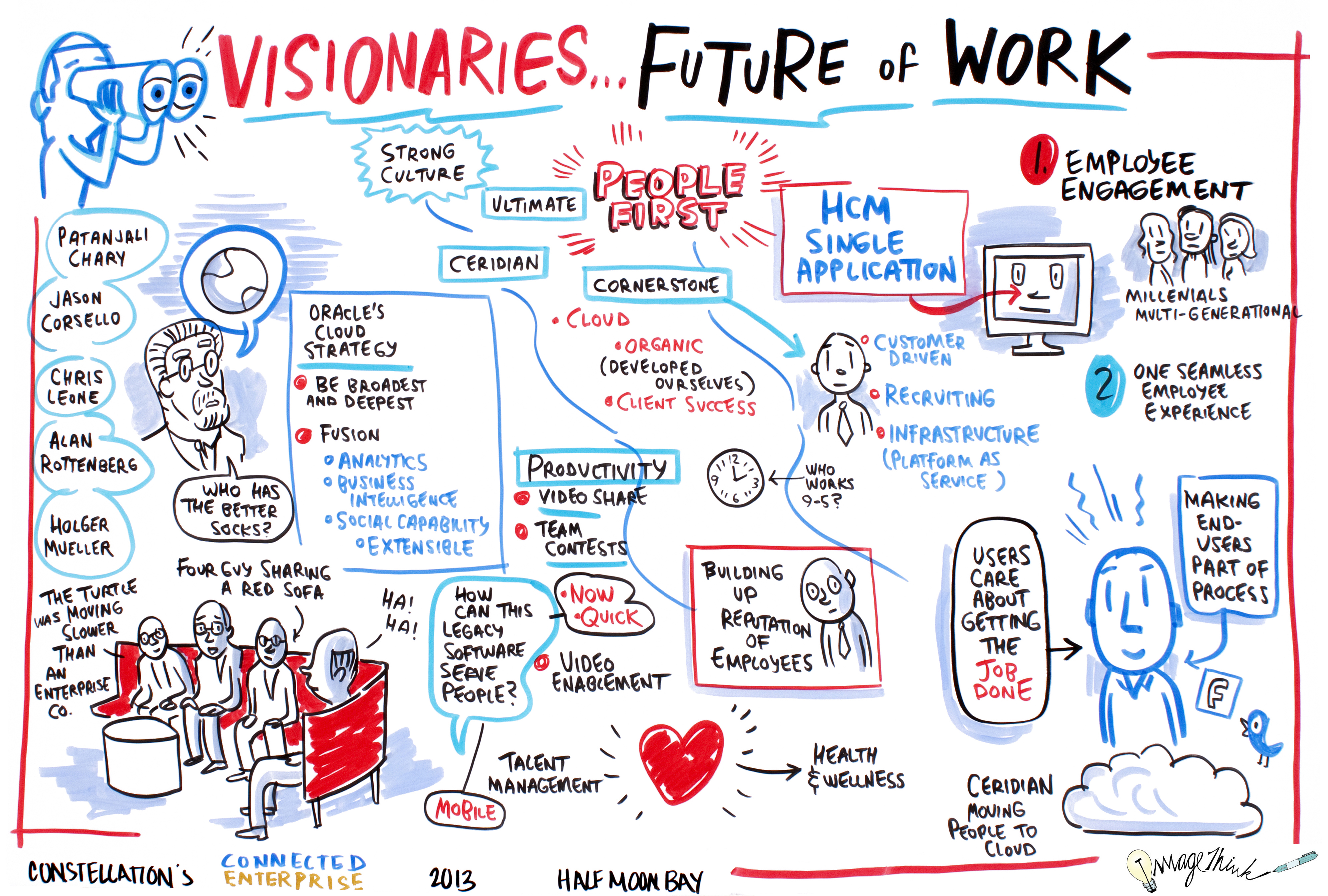
Future of Work Visionaries panel at Constellation's Connected Enterprise. Four future of work executives share their companies' approaches to producing the industry's most intuitive and innovative HR products.

Future of Work Visionaries Connected Enterprise

Moderator: 
Holger Mueller, Constellation Research
Panelists: 
Patanjali Chary, Vice President, User Experience, Ultimate Software 
Jason Corsello, Chief Strategy Officer, Cornerstone on Demand
Chris Leone, SVP HCM Cloud Services, Oracle
Alan Rottenberg, Ceridian
 
The Future of Work analyzes the confluence of technological, demographical and cultural trends challenging the traditional paradigm of work. Where we work, when we work, how we work, what we work on, and why we work have dramatically shifted. Will you be prepared to inspire five generations of workers to reach their full potential? Click here to learn more.
 
Media Name: 18CCE2013_ImageThink_day2_HEATON_9o12.jpg
New C-Suite Future of Work Innovation & Product-led Growth Tech Optimization Data to Decisions Marketing Transformation Next-Generation Customer Experience Digital Safety, Privacy & Cybersecurity cce Connected Enterprise Oracle Leadership AI Analytics Automation CX EX Employee Experience HCM Machine Learning ML SaaS PaaS Cloud Digital Transformation Enterprise Software Enterprise IT HR Chief Customer Officer Chief People Officer Chief Experience Officer Chief Human Resources Officer

Event Report: The Atlantic Silicon Valley Summit - Exploring The Culture Of Innovation [VIDEO] #AtlanticSVS

Event Report: The Atlantic Silicon Valley Summit - Exploring The Culture Of Innovation [VIDEO] #AtlanticSVS

What’s Next In the Valley?

Silicon Valley has reached the status of international myth, as the promised land of creative thinking and innovation, and the home of leaders who are shaping the way we interact with the physical world. What is it about this place that draws the world’s most forward- reaching minds?  As pockets of innovation spring up across the country – Silicon Alley, Silicon Beach, and Silicon Priarie, for example, how can the Valley maintain its status?

An Inside Look On The Culture Of Innovation From A Historian, A Practitioner, And A Futurist

On December 16th, The Atlantic drew together cutting edge technologists, investors, and digital futurists for its first Silicon Valley Summit: Listening To The Innovators.  Held at the Computer History Museum in Mountain View, CA, the panelists included:

  • Leslie Berlin – Project Historian for the Silicon Valley Archives at Stanford University
  • Ben Galbraith – VP of Global Products at Walmart Labs
  • Marina Gorbis, Executive Director at the Institute for the Future


The panel was challenged with addressing the key pillars of innovation, where other hotspots could take foothold, what is inside the DNA of an innovative organization, and what to expect next in 2014. A few highlights from the event include:

  • Identifying key pillars of innovation. The panelists identified audacity, optimism, innovation, culture of no permission, good network, and the constant influx of new people as key pillars.
  • Taking Silicon Valley elsewhere. The panelists overwhelmingly thought it was not going to be possible to bring the valley elsewhere.  The valley itself is a unique culture.  However, they believed that areas such as Silicon Alley, Silicon Beach, Silicon Prairie, and Silicon Roundabout could build their own nexus of innovation.
  • Ensuring future access to Silicon Valley. The panelists also felt that it was important to provide access to the innovation in Silicon Valley to the rest of the world.

 
Video: The Atlantic Live – Exploring The Culture Of Innovation


Exploring the Culture of Innovation from The Atlantic

Reprints

Reprints can be purchased through Constellation Research, Inc. To request official reprints in PDF format, please contact Sales .

Disclosure

Although we work closely with many mega software vendors, we want you to trust us. For the full disclosure policy, stay tuned for the full client list on the Constellation Research website.

* Not responsible for any factual errors or omissions.  However, happy to correct any errors upon email receipt.

Copyright © 2001 – 2013 R Wang and Insider Associates, LLC All rights reserved.
Contact the Sales team to purchase this report on a a la carte basis or join the Constellation Customer Experience!


Data to Decisions Future of Work Marketing Transformation Matrix Commerce New C-Suite Next-Generation Customer Experience Tech Optimization Innovation & Product-led Growth SoftwareInsider Leadership Chief Customer Officer Chief Executive Officer Chief Financial Officer Chief Information Officer Chief Marketing Officer Chief People Officer Chief Procurement Officer Chief Supply Chain Officer Chief Technology Officer Chief Information Security Officer Chief Data Officer Chief Experience Officer

Social Communities Spur Innovative Customer Support

Social Communities Spur Innovative Customer Support

1

As customer support managers plan for the upcoming year, one area I suggest for consideration is to create an online customer community for product support.  During the last year, a sizeable number of organizations have discovered the many benefits for building an online community to better serve their customers and partners. Online communities reduce support costs and improve response times by accessing the collective intelligence of its members and deflecting support calls.  Brands that have created online communities find they offer technical support to customers over a shared content management system and direct input from peers with knowledge of their product.  Crowdsourcing promotes faster problem resolution and transparent engagement. Additional benefits for online customer support communities include providing a forum for customers to share opinions, find information and give and receive advice. 

It is easy for members to become involved, as communities support interactive content, such as blog posts and, chat sessions. Communities attract self-directed individuals who want a trustworthy resource for problem solving.  Several innovative customer support communities use gamification techniques to encourage members to become active and continue their participation.  Gamification offers recognition and rewards to members based on their degree of contribution in the community.  For example, members may earn badges or honorary titles that reflect their status as active supporters.

Communities are self-directed but require brands oversee the content to ensure its integrity.   Costs for community development and management are offset by fewer assisted transactions, improved customer satisfaction and new sales revenues. 

Online Communities Offer Amazing Customer Care

Download the report snapshot


Next-Generation Customer Experience B2C CX Chief Customer Officer Chief People Officer Chief Human Resources Officer

Outstanding Applications of Big Data - Insights from a Career in Analytics

Outstanding Applications of Big Data - Insights from a Career in Analytics

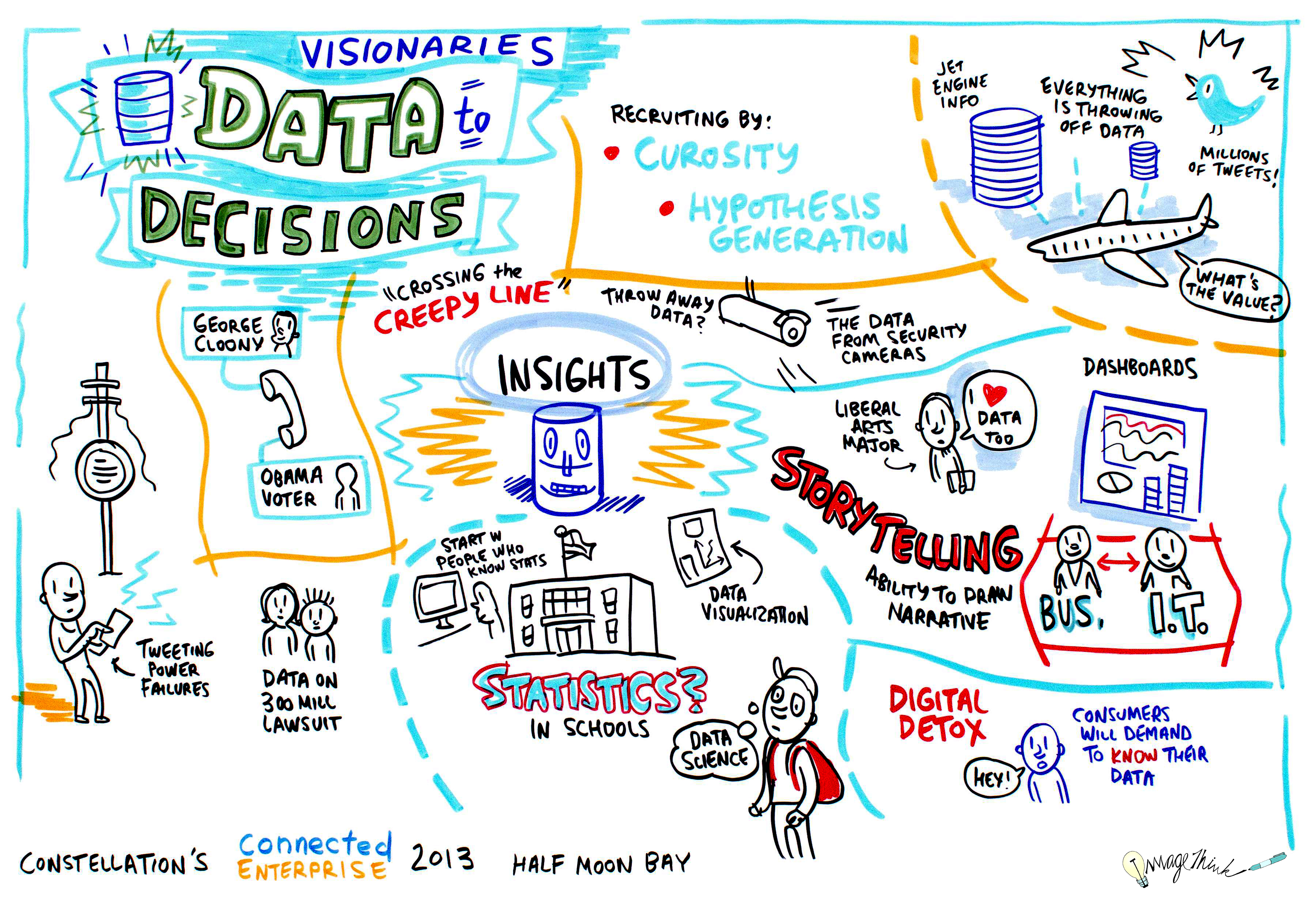
Data Data to Decisions Visionaries panel at Constellation's Connected Enterprise. Three data executives share their takeaways from their lengthy careers in big data/analytics.
The Visionaries series shares the experiences of industry thought leaders.


Moderator:
J. Bruce Daley, Constellation Research
Panelists:
Dr. Dave Schrader, Teradata
Chris Selland, HP Vertica
Kenneth Wincko, Dunn & Bradstreet


Data to Decisions examines the enablement of data-driven decisions across the entire organization.
Don't get swept up in the big data hype.  Gather key insights from your data, transform insights into actionable information, and then make the right decisions.
 

Reserve your seat for Constellation's Connected Enterprise 2014

Media Name: ImageThinkDATAtoDECISIONS_9o9.jpg
Data to Decisions Innovation & Product-led Growth Future of Work Tech Optimization New C-Suite cce Connected Enterprise Leadership AI ML Machine Learning LLMs Agentic AI Generative AI Robotics Analytics Automation Cloud SaaS PaaS IaaS Quantum Computing Digital Transformation Disruptive Technology Enterprise IT Enterprise Acceleration Enterprise Software Next Gen Apps IoT Blockchain CRM ERP CCaaS UCaaS Collaboration Enterprise Service developer Metaverse VR Healthcare Supply Chain business Marketing finance Customer Service Content Management Chief Information Officer Chief Experience Officer Chief Technology Officer Chief Information Security Officer Chief Data Officer

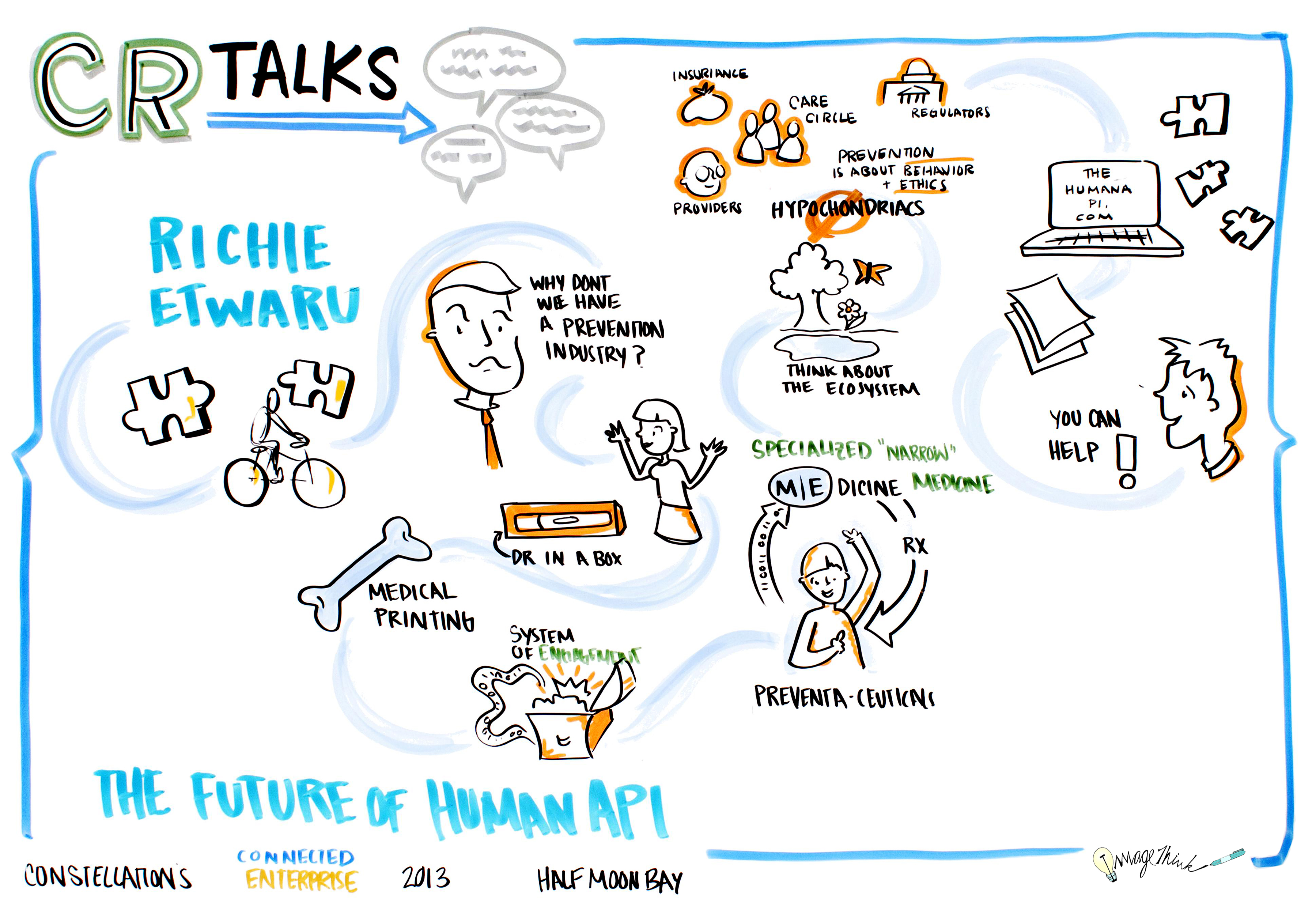
The Future of the Human API

The Future of the Human API

Richie Etwaru explains how cloud and mobile technology can shift the healthcare paradigm to focus on prevention, thus resulting in better, individualized healthcare for all. Recorded at Connected Enterprise.

Data to Decisions Future of Work Matrix Commerce New C-Suite Next-Generation Customer Experience Chief Customer Officer Chief Executive Officer Chief Financial Officer Chief People Officer
On <iframe allowfullscreen="" frameborder="0" height="315" src="//www.youtube.com/embed/gJHaoqeucX8" width="560"></iframe>
Media Name: sshumapi.png

How to Fix the Healthcare Industry - The Prevention Economy and the Human API

How to Fix the Healthcare Industry - The Prevention Economy and the Human API

Today's healthcare industry focuses primarily on the "cure and care" with significantly less attention paid to prevention. Richie Etwaru explains how cloud and mobile technology can shift the healthcare paradigm to focus on prevention, thus resulting in better, cheaper, perfectly-tailored healthcare for all.

Recorded at Constellation's Connected Enterprise Innovation Summit October 31, 2013.

Cegedem is looking for advocates for this prevention-based healthcare industry. For more information visit: thehumanapi.com

Request more information about Constellation's Connected Enterprise 2014

Media Name: Human API.jpg
Data to Decisions Future of Work Matrix Commerce New C-Suite Next-Generation Customer Experience Innovation & Product-led Growth Tech Optimization cce Connected Enterprise Leadership Chief Customer Officer Chief Executive Officer Chief People Officer Chief Experience Officer

Salesforce1 is Not a Platform: The Inclusion Theory

Salesforce1 is Not a Platform: The Inclusion Theory

If Salesforce1 is not a platform then what is it? The Inclusion Theory may provide the key. Inclusion is one of the seminal theories in geology. An inclusion happens when any older material is enclosed inside a newer rock or mineral. The Inclusion Theory in computing holds that Salesforce1 along with products from Amazon Web Services and aMind Solutions (among other companies) enable developers to create a new class of applications by including different mass market devices and enterprise systems together within their structure.

Download "Inclusion Layer Products Enter the Market" snapshot

The significance of this approach is that it treats devices, not as dumb terminals at the top of a software stack, but as hand held computers that also happen to make phone calls. This opens the door for an entirely class of applications to be developed in the cloud that would be impossible to develop in either traditional client server or mainframe environments.

Figure 1: Geological Principal of Inclusion

Inclusion in geology

Source: Idaho Museum of Natural History

Conceptually the theory holds that inclusions take place when APIs and other device-specific code are enclosed inside a newer layer of software, such as Salesforce1. This “inclusion” layer manages tasks such as access, security, and identity. Using the inclusion layer, enterprise systems can be consistently, reliably and cost effectively accessed from devices designed for the mass market. As an unexpected benefit, the inclusion layer also opens the door to a new way of integrating systems together above database or server level. The inclusion layer is also subject to the network effect and becomes more valuable as more devices and enterprise systems are included.

Figure 2: The Inclusion Theory

Slide2

Source: Constellation Research

In addition to Salesforce1, Constellation research has identified at least two other products that are examples of the inclusion layer approach at work and provide clues how Salesforce1 is likely to develop.  They include:

  • Amazon Web Services AppStream
  • aMind Mobile and Web Framework

Constellation Research has published a report the "Inclusion Layer Products Enter the Market" by Constellation Principal Analyst and Vice President, J. Bruce Daley. A complimentary report snapshot is available. 

Download "Inclusion Layer Products Enter the Market" snapshot


New C-Suite Tech Optimization Innovation & Product-led Growth Future of Work Data to Decisions Dreamforce salesforce PaaS SaaS IaaS Cloud Digital Transformation Disruptive Technology Enterprise IT Enterprise Acceleration Enterprise Software Next Gen Apps IoT Blockchain CRM ERP CCaaS UCaaS Collaboration Enterprise Service Chief Information Officer Chief Technology Officer Chief Digital Officer Chief Data Officer Chief Analytics Officer Chief Information Security Officer Chief Executive Officer Chief Operating Officer

Salesforce Chatter: The Collaborative Foundation of Salesforce1

Salesforce Chatter: The Collaborative Foundation of Salesforce1

Today Constellation Research published my latest report, Salesforce Chatter and the Salesforce1 Platform from Dreamforce 2013 and Beyond

Executive Summary: Over the last three years, Salesforce.com has evolved its overall marketing message from â??Social Enterpriseâ? to â??Become a Customer Companyâ? and then to â??The Internet of Customersâ?. Constellation supports the increased emphasis on customers and the reduced focus specifically on â??socialâ?. This change in messaging mirrors the shift Salesforce.com is making with its collaboration platform Chatter. The company is improving it from being a stand-alone enterprise social network to being a core element of its line-of-business applications such as Customer Relationship Management (CRM), Marketing and Customer Service. This report takes a look at Salesforce Chatter and highlights five strengths and five weaknesses in the service.

This report provides useful decision criteria for organizations investigating Salesforce Chatter, competitive intelligence for collaboration vendors who compete against Salesforce.com, and areas of opportunity for business partners looking for ideas of what do build around the Salesforce.com platform.

Download the Quark Snapshot

Purchase the Quark

Image:Salesforce Chatter: The Collaborative Foundation of Salesforce1


Data to Decisions Future of Work Innovation & Product-led Growth New C-Suite Marketing Transformation Next-Generation Customer Experience Digital Safety, Privacy & Cybersecurity Dreamforce salesforce

SAP Gets Serious about Open Source, Courts Developers

SAP Gets Serious about Open Source, Courts Developers

(and it's about time!)

With SAP being a global company it has regional editions of the Sapphire and TechEd events. For anyone following the company it's always a key question if the follow up events to the traditionally leading North American event, are pure repeats - or if there are more or less fine tuned changes. 

For this year's edition of the TechEd developer conference it was more or less same same between Las Vegas and Amsterdam - but the event in Bangalore was an event by itself. There is a lot to digest from this TechEd - that just started today - December 11th - and will go until December 13th.


The big picture

So let's start with what I thought was the most interesting and important part to see if it had changed from TechED in Las Vegas and Amsterdam - and the good news is - it has not changed, the picture is still very much the same:


Wedged between HANA the database, running on the HANA cloud platform are a number of different applications - to which Fiori is the front end. And while this is easy to draw and compelling to explain - it has massive repercussions for SAP customers, SAP partners and SAP itself. More to come in a separate post, hopefully soon. 


Takeaways from the press release

So let's dissect and comment on the key pieces of the press release:
 

Simplified Development Experience 
To address the fast and agile nature of today’s market, SAP has launched a regional test drive of a new open development environment for SAP HANA. SAP River intends to provide a real-time development environment for rapidly building complete native applications powered by SAP HANA and enable increased developer productivity through a simpler development process, easily maintainable source code and a clear separation of intent and yet an optimized native execution on SAP HANA. 

MyPOV

This was certainly the big news - SAP (once again) creates its own development environment and language with SAP River. For those watching SAP long enough, developer productivity was the key reason ABAP was created in the first place and kept in place (ironically it was Shai Aggassi at an event in Bangalore saying that ABAP would be around for a long time, because its so productive) till today. 
We will have to see much more of River if that really merits the case - my general view (for now) is - the world (and developers) do not need another development language and environment.

OpenUI5, Open Source Variant of the SAPUI5, for the Developer Community 
SAP is contributing key portions of its SAPUI5 framework as open source code on the GitHub site under an Apache Version 2.0 license. As part of the effort, SAP has developed different themes, framework features and control libraries to help provide a consistent end-to-end experience and foster reuse and efficiency, for example, via responsive layouts. - See more at: http://www.news-sap.com/sap-increases-focus-on-developer-experience-and-makes-key-open-source-contributions/#sthash.zdnNPNQ4.2Y7JqRMY.dpuf


MyPOV

This was widely popular by the audience and in social media. And in general it's positive when large tech vendors contribute to open source and put muscle and investment behind it. But usually they take a lot from open source and then contribute to the project with some fraction of investment. OpenStack is a prominent example for that. But in SAP's case with SAPUI5 - now OpenUI5 - SAP is the only contributor - and the question is, who will collaborate and invest into it and into which areas. If there was someone, SAP should have had them  on stage and in this press release. 
Another potential red flag are the details on what SAP will keep and not contribute - something that wasn't communicated as I wrote this (yet).

New Service Broker for Cloud Foundry to Connect to SAP HANA
 SAP announced the code contribution and availability of a Cloud Foundry service broker for SAP HANA. Developed in close association with Pivotal and now available as open source on GitHub, the service broker will allow any Cloud Foundry application to connect to and leverage the in-memory capabilities of SAP HANA. - 


MyPOV

Long awaited and now it's there - and good move for HANA - the database. With the new River SAP is competing with Cloud Foundry as a platform for developers to build next generation applications on. I am sure SAP and Pivotal will separate that by the type of applications you can build with each platform - but the partnership with Pivotal becomes now more of a database partnership than anything else. 

New Node.js Connector for SAP HANA 
 In November 2013 SAP contributed SAP HANA database client via GitHub site that enables developers to efficiently connect Node.js applications to SAP HANA. - See more at: http://www.news-sap.com/sap-increases-focus-on-developer-experience-and-makes-key-open-source-contributions/#sthash.zdnNPNQ4.2Y7JqRMY.dpuf


My POV

This goes along the same lines as the previous paragraph on CloudFoundry - only here SAP does really good to open source in the sense that a tech giant contributes (and maintains presumably) an open source framework's usage (in this case the popular node.js framework) as part of a much larger open source project. Of course with the interest of more node.js projects uptaking HANA as the database - but that is a very legitimate motivation for SAP. Well done.

New Beta Version for SAP PowerBuilder 
A new closed beta version of the SAP PowerBuilder application development tool is intended to support new operating systems, databases and open standards and is planned for limited availability on December 15, 2013. SAP is committed to innovation without disruption and with the new beta release, beta customers can use their current investment in applications, knowledge and skills while they take advantage of new SAP innovations. 


MyPOV

With the Sybase acquisition SAP also acquired one aging, but prominent application development platform, the leader of RAD race of the 90ies, PowerBuilder. It's good to see that SAP keeps investing into the product - as there are still a lot of clients out there running applications on PowerBuilder. If I understood Reh correctly, PowerBuilder will be able to generate SAP River RDL code and thus become a code and (hopefully for SAP) a developer hands contributor. If that will work out - we will see - but it's good to see, that SAP leverages all developer assets and  mind share it has to its disposal to get River off to a running start.

Easy Access to SAP Technology 
A unified developer license covering all major platforms and technologies significantly simplifies the developer experience and makes it easy to get access to key SAP technologies. 


MyPOV

Always good to simplify licensing for developers - the details will have to be hashed out. But given that it looks like Schmerder created and updated it - I am pretty confident it's the best that SAP was able to do at this point. Others will dissect and find the issues.


Other key takeaways

As we talk about rivers and the event was in India - not surprisingly there an Indian River inspiring a new codename - the Ganges. And SAP Ganges is the latest attempt of SAP modelling the commerce happening between its customers. Remember SAP tried in the dot com boom era with SAP markets - and wasn't that successful - but with the Ariba and hybris assets in house, it's well worth it to give it another try. It looked like Mondkar annunced it's development roadmap for Ariba till Sapphire in June 2014 - let's see what we hear and see between now and then. SAP Mentor Dick Hirsch has written a great first take here. 

And then Fiori is making progress, progress it needs to make as it was recently (TechEd in Las Vegas) declared as the one and only SAP UI going forward. For that it needs to gain capabilities way beyond it's self service user interface origins - and the demos of the sales forecast and manufacturing planning are encouraging - but there is a lot more that needs to happen for a professional user's user interface, powerful enough to be the user interface from 9 to 5 plus overtime.


MyPOV

It's good to see SAP courting developers, but so is everyone else. If I put my developer hat on and compare the TechED messages with the ones I heard at Google I/O, Microsoft Build, VMWorld, Oracle's JavaOne, AWS re:invent and Salesforce's Dreamforce in the last 6 months - then SAP and River have their work cut out. All these vendors court the enterprise developers and have larger developer ecosystems than what SAP has ever had control over. Valiant to scramble Powerbuilder folks and kudos for supporting it - but that will not give SAP critical mass. 

If SAP e.g. had announced support for the super popular docker both to build on and to deploy on HANA - I am pretty sure it would have garnered (even) more attention and ultimately - more apps running on HAN,A. 

But then SAP is the largest business application vendor and certainly can try to attract developer masses into its proprietary architecture - that's the control ultimately all enterprise giants want to have. But Salesforce.com struggles and ultimately little success with Apex show that the proprietary path SAP seems to be taking with River is a very challenging path to success. But never say never. I have lots of respect for Klein and team.   

Tech Optimization Innovation & Product-led Growth Next-Generation Customer Experience Future of Work Data to Decisions Digital Safety, Privacy & Cybersecurity Google SAP amazon Oracle Microsoft SaaS PaaS IaaS Cloud Digital Transformation Disruptive Technology Enterprise IT Enterprise Acceleration Enterprise Software Next Gen Apps IoT Blockchain CRM ERP CCaaS UCaaS Collaboration Enterprise Service Chief Information Officer Chief Technology Officer Chief Information Security Officer Chief Data Officer

Andres Botero Joins Steelwedge Software

Andres Botero Joins Steelwedge Software

Botero photo

Andres Botero, who worked at Siebel Systems as Group Manager of Worldwide Operations, has joined Steelwedge Software as Chief Marketing Officer. Founded in 2000, Steelwedge improves sales and operations planning by adding automated collaboration and analytics to the process. In his new role Botero will be responsible for will be responsible for strategy, positioning, product marketing and marketing operations.

Steelwedge products build consensus among sales, marketing, finance, and the supply chain about future product demand so that companies can better understand why it fluctuates, balance capacity with sales, connect sales and operations with financial planning, and measure performance. The company claims to have more cloud sales and operations planning deployments than all of its competitors combined. Some Steelwedge customers include Applied Materials, Canon, Hospira, Emerson, NVIDIA, Sara Lee, Sony and Syngenta.

Before joining Steelwedge, Botero was Global Lead for Supply Chain Management Marketing at SAP.

Tech Optimization Chief Information Officer Chief Marketing Officer