Results

Walmart's genAI, automation, omnichannel initiatives pay off in Q2

Walmart's genAI, automation, omnichannel initiatives pay off in Q2

Walmart's second quarter shined partly due to technology investment in automation and AI as well as strong demand.

The retailing giant reported second quarter revenue of $169.3 billion, up 4.8%, with earnings of 56 cents a share. Adjusted earnings were 67 cents a share. Walmart also raised its outlook for fiscal 2025.

Walmart benefited from strong demand and efficiency that enabled it to lower prices across 7,200 categories. Perhaps the biggest news from Walmart is that consumers kept spending due to a focus on value.

Here's a look at the enterprise technology takeaways from Walmart's second quarter:

Generative AI. Walmart CEO Doug McMillon had a long riff on Walmart's earnings call. here are some of the bullet points.

  • Walmart is building its own large language models (LLMs) and using third party sources too.
  • GenAI has sped up the time it takes to improve the product catalog. McMillon said:

"One example is that we've used generative AI to improve our product catalog. The quality of the data in our catalog affects nearly everything we do from helping customers find and buy what they're looking for, to how we store inventory in the network, to delivering orders. We've used multiple large language models to accurately create or improve over 850 million pieces of data in a catalog. Without the use of generative AI, this work would have required nearly 100 times the current headcount to complete in the same amount of time."

  • Associates are using an AI-driven shopping assistant that provides advice and ideas. The shopping assistant will get an upgrade to answer follow-up questions.
  • Generative AI is driving cross-category sales and replicating what happens with impulse buys in a physical store. "One of the interesting things that's happening with generative AI is that cross-category search is more effective, which serves up more general merchandise items and it helps drive e-commerce profitability," said McMillion.

Enterprises start to harvest AI-driven exponential efficiency efforts | GenAI may be the new UI for enterprise software | 14 takeaways from genAI initiatives midway through 2024


E-commerce revenue was strong with 21% growth, and the store pickup and delivery outpaced in-store and club sales. "Pickup is growing faster than our in-store or club sales, and delivery is growing even faster than pickup. Delivery accuracy and speed continue to improve," said McMillon. "Our e-commerce progress creates more optionality for our customers and fuels the growth of our newer businesses."

Store fulfilled delivery was up about 50% in the second quarter, said Walmart CFO John David Rainey.

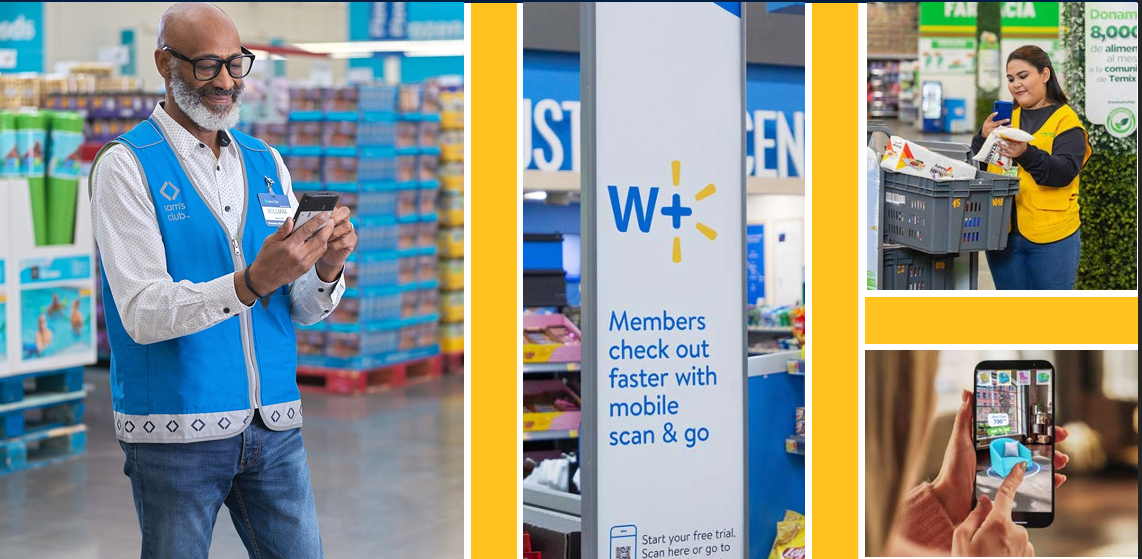
Scan and go is driving digital engagement at Sam's Club. "Digital engagement remains strong with Scan and Go penetration surpassing 30%. With our increased convenience of our Just Go technology now operational in 325 clubs, over 50% of our members can exit without a check, improving member NPS by more than 800 basis points, compared to the clubs without this technology," said Rainey.
Supply chain automation. Rainey said more than 45% of Walmart's e-commerce fulfillment center volume is now automated. Rainey said:

"We have about 1,800 stores receiving some level of freight from 15 of our regional distribution centers that are in varying stages of automation implementation. And as a result, our supply chain teams are processing more units through our DCs and FCs. And while we're spending more on CapEx than we have historically, we're pleased with the returns from these investments, particularly the automation of our supply chain. We expect these investments to yield returns that will allow us to increase our return on invested capital each year."

By the end of the year, Walmart said about 3,000 stores of the 4,600 will have deliveries from automated facilities some way.

Next-Generation Customer Experience Data to Decisions Innovation & Product-led Growth Future of Work Tech Optimization Digital Safety, Privacy & Cybersecurity B2C CX AI GenerativeAI ML Machine Learning LLMs Agentic AI Analytics Automation Disruptive Technology Chief Information Officer Chief Executive Officer Chief Technology Officer Chief AI Officer Chief Data Officer Chief Analytics Officer Chief Information Security Officer Chief Product Officer

HPE acquires Morpheus Data to round out HPE GreenLake features

HPE acquires Morpheus Data to round out HPE GreenLake features

Hewlett Packard Enterprise said it has acquired Morpheus Data, which makes a hybrid cloud management platform. HPE said Morpheus Data will be used to expand its hybrid cloud features in HPE GreenLake.

In a release, HPE said Morpheus Data will give GreenLake the ability to provision multi-cloud and multi-vendor apps, orchestrate and automate workloads and optimize cloud costs. HPE said the purchase goes along with its acquisition of OpsRamp in 2023.

Constellation Research analyst Andy Thurai said:

"This acquisition will drive HPE's cloud full-stack automation capabilities. Especially it can add multi-cloud automation, automation, FinOps and orchestration on top of the observability capabilities that is being infused with OpsRamp. This is especially important in the hybrid environments where the landscape is still very fragmented."

Brian Wheeler, CEO of Morpheus Data, in a blog post said:

"By joining forces with HPE, we will be able to leverage their extensive resources, industry expertise, and global reach to enhance our ability to deliver even more innovative solutions and better serve our customers."

Morpheus Data will be integrated into HPE GreenLake, HPE's private cloud portfolio and sold as standalone software.

Terms of the deal, which is expected to close in HPE's fiscal fourth quarter, weren't disclosed.

Tech Optimization Data to Decisions Digital Safety, Privacy & Cybersecurity Innovation & Product-led Growth Future of Work HPE greenlake SaaS PaaS IaaS Cloud Digital Transformation Disruptive Technology Enterprise IT Enterprise Acceleration Enterprise Software Next Gen Apps IoT Blockchain CRM ERP CCaaS UCaaS Collaboration Enterprise Service Chief Information Officer Chief Technology Officer Chief Information Security Officer Chief Data Officer

Alibaba cloud unit shows AI traction in Q1

Alibaba cloud unit shows AI traction in Q1

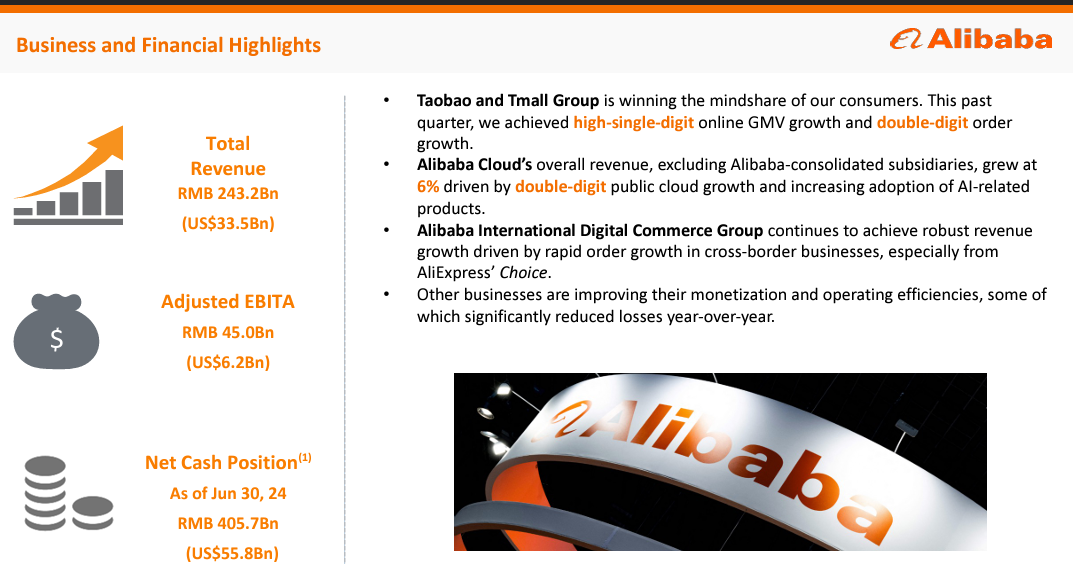
Alibaba's first quarter revenue fell 4% to $33.47 billion amid tough e-commerce competition, but its cloud business picked up momentum.

The company reported first quarter earnings of $3.34 billion, down 27% from a year ago. Alibaba is facing competition from rivals such as PDD and JD.com. Alibaba has had success with its Alibaba International Digital Commerce (AIDC) business, which includes retail and wholesale marketplaces including Lazada, AliExpress, Trendyol, Daraz, Miravia and Alibaba.com. First quarter revenue for AIDC was up 32% from a year ago.

Even though Alibaba's various e-commerce businesses were mixed the Cloud Intelligence Group gained a bit of momentum after a few quarters of flat growth. First quarter revenue for the cloud unit was $3.65 billion, up 6% from a year ago.

Alibaba said it saw "double-digit public cloud growth and increasing adoption of AI-related products." AI-related product revenue grew at a triple-digit pace. The company said it "will continue to invest in customers and technology, particularly in AI infrastructure, to increase cloud adoption for AI and maintain our market leadership."

In the quarter, Alibaba released Qwen 2.0, a series of large language models.

Alibaba CEO Eddie Wu said:

"In our cloud segment, we continue to pursue high-quality revenue and effectively execute our integrated cloud plus AI development strategy. This quarter, Alibaba's overall revenue, excluding Alibaba consolidated subsidiaries, grew 6%, with public cloud revenue maintaining double-digit growth. AI-related product revenues sustained a triple digit growth continuing to increase its share of public cloud revenue. We're seeing more major customers choosing Alibaba Cloud as their computer infrastructure for AI development. At the same time, Alibaba's proprietary large language models are gaining wider adoption.

We'll strengthen synergies between cloud and AI products, not only supporting existing customers and implementing new AI capabilities on Alibaba Cloud, but also enabling AI native enterprises to scale and succeed on our platform. We're committed to capitalizing on both opportunities.

Three, we'll continue to invest in R&D and AI CapEx to ensure the growth of our AI-driven cloud business."

Data to Decisions Tech Optimization SaaS PaaS IaaS Cloud Digital Transformation Disruptive Technology Enterprise IT Enterprise Acceleration Enterprise Software Next Gen Apps IoT Blockchain CRM ERP CCaaS UCaaS Collaboration Enterprise Service Chief Information Officer Chief Technology Officer Chief Information Security Officer Chief Data Officer Chief Executive Officer

Constellation ShortList 2024: Doug Henschen's take on BI and Analytics

Constellation ShortList 2024: Doug Henschen's take on BI and Analytics

Constellation analyst Doug Henschen discusses updates to his 2024 Constellation ShortLists for #analytics and #Business Intelligence platforms, highlighting new and updated platforms such as #Amazon QuickSight, #Domo, Google Looker, #Microsoft Power BI, and ThoughtSpot.

Doug emphasizes the importance of multi-cloud options, augmented #analytics, embedded analytics, and unified #data models. He mentions dropping IBM Cognos and Spotfire due to a lack of investment.

View Doug's ShortLists and more: https://www.constellationr.com/shortlist

__

View the full transcript (Disclaimer: this transcript has not been edited and may contain errors)

Hey folks, Doug Henschen of Constellation Research, and it's that time of year again, ShortList update time. Constellation publishes more than 140 shortlists. They're free guides that help you narrow your tech selections and save you time. I'm updating nine of my ShortList with this round here in August 2024 and today I will talk about four ShortLists all focused on analytics and bi, one of my favorite topics. 

So let's kick it off here, and we'll start with multi-cloud analytics and business intelligence platforms. Here we're looking at analytics and BI platforms that are offered as software as a service or managed services on two or more public clouds. The multi-cloud options bring analytics to your center of data gravity, reducing the friction and costs involved in data access and data movement. 

And on the list for 2024 are Domo, which is available both on AWS and Azure, Google Looker, which surprisingly, is available as software as a service on AWS and Azure, as well as Google Cloud MicroStrategy, which is a container-based managed service available on three or more public major public clouds, SaaS visual analytics, part of the viya platform, also container managed service and then thoughtspot, available as SaaS. Thoughtspot Cloud is available on AWS and Google, and also has a marketplace offering on Azure. 

On this list, a drop from this list that's been on the list in the past was IBM Cognos and spot fire. Haven't seen a lot of investment from them, so they're off that ShortList for 2024 next up, augmented analytics and business intelligence. 

Here we're talking about computer assistance for analysis so smart data discovery and analysis capabilities, including automated discovery, recommended tables and sources, recommended visualizations, also looking there at intent-driven recommendations based on behavior patterns seen in the use and usage and access to data and how and where it's data is being used by user, by group, by role, by permissions and item popularity and data source popularity. And then finally, integration of can escape it cutting edge generative AI capabilities. Here is it's being used for CO generation, for Data Prep and for natural language-based query analysis and explanations. 

And on the short list for 2024 a new player, first time on one of my bi short list, Amazon QuickSight, which has added Gen AI in the form of Amazon Q and quick site, it was actually formally QuickSight Q, now part of the larger Amazon Q Gen AI family. This is the availability of that Gen AI service within quick site a long time. Members on the list also pursuing Gen AI would include Power BI, Microsoft's product, Oracle analytics, cloud clicks, click sense SAP analytics, cloud Tableau and thoughtspot. 

Next up, let's look at embedded analytics. And here I'm I'm not talking about just embedded analytics for ISVs and software as a service companies. There are so many different types of companies now that are developing internal or customer facing software or services they don't even consider themselves to be software vendors or SaaS vendors, but here they are in need of embedded capabilities, and there we're looking at microservices architectures, fine grained REST APIs, software development kits so you can flexibly embed data, metrics, visualizations, dashboards into a range of applications and and services, and also on the more on the cutting edge is support for DevOps approaches that really bridge the gap between development and operations and help you automate continuous integration and continuous development. 

So on my short list for 2024 embedded analytics would include Domo, Google Looker, Microsoft, power, bi, Qlik, sense size, Tableau and thoughtspot. And dropped from this list this time around was MicroStrategy and Oracle analytics cloud, though I did add OAC to a new list that I have in the BI analytics category, and that is embedded analytics platforms for cloud applications. 

Here I'm looking at deliver a platform that has an approach for managing application data and embedding visualizations, KPIs, and dashboards into key decision points within ERP, CRM. HCM and other cloud based applications, and this gives you a unified data modeling, access control, governance approach and two way contextual interactivity between the apps and the analytics. 

And on my short list here for 2024 is infor burst, and its integration with Infor Cloud suites, Microsoft Power BI and integrations with Microsoft Dynamics, 365, and Power Apps. Oracle analytics cloud and its integrations with Oracle Fusion cloud applications. SAP analytics cloud and its integrations with SAP applications, of course, Salesforce CRM analytics, obviously part of self Well, embedded within Salesforce apps. And then finally, Zoho analytics, embedding within Zoho applications. 

Well, that's it for my latest analytics and BI ShortList updates. To see all of our ShortLists, visit constellationr.com/shortlist, and I wish you the best of success with your tech selections. 
 

On ShortList Spotlights <iframe width="560" height="315" src="https://www.youtube.com/embed/gp3iRrnEeDg?si=jjYDii_6hv41IoxU" title="YouTube video player" frameborder="0" allow="accelerometer; autoplay; clipboard-write; encrypted-media; gyroscope; picture-in-picture; web-share" referrerpolicy="strict-origin-when-cross-origin" allowfullscreen></iframe>

Cisco Q4 better-than-expected, will cut 7% of global workforce

Cisco Q4 better-than-expected, will cut 7% of global workforce

Cisco reported better-than-expected fourth quarter results, but networking revenue was down 28% from a year ago. Cisco also said it will cut 7% of its global workforce and take pre-tax charges of $1 billion with most of that sum recognized in the first quarter. 

The company reported fourth-quarter earnings of 54 cents a share on revenue of $13.6 billion, down 10% from a year ago. Non-GAAP earnings were 87 cents a share.

Wall Street was expecting Cisco to report non-GAAP fourth quarter earnings of 85 cents a share on revenue of $13.54 billion.

For fiscal 2024, Cisco reported earnings of $2.54 a share on revenue of $53.8 billion, down 6% from a year ago.

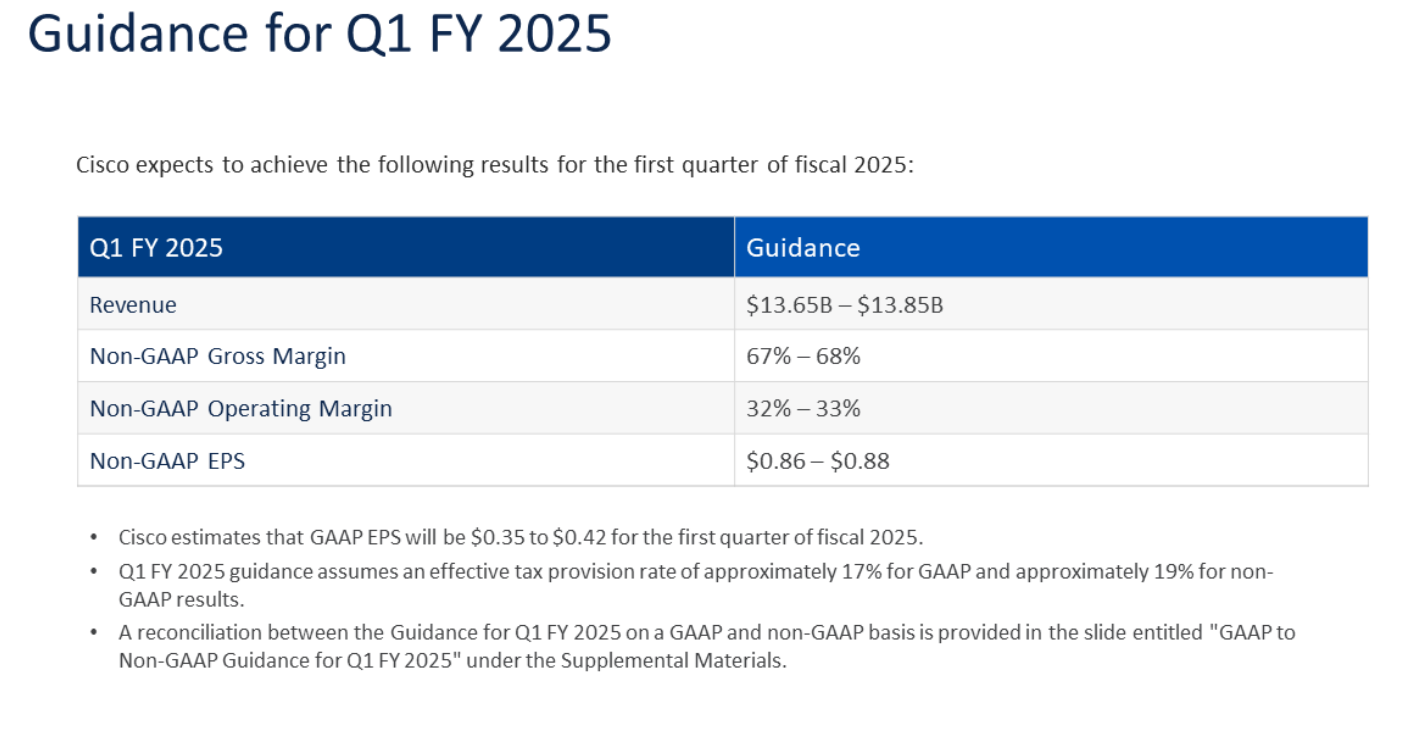
As for the outlook, Cisco projected first quarter revenue of $13.65 billion to $13.85 billion with non-GAAP earnings of 86 cents a share to 88 cents a share. Fiscal 2025 revenue will be between $55 billion to $56.2 billion with non-GAAP earnings of $3.52 a share to $3.58 a share.

The company's results have been boosted by the acquisition of Splunk with total fiscal year subscription revenue of $27.4 billion, or 51% of total revenue. Annualized recurring revenue ended the fiscal year at $29.6 billion, including $4.3 billion from Splunk.

CEO Chuck Robbins said customers' are through with their indigestion with networking gear and demand was balanced. 

"Across the technology portfolio, demand was incredibly balanced. We saw a double digit growth in security, double digit growth in collaboration, and then in the networking space. The switching and the enterprise routing businesses were both high single digit growth. And the wireless business was up double digits. 

Enterprise customers are now actually upgrading their infrastructure in preparation for AI. And in some cases, they're taking some of the dollars that they've set aside for AI to actually spend it on modernizing their infrastructure to get ready for that." 

By the numbers:

  • Networking revenue for the fourth quarter was $6.8 billion, down 28% from a year ago.
  • Security revenue in the fourth quarter was $1.787 billion, up 81%, due to Splunk.
  • Observability revenue was $258 million, up 41% from a year ago, due to Splunk.
  • Collaboration revenue was flat for the fourth quarter at $1.02 billion.
  • Services revenue in the fourth quarter was $3.78 billion, up 6% from a year ago.

Speaking on an earnings conference call, Robbins said the company saw a strong close to the quarter. Cisco also named Jeetu Patel chief product officer overseeing Cisco and Splunk products.

"Our products will come together in a more integrated way than ever before, positioning us to deliver incredibly powerful outcomes for our customers," said Robbins. "Looking ahead, we remain laser focused on growth and consistent execution as we invest within an AI cloud and cybersecurity to focus on these key priority areas."

Robbins noted:

  • The company saw strong product growth even with "persistent macro uncertainty."
  • Public sector demand was "particularly strong" driven by federal spending in the US.
  • "We signed several $100 million plus transactions in the quarter with global enterprises who are leveraging the breadth of our technology platforms to modernize and automate their network operations and deploy next generation machine learning and AI applications."
  • "In our networking portfolio, data center switching also saw double digit product order growth and enterprise routing, campus switching and wireless orders were also strong."
  • "We have now crossed $1 billion in AI orders with web scale customers."
  • "Three of the top four hyperscalers are deploying our Ethernet AI fabric, leveraging Cisco validated designs for AI infrastructure. We expect an additional $1 billion in AI product orders in fiscal year '25."

Tech Optimization cisco systems Chief Information Officer

Vendor Recommendations, Tech News, Event Silly Season | ConstellationTV Episode 86

Vendor Recommendations, Tech News, Event Silly Season | ConstellationTV Episode 86

This week on ConstellationTV episode 86, co-hosts Liz Miller and Holger Mueller analyze the latest enterprise #technology news (chip update, #Google monopoly, Elon Musk).

Then hear which vendors CR analyst Doug Henschen chose for several of his 2024 Q3 #ShortLists and conclude with a preview of the #enterprise technology conferences Liz and Holger will attend during what they affectionately call "Event Silly Season".

00:00 - Introduction: Meet the Hosts
01:43 - Enterprise technology news coverage
13:35 - ShortList Walkthrough
19:39 - Preview to Event Silly Season
32:46 - Bloopers!

ConstellationTV is a bi-weekly Web series hosted by Constellation analysts, tune in live at 9:00 a.m. PT/ 12:00 p.m. ET every other Wednesday!

On ConstellationTV <iframe width="560" height="315" src="https://www.youtube.com/embed/adDT_rV_oqo?si=SwwrFOOPXGN2UI7-" title="YouTube video player" frameborder="0" allow="accelerometer; autoplay; clipboard-write; encrypted-media; gyroscope; picture-in-picture; web-share" referrerpolicy="strict-origin-when-cross-origin" allowfullscreen></iframe>

Sakana AI aims to automate scientific research with genAI

Sakana AI aims to automate scientific research with genAI

Sakana AI, an artificial intelligence startup based in Tokyo, has launched a new generative AI model called AI Scientist that aims to automate scientific research discovery processes.

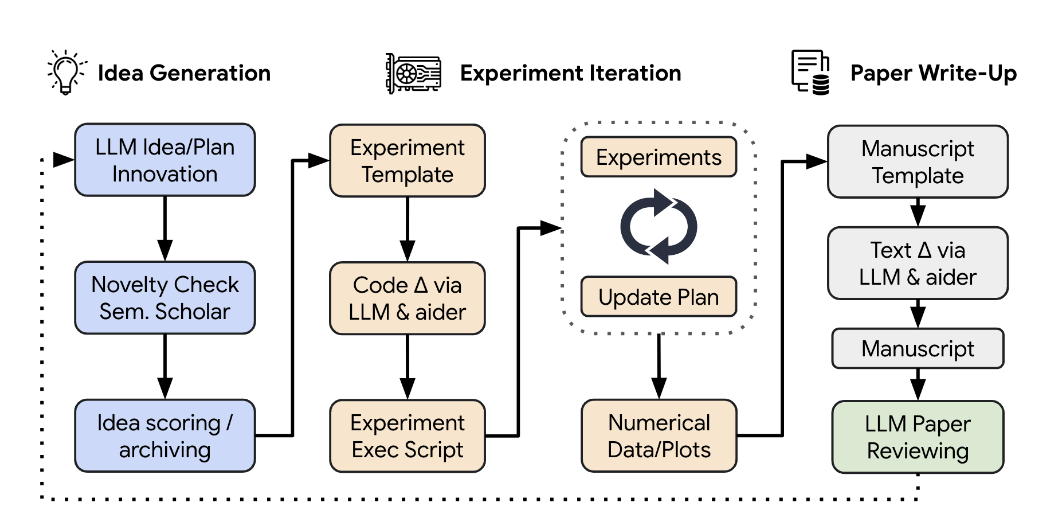
In a blog post, Sakana AI said The AI Scientist enables large language models (LLMs) to perform research independently. Sakana AI and researchers from the University of Oxford and University of British Columbia released a paper on The AI Scientist.

The paper outlines an AI-driven system for automated scientific discovery for machine learning that includes generating novel research ideas, writing code, executing experiments, summarizing results and presenting findings via text and visualizations.

Constellation ShortList™ Pre-Built Large Language Models For Generative AI

Sakana AI also said The AI Scientist has an automated peer review process to evaluate papers, write feedback and improve results. The process can be repeated to develop ideas.

According to Sakana AI, The AI Scientist is also designed to be compute efficient with a full paper delivered at about $15 per paper. There are flaws in the first version of papers, but the initial demonstration highlights how LLMs can be applied to scientific discovery.

Here's an overview of how The AI Scientist works.

The AI Scientist has a bevy of limitations in that it needs an existing code base as a starting point, needs computer vision and can be prone to errors. Nonetheless, the initial paper on The AI Scientist highlights an interesting use case.

Constellation Research analyst Holger Mueller said:

"Science is an interesting use case, as it lends itself very well to AI. There's plenty of public data out there, and the profession follows a rigid standardized methodology to come to scientific insights. Similarly, the process of validating and challenging insights is highly structured. Of course, anybody trying to automate scientists will face a lot of scrutiny, and we'll have to prove that it can deliver value of a daily scientist. Research. Human supervision will of course be a critical aspect, but from its overall characteristics, science lends itself very well to be automated by artificial intelligence."

Related:

Data to Decisions Innovation & Product-led Growth Future of Work Tech Optimization Next-Generation Customer Experience Digital Safety, Privacy & Cybersecurity AI GenerativeAI ML Machine Learning LLMs Agentic AI Analytics Automation Disruptive Technology Chief Information Officer Chief Executive Officer Chief Technology Officer Chief AI Officer Chief Data Officer Chief Analytics Officer Chief Information Security Officer Chief Product Officer

Google tries to meld Gemini, Android, Pixel 9 as it hits genAI as UI theme

Google tries to meld Gemini, Android, Pixel 9 as it hits genAI as UI theme

Google's Made by Google event featured Pixel 9 devices with a heavy dose of its Gemini models as well as its tech stack that extends from cloud to edge.

Yes, Google's event was technically about devices, better cameras and other features, the main event really revolved around genAI and natural language experiences.

I'm pondering the implications of Google's Pixel event in terms of that genAI as UI theme. Will this experience melding happen on devices first and then extend to enterprise software? It remains to be seen, but as Airbnb recently noted: The phone UI hasn't changed a whole lot even with genAI.

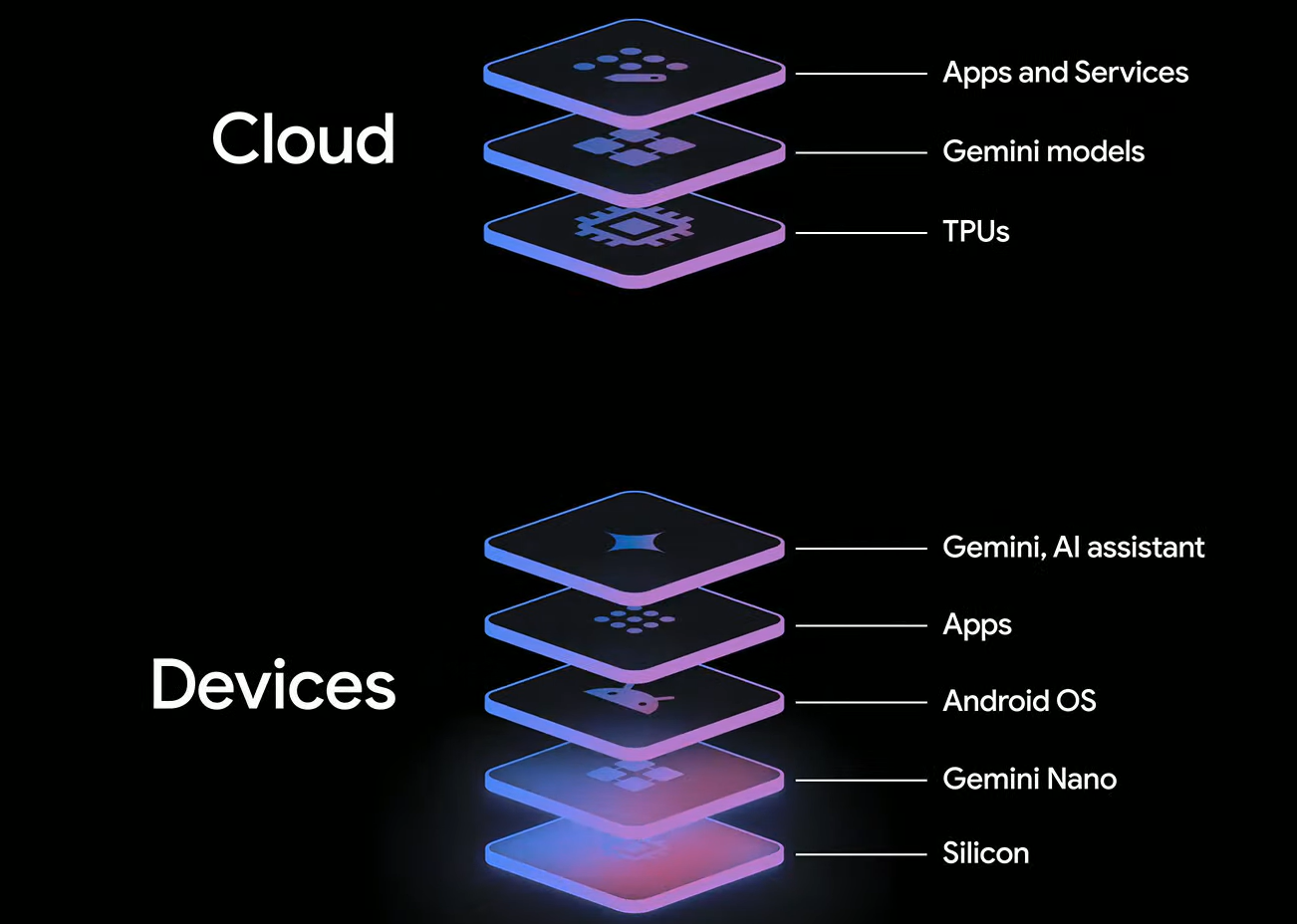
Rick Osterloh, Senior Vice President of Platforms and Devices, outlined the Google AI stack and vision. 

"We're fully in the Gemini era, with AI infused into almost everything we're doing at Google across our full tech stack. Our integrated AI strategy means we're in control of where we're heading. 

We're innovating with AI at every layer of the tech stack, from the infrastructure and the foundation models to the OS and devices and the apps and services you use every day. It's a complete end to end experience."

The other theme here with Google's Pixel event is the integration of Android and Gemini. The upshot here is that Google wants to charge you for advanced Gemini feature. The problem is users can wind up with AI sprawl. GenAI isn't a streaming service. Do you roll with Gemini or OpenAI?

Here are the moving parts from the Made by Google launch:

  • Gemini Live will roll out to Gemini Advanced subscribers. Gemini will give a natural language window into multiple applications including Keep, Tasks, Utilities and YouTube Music as well as Gmail and Calendar. Gemini will also pull in context as needed. The only catch here is that Gemini works with Google apps, but ultimately needs to extend into third party apps too.
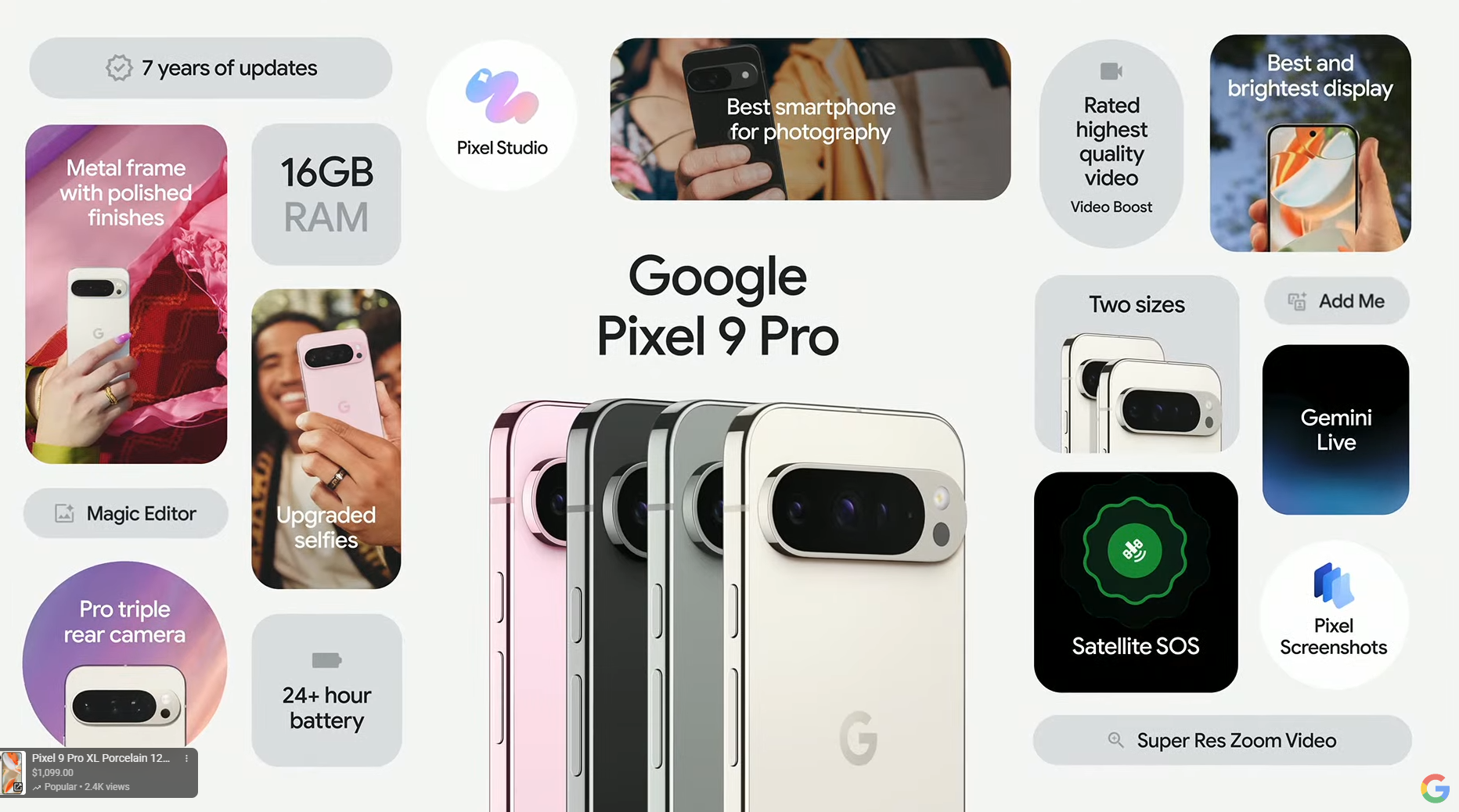
  • Pixel 9 devices will be powered by Google's Tensor G4 silicon that was designed with Google DeepMind. The Tensor G4 will run Gemini Nano with Multimodality so the phone can understand text, images and audio. Google also launched the Pixel 9 Pro Fold. Pixel 9 devices start at $799.
  • For now, Google is layering Gemini and genAI throughout its devices and features ranging from camera to Pixel Studio to Circle to Search.

Add it up and Google's Pixel event is notable as a comparison to Apple Intelligence. Neither has leveraged genAI to change the mobile UI paradigm, but consider the Pixel launch more like a first installment. The larger story over time will be Pixel as edge device and the leverage Google has with its tech stack. 

Data to Decisions Next-Generation Customer Experience Innovation & Product-led Growth Future of Work Tech Optimization Digital Safety, Privacy & Cybersecurity Google B2C CX AI GenerativeAI ML Machine Learning LLMs Agentic AI Analytics Automation Disruptive Technology Chief Information Officer Chief Executive Officer Chief Technology Officer Chief AI Officer Chief Data Officer Chief Analytics Officer Chief Information Security Officer Chief Product Officer

BT150 Zeitgeist: GenAI projects and culture, performance management

BT150 Zeitgeist: GenAI projects and culture, performance management

Generative AI projects largely depend on change management and culture to move from pilot to production, according to BT150 members. In addition, performance management is an area where AI could be a big help.

Those are some of the takeaways from Constellation Research's August BT150 meetup.

Generative AI, budgets and proof-of-concepts. With 2024 nearly 75% complete, the jury is still out on generative AI proof-of-concepts getting to production. Anecdotally, the lack of returns for many genAI projects is an issue since AI took funds from other critical enterprise projects.

One issue for genAI projects is that there are vanity proof-of-concept genAI projects. These projects were championed more for resume building than use cases. In addition, many companies have lacked the data strategy to execute well on AI.

BT150 members noted that in their experience culture for change and change management was a more important indicator of success than vendors, models and other technology.

BT150 recaps

A BT150 member said AI-driven management coaching software has been helpful to employees and has boosted performance at a double digits clip. This bot works though scenarios and difficult conversations. The upshot is that one return from AI products may be behavior change and thinking through scenarios differently. CxOs could start thinking in terms of AI apps beyond just doing tasks faster.

Performance management software is a tough sell even if it has returns. "Performance management is highly relevant at this time; however, time are tough, the economy sucks and no want wants to pay for anything," said one BT150 member. "Everyone realizes there's a huge problem with performance management, but not one use case was allowed to go forward. Our use cases are either things that save money, increase margin or are customer facing."

Perhaps the biggest issue is that enterprises can't measure the ROI for effectiveness well. Instead, enterprises fall into the trap of efficiency where cuts are more important than effectiveness.

Data to Decisions Innovation & Product-led Growth Future of Work Tech Optimization Next-Generation Customer Experience Digital Safety, Privacy & Cybersecurity ML Machine Learning LLMs Agentic AI Generative AI AI Analytics Automation business Marketing SaaS PaaS IaaS Digital Transformation Disruptive Technology Enterprise IT Enterprise Acceleration Enterprise Software Next Gen Apps IoT Blockchain CRM ERP finance Healthcare Customer Service Content Management Collaboration GenerativeAI Chief Information Officer Chief Technology Officer Chief Information Security Officer Chief Data Officer Chief Executive Officer Chief AI Officer Chief Analytics Officer Chief Product Officer

Winter is coming for enterprise software | Constellation Insights Roundup

Winter is coming for enterprise software | Constellation Insights Roundup

Disruption is coming for enterprise #software. Enterprise software could become disrupted as new #AI and #data-driven entrants smell opportunity by either serving as an overlay to the acronym-laden soup of systems or replacing them. The disgruntlement with enterprise software has been brewing throughout 2024. Forced migrations, multi-cloud cross-selling, copilot upcharges and lack of value are forcing the issue.

Watch the full recap by Larry Dignan, Editor in Chief of Constellation Insights to learn more about why winter is coming for #enterprise software. 🔔 Subscribe to the Constellation Insights newsletter and never miss an enterprise #technology update: https://zc.vg/pdcuq

On Insights <iframe width="560" height="315" src="https://www.youtube.com/embed/OJe1-cuU-ng?si=H80Npci8_qkX0mVG" title="YouTube video player" frameborder="0" allow="accelerometer; autoplay; clipboard-write; encrypted-media; gyroscope; picture-in-picture; web-share" referrerpolicy="strict-origin-when-cross-origin" allowfullscreen></iframe>