Results

How Google Cloud is monetizing AI

How Google Cloud is monetizing AI

Google Cloud CEO Thomas Kurian said the company is increasingly monetizing AI based on consumption models, volumes of data and selling agents to line of business executives over IT.

Speaking at Goldman Sachs Communacopia and Technology conference, Kurian touched on a big theme in software and cloud services: AI monetization. Many technology companies are pondering consumption models for AI agents, say $2 per customer service inquiry resolved. Other tech vendors are pondering value-based models.

As AI has been integrated throughout the Google Cloud portfolio, Kurian said the company has altered its model. Historically, cloud projects were controlled by IT, but AI adoption is driven by business initiatives.

"We monetize it in different ways, and we're focused on three important things: winning new customers, winning more projects within the customer, upselling new products," said Kurian, who added that the company is focused on industries and line of business. "Many of these solutions are not bought in the IT organization. They are bought by the Head of Customer Service, the Head of Commerce, the head of Finance, and so you have to learn to sell outside of the IT organization."

Here are some of the monetization comments from Kurian.

Security. Google Cloud is monetizing volumes of data used to detect and respond to threats. "We're seeing growth because we have helped people speed up how quickly they can use our tools to detect and respond to threats. We've seen a 4x increase in customer adoption, 3 times the volume of data ingested, an 8 times increase in threat hunting. We monetize this based on the volume of data we're processing and the number of threat hunts or queries that are happening on the system," said Kurian.

Democratizing analytics. Data agents have become popular as a way to "migrate data, stage it, aggregate it, visualize it, it even builds you charts and spreadsheets," said Kurian. As a result, BigQuery has 80% more machine learning operations in the last six months with 13x growth in multimodel data due to Gemini models. "Because we've opened up analysis from being the domain of people who know SQL, Python, etc. It also drives a lot more end user subscription growth because we can sell more seats in an organization," said Kurian. "We see growth in our analytical platform BigQuery."

Google Workspace. Kurian said Google Cloud is introducing new applications for customer experience and customer service. "Think of it as you can go on the web, on a mobile app, you can call a call center or be at a retail point of sale, and you can have a digital agent, help you assist you in searching for information, finding answers to questions using either chat or voice calls," said Kurian.

The bet with Google Workspace is that it will stand out because it can handle web, mobile point-of-sale and call center in one system with multimodal data. These call center use cases are monetized based on value, said Kurian. He said:

"We monetize based on the value we save for users, either the costs we're displacing or the reach expansion we're giving their agents. We've seen growth across all the dimensions, the adoption of agents, digital agents, the volume of traffic going to these agents, etc. Examples of customers using our customer experience platform. If you call Verizon, you're talking to our chat system and our call system, 60% containment rate, high rate of call deflection.

If you drive a General Motors vehicle and you hit OnStar, you're talking to our conversational AI system."

Partner led deals. Google Cloud's recent Accenture expansion is an example of how the company is leveraging integrators. "We're not a big consulting shop. We're not a services organization. So, we work with a broad partner ecosystem. Because we don't conflict with the partner ecosystem, we've invested in them. We've invested in technology, commercial incentives, training and certifications, as well as go-to-market incentives," said Kurian.

AI Agents. AI agents will be specialized with different models. "We have people building insurance agents, research analysis agents, customer service agents of their own," said Kurian. "We've also provided packaged agents, a data agent, a cybersecurity agent, a collaboration agent for helping you write things and increasingly, we are specializing in them by industry. So, for example, an insurance agent is different than a nursing agent. All three monetized in different ways."

Other items from Kurian on Google Cloud include:

  • Google Cloud now offers close to 1 gigawatt of water cooling in its data centers.
  • Google Cloud has seen 10x growth from a year ago in AI training workloads.
  • Ford Motor is using Google Cloud's deep learning services to build simulations for virtual wind tunnels to replace computational fluid dynamics.
  • 45% of the Fortune 500 projects with Google Cloud and Accenture have gone live.

Data to Decisions Digital Safety, Privacy & Cybersecurity Innovation & Product-led Growth Tech Optimization Future of Work Next-Generation Customer Experience Google Cloud Google SaaS PaaS IaaS Cloud Digital Transformation Disruptive Technology Enterprise IT Enterprise Acceleration Enterprise Software Next Gen Apps IoT Blockchain CRM ERP CCaaS UCaaS Collaboration Enterprise Service AI GenerativeAI ML Machine Learning LLMs Agentic AI Analytics Automation Chief Information Officer Chief Data Officer Chief Information Security Officer Chief Technology Officer Chief Executive Officer Chief AI Officer Chief Analytics Officer Chief Product Officer

Oracle CTO Ellison talks AWS partnership with Garman, the need for autonomous security

Oracle CTO Ellison talks AWS partnership with Garman, the need for autonomous security

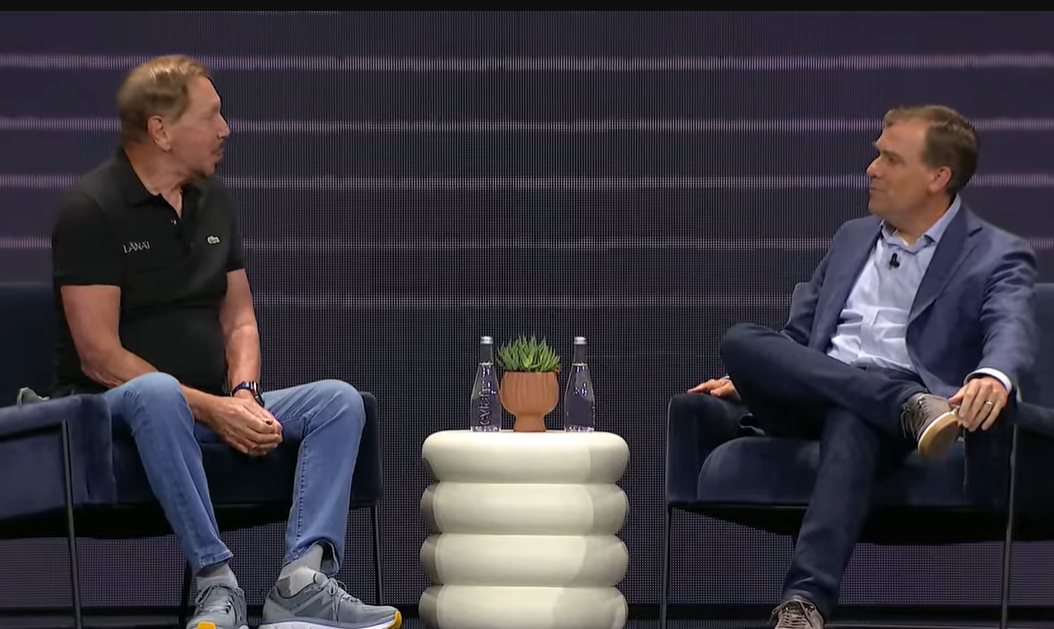
Oracle CTO Larry Ellison hit the stage with AWS CEO Matt Garman to talk about their multicloud partnership and optimizing. Ellison also talked about Oracle's autonomous security efforts to prevent ransomware, identity theft and other attacks.

Speaking during his Oracle CloudWorld keynote, Ellison followed up the AWS announcement with a few more details and a lot of strategy for Oracle. His main argument is that seamless multicloud technology is happening now.

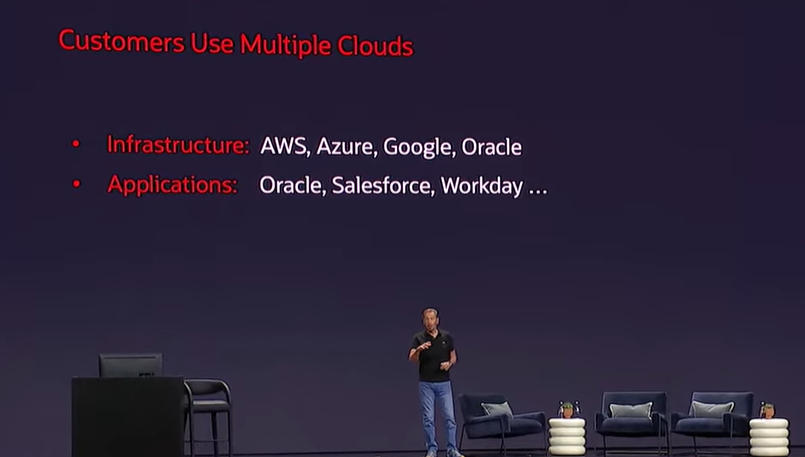
"We lost the idea that customers could buy technology from many different companies, and those technologies work gracefully together and we're entering a new phase where services on different clouds work gracefully together," said Ellison. "The clouds are becoming open. They're no longer walled gardens, but customers will have choices and can use multiple clouds together."

Garman said Oracle and AWS have multiple joint customers. He said:

"We'll take an example of somebody like a Best Buy, who runs many of their systems inside of AWS. Best Buy has recommendations for their customers and lots of interesting e commerce applications, and they run their core database workloads on Oracle. This is a great solution for them."

Garman said that the integration between AWS and Oracle will result in a native experience to the point where Oracle database backs up to AWS S3. The prices through Oracle Cloud and AWS are the same for databases.

Ellison added:

"We think this (Oracle and AWS) dramatically expands the market. It's what customers have asked for very long time. My friend Jamie Dimon has got huge commitments at JPMorgan Chase. Every time he saw he asked when we are going to have AWS. Now I finally have an answer."

State Street CTO Andy Zitney said the deal will be a big gain for the company, a big Oracle Exadata and AWS customer. "we were starting down the journey of starting to integrate the clouds, and this comes right at the perfect time to expedite that and make it easier for us," said Zitney. "It will help us accelerate our digital transformation."

AWS and Oracle's first region will be in Virginia, but Zitney noted that State Street needs global coverage and can prioritize locations. Zitney said State Street's current footprint with AWS is 43, but the plan is to scale that down. "We're thinking the number will be 30 to 40 in the end," said Zitney. "With this I won't need on-prem as much as I used to."

Ellison added that Oracle's multicloud strategy doesn't end with AWS, Microsoft Azure and Google Cloud. He noted that Oracle embeds its database services in Fujitsu as well as NTT.

"The interesting thing about this multicloud world is whichever is your primary cloud you can reach out to other clouds, infrastructure, and mix and match the applications and the services you want," said Ellison.

Cyber defense robots

Ellison's other big topic was cybersecurity.

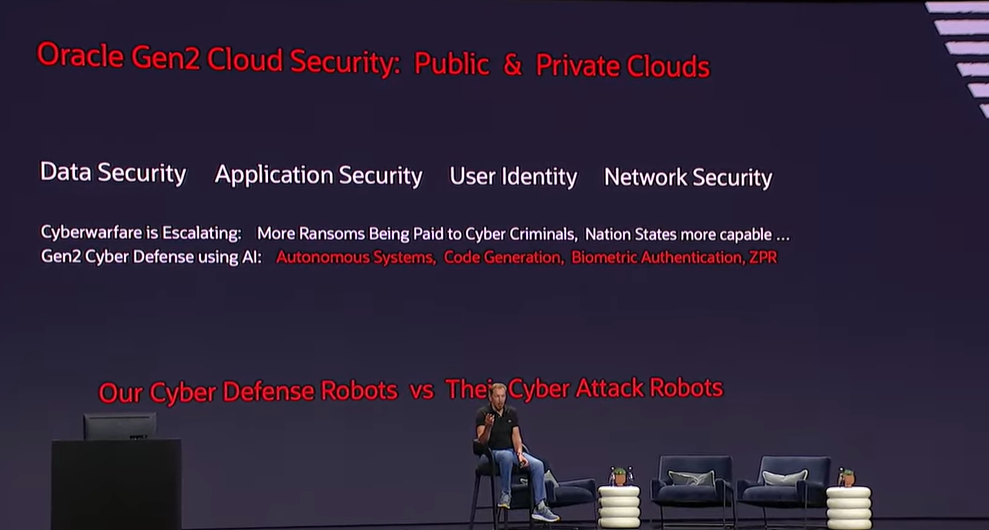
"Oracle is using AI to build cyber defense robots and autonomous systems to defend against identity theft," said Ellison. "We are using AI to prevent that from happening. We can use AI to dramatically improve cloud security. The cyberwars are getting worse not better."

Ellison said the CIA was among Oracle's first customers and data security is critical. "We look at four pillars of security at Oracle. One is data security. Make sure under no circumstance can people steal, look at your data, steal your data, or lock you out and away from your own data. We have to have absolute data security," he said.

Ellison also added that Oracle's other pillars for security are application and network security.

The pitch from Ellison is that cybersecurity systems need to be autonomous. "what we need to do is a set of cyber robots, defense robots to stop these attacks," he said. "We can do a better job of protecting our data if the database system that is managing that data is fully autonomous. And this is something that Oracle has been working on for a very long time."

Like most cybersecurity experts, Ellison said human error is largely to blame for many attacks. Autonomous systems are simply safer.

As a result, Oracle is moving all of its applications to Autonomous Database by 2025. "No human labor, no human error. It's really interesting that it is the most economical way to do things and the safest way to do things," said Ellison. "We're moving not to save money, but to secure data better."

Other security takeaways from Ellison:

  • Biometric security needed. Oracle won't have any passwords in the future because biometrics will replace them. Ellison added that biometric databases have multiple use cases especially credit cards. Passport control, secure school entry and prescription pickups are also good use cases for biometric security.
  • Autonomous code generation will also be more secure. "When the application generator generates the code, we don't generate security vulnerabilities. We don't we don't generate security vulnerabilities. A computer program is writing the code, it will not make that mistake," he said. 
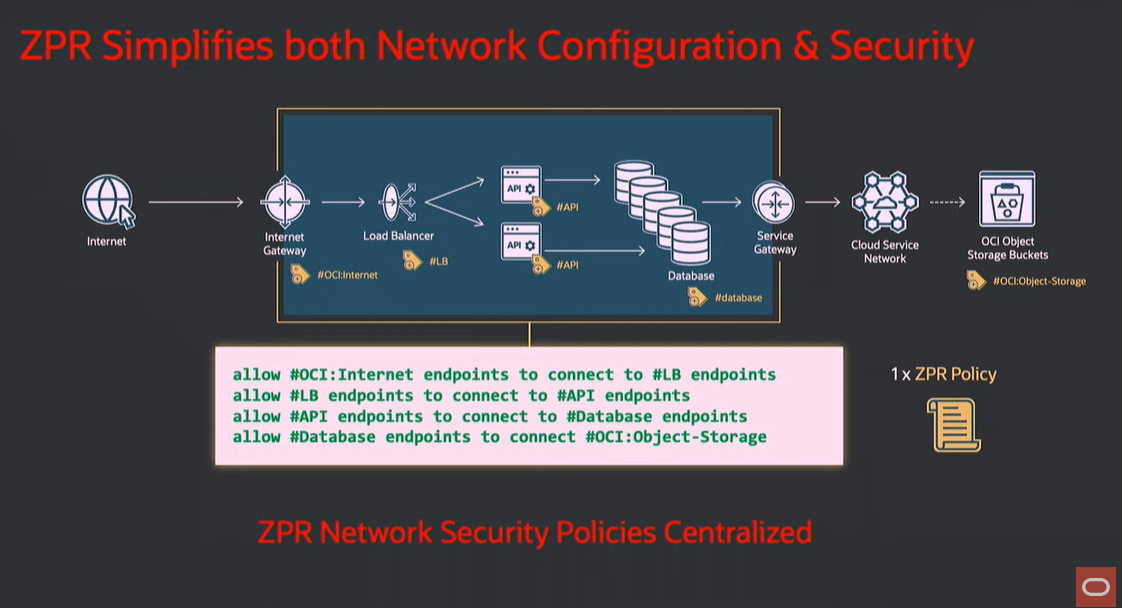
  • Zero Trust Packet Routing (ZPR) is another pillar. "The solution to the problem is you really have to separate network security from network configuration," said Ellison, who noted that ZPR is being rolled out in Oracle Cloud. 

"Let's build an all new system that's responsible for network security and that all new, that all new system will authorize certain paths through the network for certain users to use certain services, look at certain data, and only authorized pads are allowed. No other paths will be allowed. It's a brand new network security system that is separate from network configuration, rather than blended with network configuration." 

Robots are designed to inspect every packet every second, he added. 


Data to Decisions Tech Optimization Digital Safety, Privacy & Cybersecurity Innovation & Product-led Growth Future of Work Next-Generation Customer Experience amazon Oracle AI GenerativeAI ML Machine Learning LLMs Agentic AI Analytics Automation Disruptive Technology cybersecurity SaaS PaaS IaaS Cloud Digital Transformation Enterprise IT Enterprise Acceleration Enterprise Software Next Gen Apps IoT Blockchain CRM ERP CCaaS UCaaS Collaboration Enterprise Service Chief Information Officer Chief Information Security Officer Chief Privacy Officer Chief AI Officer Chief Experience Officer Chief Technology Officer Chief Data Officer Chief Executive Officer Chief Analytics Officer Chief Product Officer

Microsoft claims hybrid quantum breakthrough with Quantinuum, partners with Atom Computing

Microsoft claims hybrid quantum breakthrough with Quantinuum, partners with Atom Computing

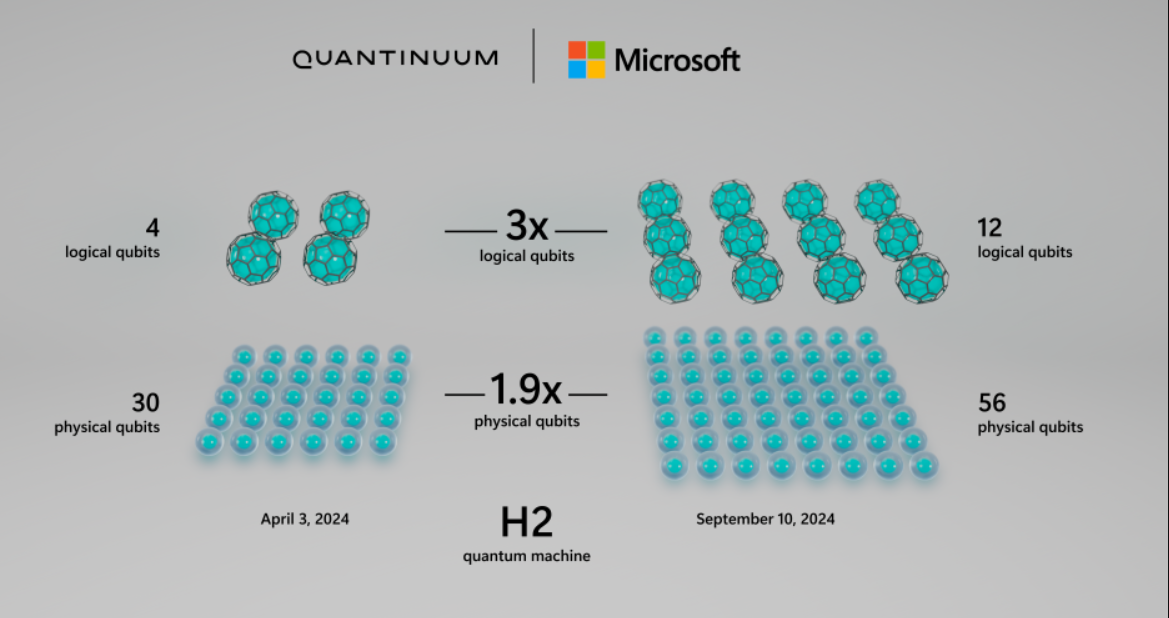
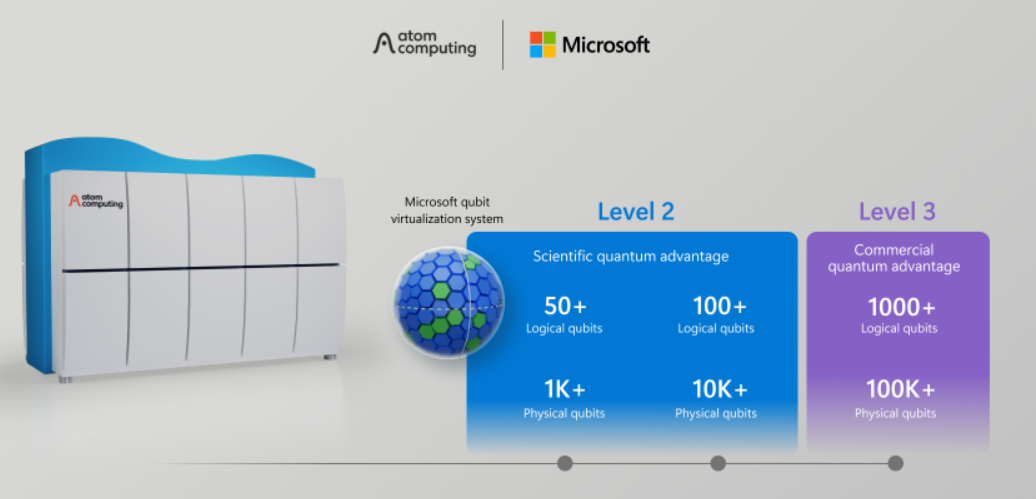
Microsoft and Quantinuum said they have created 12 highly reliable logical qubits by combining Azure Quantum's qubit virtualization system to Quantinuum's H2 trapped-ion quantum computer. Microsoft also said it would work with Atom Computing to add a new quantum system to Azure Quantum.

The companies said they also demonstrated reliable quantum computing by integrating it with AI models and high-performance computing (HPC). That development highlights how quantum systems, HPC and classical compute will ultimately be used together. Previously: Quantinuum, Microsoft claim quantum reliability breakthrough

Microsoft and Quantinuum also said they produced the 12 logical qubits with good fidelity and lower error rates. Here's what Microsoft said in a blog post about error corrections.

"Microsoft and Quantinuum demonstrated several fault-tolerant computations with the improved logical qubits. On eight logical qubits, the teams successfully conducted five rounds of repeated error correction. Furthermore, the eight logical qubits were used to perform a fault-tolerant computation during error correction, successfully demonstrating the combination of logical entangling operations with multiple rounds of quantum error correction. The eight logical qubits exhibited a circuit error rate of 0.002, which is 11 times better than the corresponding physical qubits’ circuit error rate of 0.023. To our knowledge, this is the first demonstration of computation and error correction being beneficially combined, and it showcases the ability of these logical qubits to perform increasingly deeper quantum computations reliably, paving the way to fault-tolerant quantum computing."

On the hybrid quantum computing front, Microsoft and Quantinuum said they used HPC, AI and quantum hardware to chemistry problems. To that end, Microsoft Azure will include Quantinuum's InQuanto computational chemistry offering and integrate it into Azure Quantum Elements.

Constellation ShortLists™

Microsoft's partnership with Atom Computing, which has yielded logical qubits and systems that are being optimized. Microsoft said it will apply its qubit-virtualization system to Atom Computing's second-generation systems within Azure Elements.  

More quantum computing:

Data to Decisions Tech Optimization Innovation & Product-led Growth Microsoft Quantum Computing Chief Information Officer

Generative AI driving interest in nuclear power for data centers

Generative AI driving interest in nuclear power for data centers

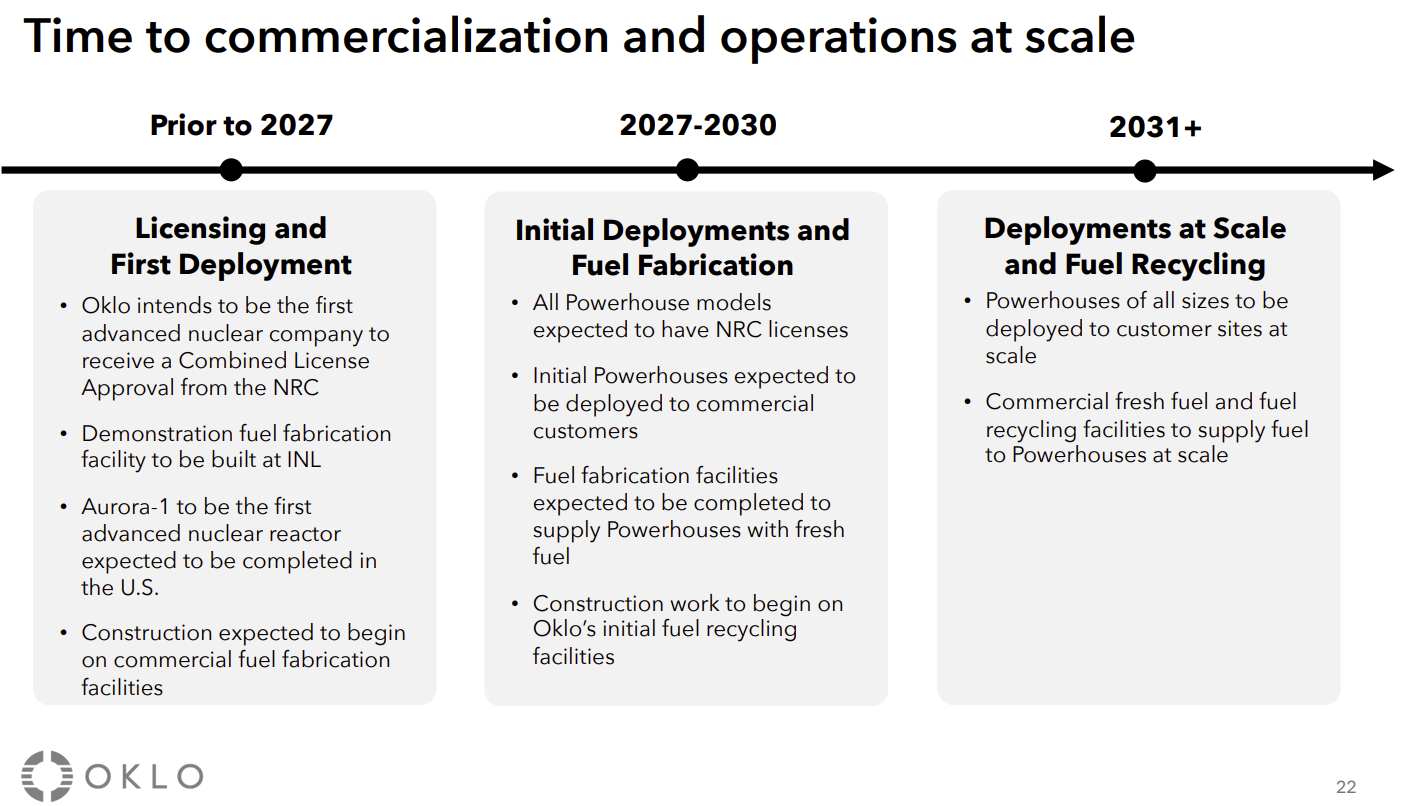
Nuclear-powered data centers are on the horizon (and here in some cases), but deployments will take time and likely extend into 2026 or 2027. What's driving the nuclear data center concept? Generative AI workloads and an electricity grid that's currently under strain.

Oracle CTO Larry Ellison dropped this nugget on the company's first quarter earnings call:

"Let me say something that's going to sound really bizarre. Well, I probably -- you'd probably say, well, he says bizarre things all the time. So why is he announcing this one? It must be really bizarre. So, we're in the middle of designing a data center that's north of the gigawatt that has -- but we found the location and the power place. We look at it, they've already got building permits for three nuclear reactors. These are the small modular nuclear reactors to power the data center. This is how crazy it's getting. This is what's going on."

It's not that crazy considering how much attention nuclear power is starting to get its due because of the need for sustainable energy and the reality that so-called AI factories are going to need a lot more power. Is it any wonder that OpenAI founder Sam Altman also happens to be Chairman of Oklo, which specializes in fast fission reactors that can run on fresh fuel and recycled waste?

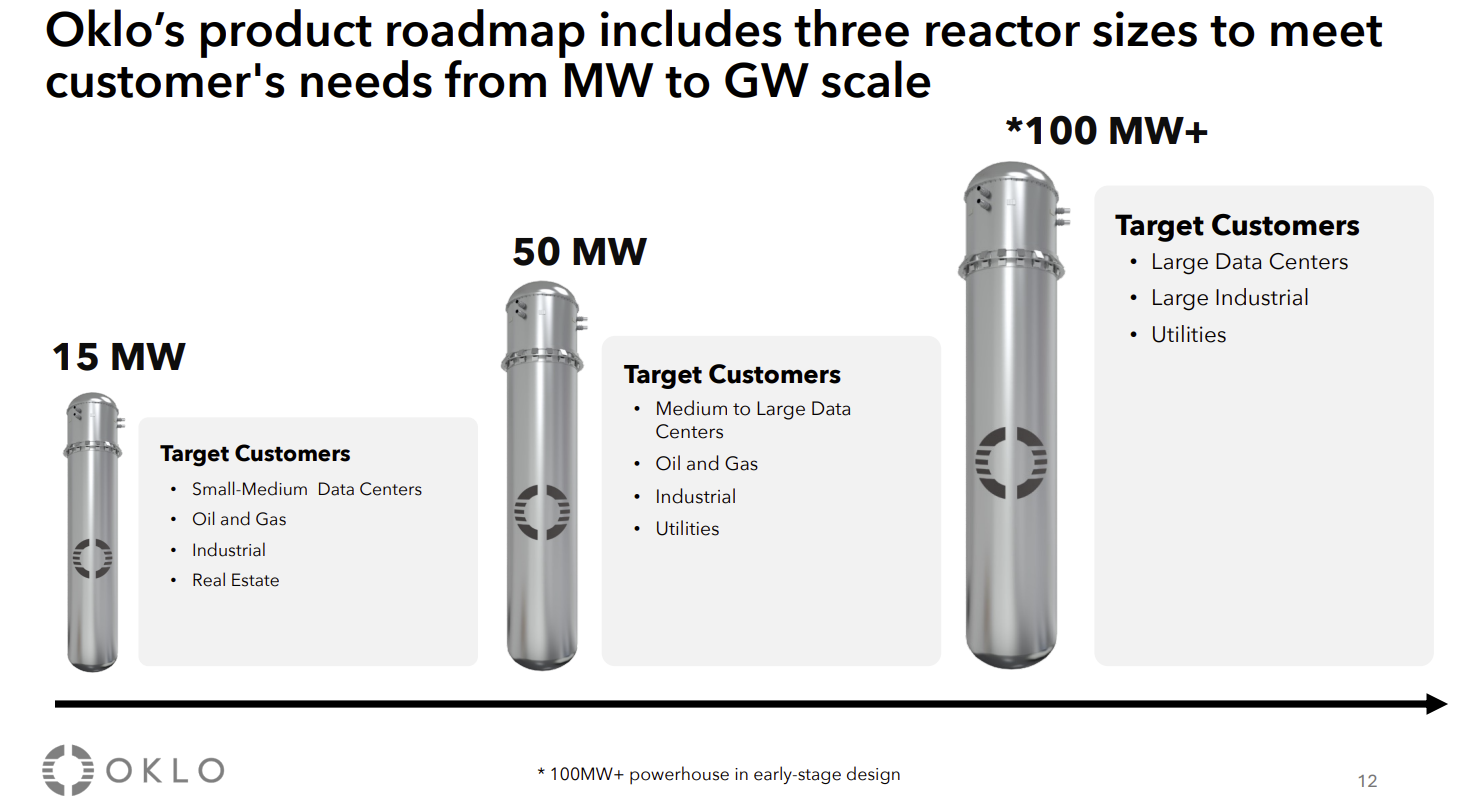
Oklo is publicly traded, but is pre-revenue. The general idea is that Oklo would build these mini-nuclear power plants attached to data centers handling AI workloads. On a recent second quarter earnings call, CEO Jacob DeWitte said:

"When we talk about providing power directly to energy users, these sizes offer a good entry point to a number of different markets, and these projects can be quite large when they aggregate together. The reality too is that data centers are making up a vast majority of the market opportunity we see in front of us. While the numbers are very large around those opportunities, especially around the larger scale AI purpose data centers, these projects are not being deployed all at once at a one gigawatt or multi-gigawatt scale. Instead, they're ramping into it. It's phased growth through a development process."

Oklo recently announced deals with Equinix, Wyoming Hyperscale and Diamondback Energy.

These two slides highlight Oklo's reactors and commercialization plan. Oklo's shareholder letter and deck are worth a read to get up to speed.

Barron's, however, on its cover this week also highlighted Oklo and more established plays on nuclear including Constellation Energy, Duke Energy and Vistra. Bill Gates' TerraPower has also built out nuclear facilities. Amazon founder Jeff Bezos backs General Fusion, a nuclear company in British Columbia. TAE Technologies, a nuclear fusion startup raised $250 million in a venture capital round that included Google in 2022.

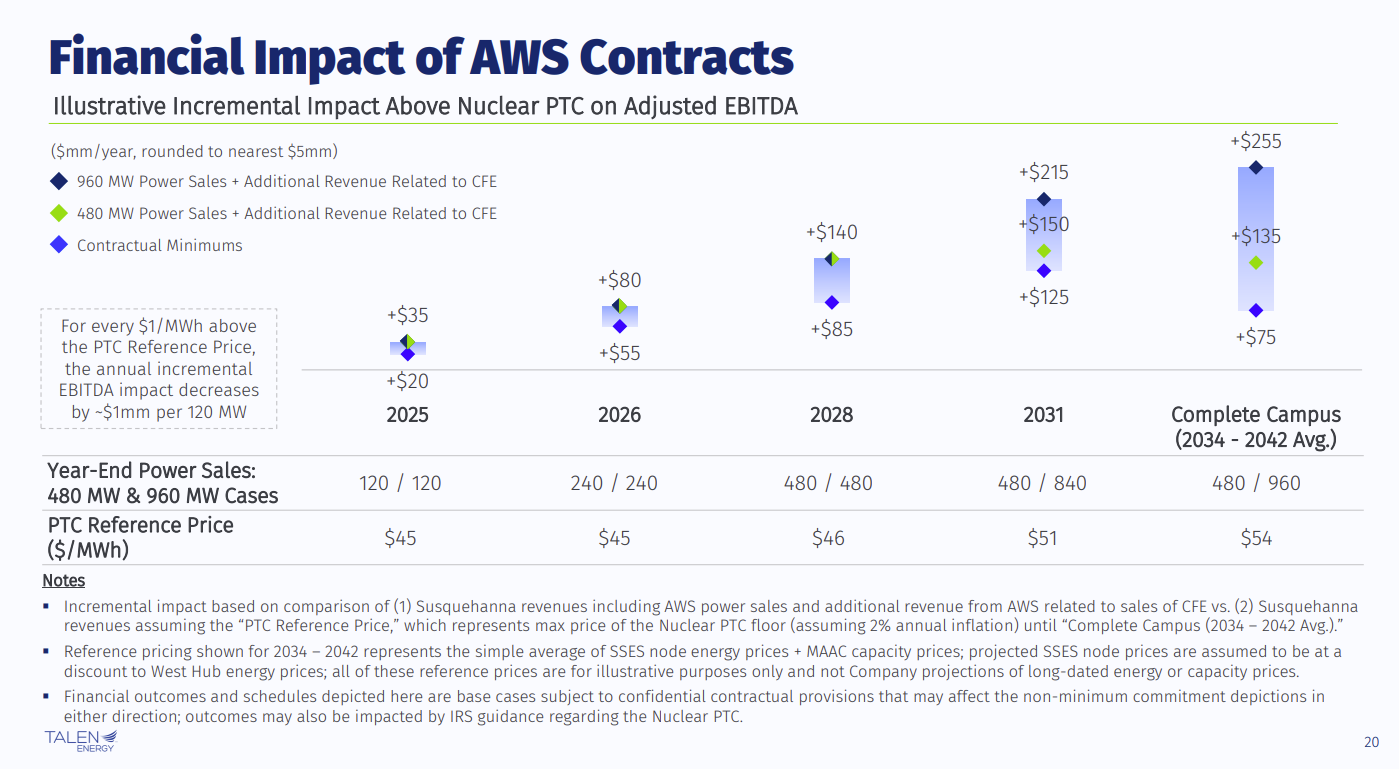
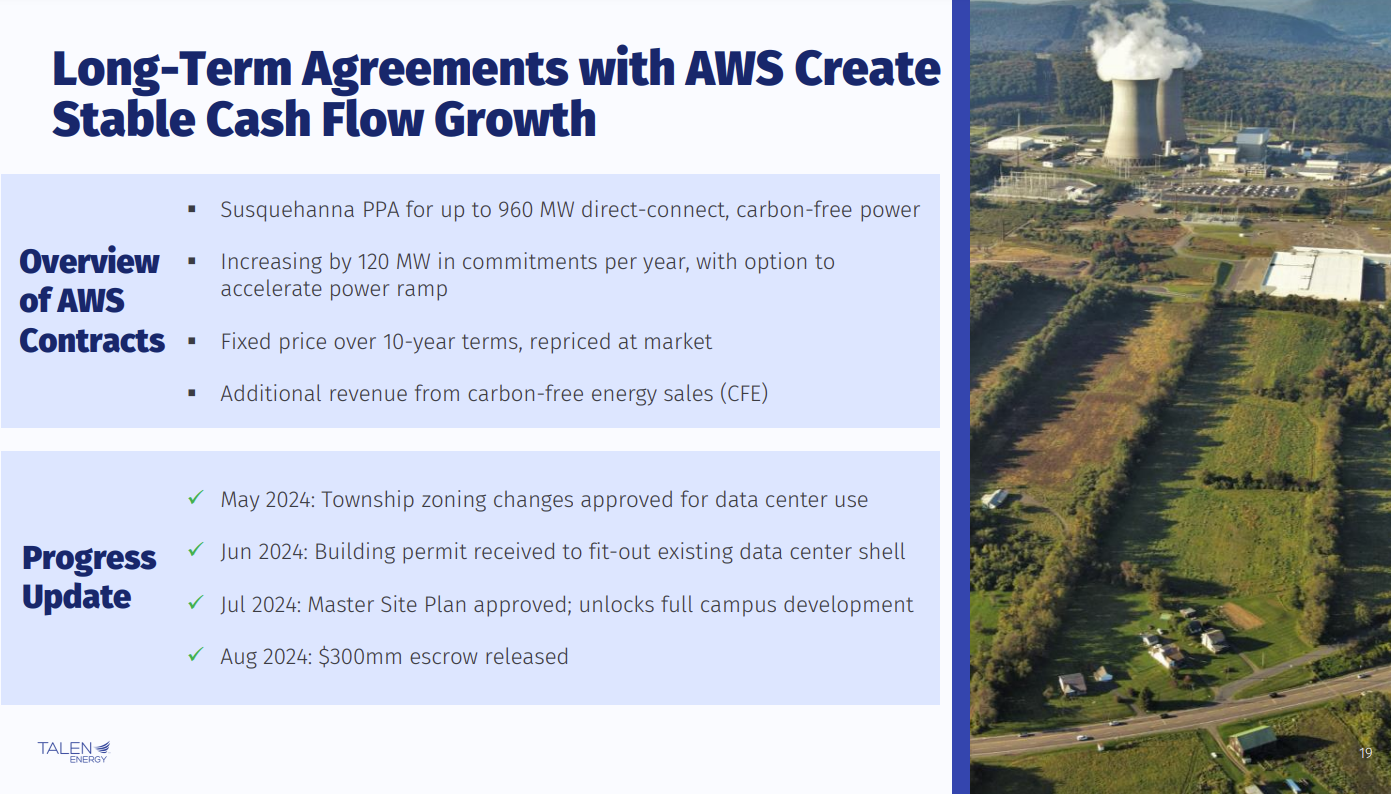
And in January, Amazon Web Services acquired a data center attached to Talen Energy's nuclear plant. Talen Energy will sell power to AWS.

Talen Energy CEO Mac McFarland said:

"At Talen, we have come up with one creative cost-effective solution by co-locating a 1-gigawatt AWS data center campus next to our Susquehanna nuclear plant. Everyone seems interested in our efforts, our colleagues in the IPP space, regulated utilities and RTOs. And the issue now sits at FERC’s doorstep. In the investment community, our deal created excitement about increased demand and incremental value creation across the entire power sector, attracting new investors."

Bottom line: AI is going to tax data center infrastructure and the grid. It increasingly looks like a nuclear power renaissance may occur due to AI workloads.

Data to Decisions Tech Optimization Innovation & Product-led Growth Future of Work Next-Generation Customer Experience Digital Safety, Privacy & Cybersecurity Big Data AI GenerativeAI ML Machine Learning LLMs Agentic AI Analytics Automation Disruptive Technology Chief Information Officer Chief Technology Officer Chief Information Security Officer Chief Data Officer Chief Executive Officer Chief AI Officer Chief Analytics Officer Chief Product Officer

Oracle CloudWorld 2024: Oracle HeatWave Lakehouse, GenAI agents, Zettascale supercluster, Intelligent Data Lake

Oracle CloudWorld 2024: Oracle HeatWave Lakehouse, GenAI agents, Zettascale supercluster, Intelligent Data Lake

Oracle is going after the lakehouse market with HeatWave to go along with a bevy of generative AI features including HeatWave GenAI and HeatWave on AWS. Oracle also launched its Intelligent Data Lake and genAI apps across its platform. Oracle also announced a zettascale cloud computing cluster with Nvidia's Blackwell platform.

At Oracle CloudWorld in Las Vegas, Oracle introduced HeatWave Lakehouse, HeatWave GenAI, HeatWave on AWS and HeatWave MySQL enhancements. MySQL became part of Oracle via the Sun Microsystems acquisition in 2009. In 2020, Oracle launched HeatWave a cloud-native in-memory query accelerator designed to speed online analytical processing (OLAP) to deliver real-time analytics and other complex queries within the MySQL database as a managed service in Oracle Cloud Infrastructure (OCI).

The HeatWave news landed a day after Oracle announced a deal with Amazon Web Services (AWS) for Oracle Database@AWS. With the move, Oracle has database partnerships with all of the hyperscale cloud providers. 

Here's a look at the HeatWave announcements:

HeatWave on AWS. Oracle said it is launching HeatWave GenAI and HeatWave Lakehouse on AWS as well as OCI. The core pitch is that Oracle HeatWave can deliver better performance. Oracle said users can automate vector store creation and vector embedding, use large language models in-database running on CPUs as well as Amazon Bedrock and have natural language conversations with documents in Amazon S3.

According to Oracle, HeatWave vector processing offers better price performance than Snowflake, Databricks and Google BigQuery.

Research: Oracle MySQL HeatWave Grows, Adds Lakehouse Support

HeatWave Lakehouse will give AWS insights on structured, semi-structured and unstructured data on Amazon S3 and offer native JavaScript support and give AWS users the ability to predict the right set of indexes for their OLTP workloads.The AWS moves round out Oracle's multicloud strategy.

HeatWave GenAI will give customers multi-lingual support to load documents in 27 languages into HeatWave Vector Store. Oracle is also adding optical character recognition (OCR) support to HeatWave Vector Store, LLM inference batch processing and automatic vector store updates.

HeatWave Lakehouse will give customers the ability to query data in object storage at the same speed as database queries. Users can write results to object storage and use HeatWave for MapReduce applications. Oracle said it is also adding automatic change propagation to HeatWave Lakehouse.

HeatWave MySQL will get the ability to optimize query plans and improve performance, integration with OCI Ops Insights and bulk ingest.

HeatWave AutoML will be able to build, train and explain machine learning models in HeatWave without additional costs. Oracle said HeatWave AutoML is getting the ability to store and process larger models, model topics, manage data drift and add semi-supervised log anomaly detection.

All OCI accounts get access to a standalone HeatWave instance in OCI home regions with 50 GB of storage and 50 GB of backup storage for an unlimited time.

Constellation Research's take on HeatWave additions

Constellation Research analyst Holger Mueller said it was critical that Oracle added genAI and lakehouse functionality to HeatWave.

"Oracle has to make it easy enough for Oracle DB customers to stay with their Oracle databases. If Oracle succeeds it will keep customers using its databases. If Oracle made it hard, customers would look for database and lakehouse alternatives – which would not be a good outcome for Oracle. Lakehouse is critical--Oracle has been absent from it so it's very much needed. The multicloud deployments of HeatWave are as well."

"For HeatWave GenAI, the update is significant. Oracle had to add vector support, and this release is all about to make it easier for developers to use vector capabilities inside HeatWave. Oracle added JavaScript support which is a big step. Basically, Oracle needs to make sure that the data content in HeatWave is available and it is easy for developers to use the vector support. If the latter succeeds the future of HeatWave in the AI era is set."

Constellation Research analyst Doug Henschen said:

"Oracle's latest announcements on MySQL Heatwave step up the competition in the data warehouse/data lakehouse market, particularly with AWS. While AWS continues to focus Aurora on transactional needs, Redshift on  analytical needs and SageMaker on data science, the combination of HeatWave on AWS, HeatWave Lakehouse, HeatWave AutoML, and HeatWave GenAI brings together a compelling set of capabilities on a single platform."

Oracle Supercluster on Nvidia Blackwell

Oracle announced a zettascale cloud computing cluster with Nvidia's Blackwell platform. OCI said it is taking orders for the AI supercomputer, which has up to 131,072 Nvidia Blackwell GPUs available.

According to Oracle, the AI supercluster has 2.4 zettaFLOPS of peak performance and can outperform the Frontier supercomputer. Oracle said:

"OCI Superclusters are orderable with OCI Compute powered by either NVIDIA H100 or H200 Tensor Core GPUs or NVIDIA Blackwell GPUs. OCI Superclusters with H100 GPUs can scale up to 16,384 GPUs with up to 65 ExaFLOPS of performance and 13Pb/s of aggregated network throughput. OCI Superclusters with H200 GPUs will scale to 65,536 GPUs with up to 260 ExaFLOPS of performance and 52Pb/s of aggregated network throughput and will be available later this year. OCI Superclusters with NVIDIA GB200 NVL72 liquid-cooled bare-metal instances will use NVLink and NVLink Switch to enable up to 72 Blackwell GPUs to communicate with each other at an aggregate bandwidth of 129.6 TB/s in a single NVLink domain."

Nvidia Blackwell GPUs on the supercluster are available in the first half of 2025. 

Oracle Intelligent Data Lake, GenAI analytics on Oracle Data Intelligence Platform

Oracle launched Oracle Intelligent Data Lake to go with its Oracle Data Intelligence Platform.

As Mueller noted, Oracle's plan is to surround its databases with all of the key components that would attract existing customers to other platforms.

Oracle said that Intelligent Data Lake will be a core component to the Data Intelligence Platform. Oracle is looking to provide a unified experience by combining orchestration, data warehouses, analytics and AI within the Data Intelligence Platform, which runs on OCI.

The Data Intelligence Platform will include integration with Oracle Autonomous Data Warehouse, Oracle Analytics Cloud, HeatWave, AI services and third-party services.

According to Oracle, the Intelligent Data Lake will enter "limited availability in 2025."

In addition, Oracle is embracing open standards with its Intelligent Data Lake, which will support data catalogs, Apache Spark, Apache Flink, Jupyter Notebooks and open-source standards such as Kafka, Delta Lake, Iceberg and Parquet.

Oracle also said its Oracle Analytics Cloud AI Assistant is available and Autonomous Database will support retrieval augmented generation (RAG) and new no code tools as part of Data Studio.

Oracle Fusion Data Intelligence, HCM, SCM apps

Oracle Fusion Data Intelligence has intelligent applications for Oracle Fusion Cloud Human Capital Management (HCM) and Oracle Fusion Cloud Supply Chain & Manufacturing (SCM) designed to recommend actions. Fusion Data Intelligence combines data, analytics, prebuild AI and machine learning models to create actionable insights to enterprises.

The company added the following:

  • Oracle Cloud HCM gets a People Leader Workbench app that aims to align business and financial goals for HR and finance execs.
  • Oracle Cloud SCM gets Supply Chain Command Center to help enterprises respond to changing conditions across the supply chain network.
  • Fusion Data Intelligence gets operational reporting as well as an AI-powered developer assistant.
  • ERP, HCM, SCM and CX analytics get new AI and machine learning feature.

GenAI Agents with RAG

Oracle announced the general availability of OCI GenAI Agents with RAG capabilities. OCI GenAI Agents access Oracle Database 23ai Vector Search and add an automation layer. 

The company said the use cases for OCI GenAI Agents include call center optimization, legal research, revenue operations and HR recruiting functions. 

In addition, OCI GenAI will be able to access Meta Llama 3.1 models as well as Cohere's Command R, Command R+ and Embed models. OCI Data Science will be able to tap into OCI Ampere A1 as well as models from Hugging Face. 

Oracle also added document understanding, support for more than 100 languages, vision and speech capabilities as well as Code Assist, which is in beta. 

Generative development

Oracle launched generative development (GenDev) that combines Oracle 23ai and multiple Oracle services and support for LLMs.

The company also launched Autonomous Database Nvidia GPU support with GPU-enabled Python packages, Data Studio AI enhancements, Autonomous Database for Developers and a version with container images. 

Oracle also announced Autonomous Database Select AI, which supports synthetic data in test instances. 

Cloud optimization

Oracle launched Cloud Success Navigator, a platform that optimizes cloud and AI deployments. Cloud Success Navigator, which is available at no cost for 12 months, includes:

  • Preconfigured environments for specific enterprise processes. 
  • Best practices from Oracle's library of business processes, process flows, learning content and guides. 
  • Deployment guidance by roles. 
  • Recommended actions for cloud quality. 
  • Dashboards for implementation status and milestones. 

Oracle Fusion Cloud Applications

Oracle outlined a series of AI tools across finance, supply chain, HR, sales, marketing and service functions in the Oracle Fusion Cloud Applications Suite. Here's the breakdown:

  • Oracle Cloud ERP gets predictive cash forecasting tools via AI models that operate across multiple time frames s well as narrative reporting toos, variance explanations and commentary. Transaction records will be automated. 
  • Oracle Cloud HCM as a set of bespoke AI skills that combines skills data with enterprise and third-party data. 
  • Oracle Cloud SCM adds a new smart operations workbench and assisted authoring in Oracle Order Management. 
  • Oracle Cloud CX has generative AI tools to answer contract questions, write emails and summarize for quotes and proposals.  

Oracle Unity Customer Data Platform (CDP), part of Oracle Fusion Cloud CX, will get an account profile explorer to spot revenue opportunities, buying group and opportunity scoring, native Oracle Analytics Cloud integration and industry optimized templates, data models and attributes. 

Data to Decisions Innovation & Product-led Growth Future of Work Tech Optimization Next-Generation Customer Experience Digital Safety, Privacy & Cybersecurity Oracle ML Machine Learning LLMs Agentic AI Generative AI AI Analytics Automation business Marketing SaaS PaaS IaaS Digital Transformation Disruptive Technology Enterprise IT Enterprise Acceleration Enterprise Software Next Gen Apps IoT Blockchain CRM ERP finance Healthcare Customer Service Content Management Collaboration GenerativeAI Chief Information Officer Chief Data Officer Chief Technology Officer Chief Information Security Officer Chief Executive Officer Chief AI Officer Chief Analytics Officer Chief Product Officer

ServiceNow's Xanadu release adds AI Agents, RaptorDB Pro, genAI enhancements

ServiceNow's Xanadu release adds AI Agents, RaptorDB Pro, genAI enhancements

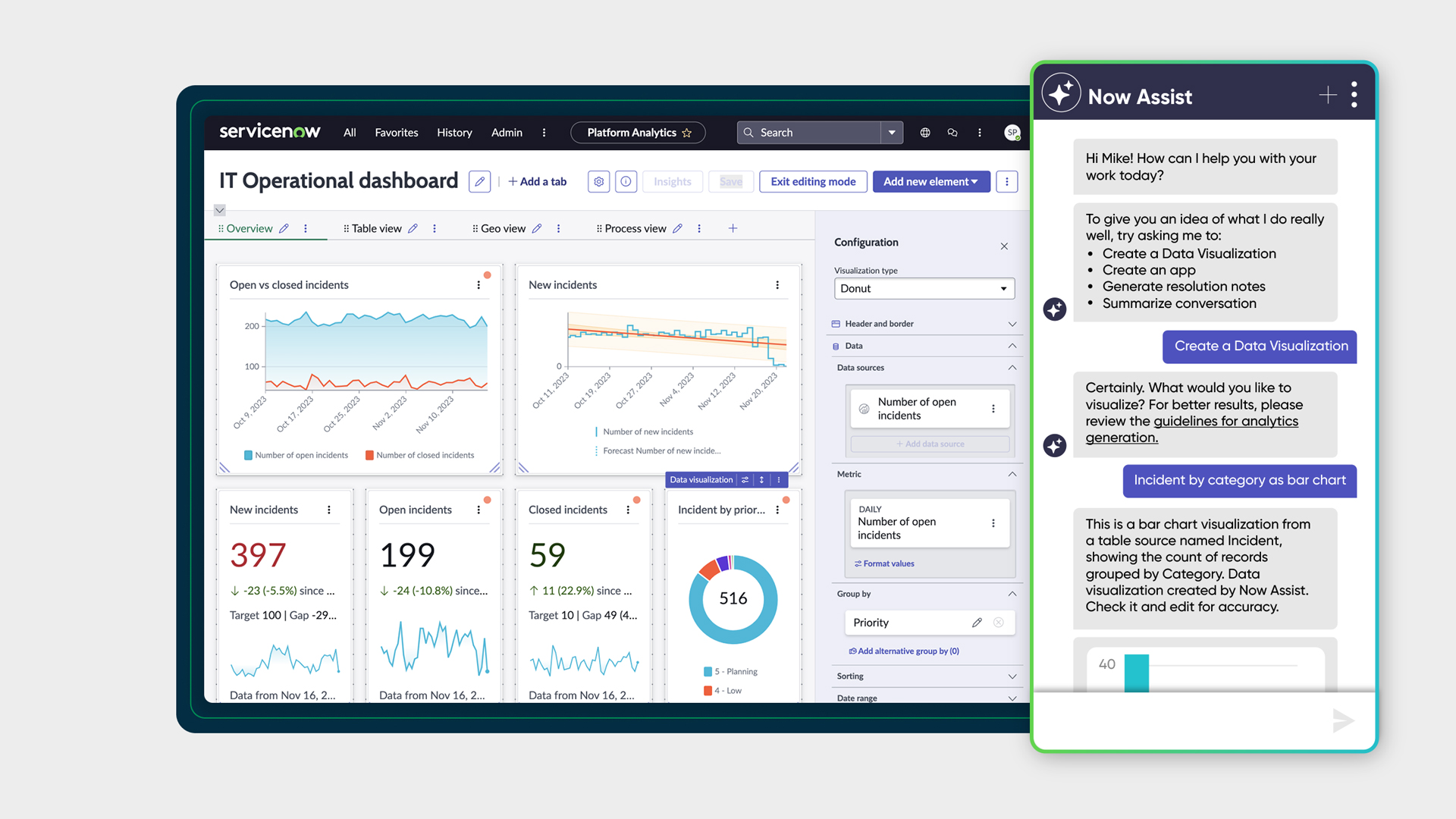
ServiceNow launched the Xanadu version of its Now Platform, which includes AI Agents that can autonomously perform tasks without human intervention, RaptorDB Pro, a new back-end database that improves performance, industry-specific features, and a new integrated development environment (IDE).

Those high-level additions are part of hundreds of new features launched in the Xanadu release. Here's a look at the Xanadu release.

AI Agents and generative AI

Agents are the hot commodity in generative AI and ServiceNow previewed its direction with autonomous AI approaches at its Knowledge conference earlier this year.

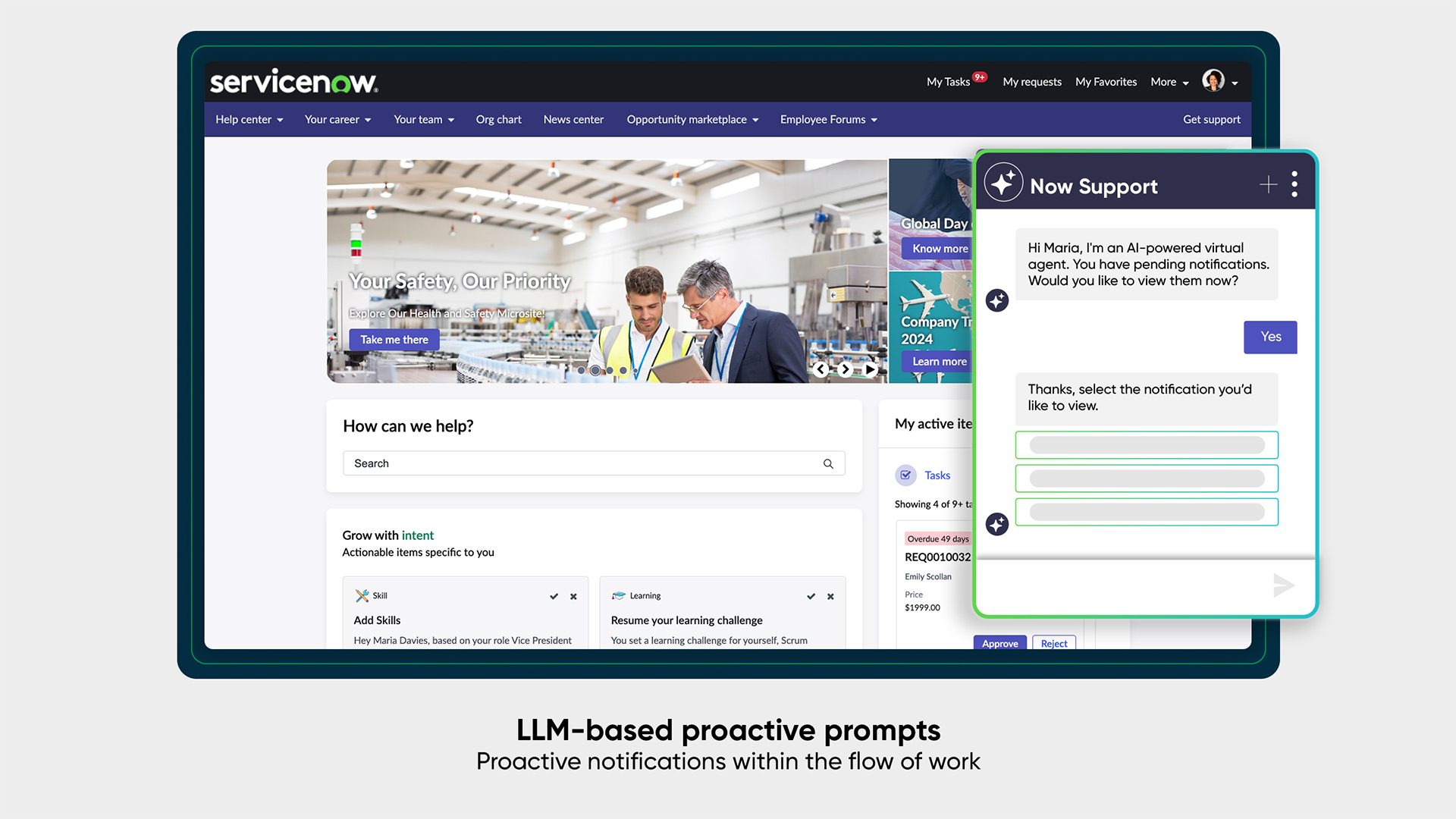
AI Agents in ServiceNow's platform are designed to automate tasks and make decisions based on all enterprise data across multiple roles and industries. 

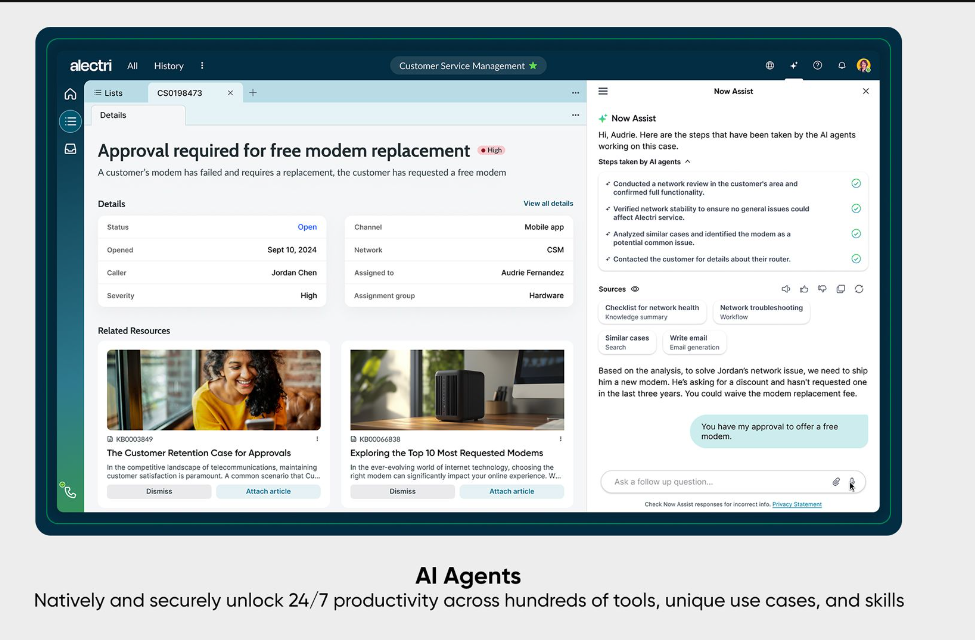
ServiceNow said it will integrate agentic AI throughout its platform with use cases including IT, customer service, procurement, HR and other enterprise functions. In November, ServiceNow will launch AI agents in its Customer Service Management (CSM) and IT Service Management offerings. 

Jon Sigler, senior vice president of platform and AI at ServiceNow, said the company's strategy revolves around enabling AI agents to "work autonomously in the background, handling tasks, managing processes and collaborating with employees rather than just serving them." 

ServiceNow is also providing an AI Skill Kit so enterprises can customize skills to their workflows and needs. ServiceNow has been posting strong revenue growth with a practical approach to generative AI and a focus on use cases. ServiceNow recently announced the acquisition of Raytion, a genAI search tool that will be integrated into the Now Platform. Boomi and ServiceNow also formed a strategic partnership that will blend Boomi's application programming interface management and automation platform with ServiceNow's Now Platform.

"There is a critical need for automation and AI solutions that deliver value and drive better business outcomes without needing to invest in new technology stacks," said Dorit Zilbershot, vice president of project management, AI at ServiceNow. "Our vision is to leverage AI Agents that can understand the environment and all available data across the enterprise and make decisions and take actions."

These AI Agents can do the following:

  • Autonomously diagnose issues, make decisions and execute actions based on predefined policies and enterprise data.
  • Tap into all available data in an enterprise including historical cases, knowledge articles, workflows and policies.
  • Summarize past interactions with customers.
  • Generate email replies to customer support cases based on all relevant data.
  • Automate routine tasks such as troubleshooting, providing discounts and handling customer queries.
  • Suggest actions that can improve processes.

In addition, ServiceNow has launched new generative AI updates for email reply generation, data visualization and various workflows. Generative AI additions to Xanadu include Now Assist genAI tools for security operations, sourcing and procurement.

Key items include:

  • Integration with Microsoft Copilot is generally available.
  • Now Assist for SecOps enables teams to transfer interactions with genAI summarization and Q&A to prioritize incident response.
  • Now Assist for Sourcing and Procurement Operations streamlines processes for submitting requests, review and compliance.
  • Now Assist Skill Kit enables partners and customers to create custom genAI skills for their use cases with multiple large language models.
  • Now Assist for IT Service Management summarizes change requests and related data.
  • Now Assist for HR Service Delivery (HRDS) engages employees and managers to complete tasks like approvals, training and goal setting with LLM prompts.

RaptorDB Pro

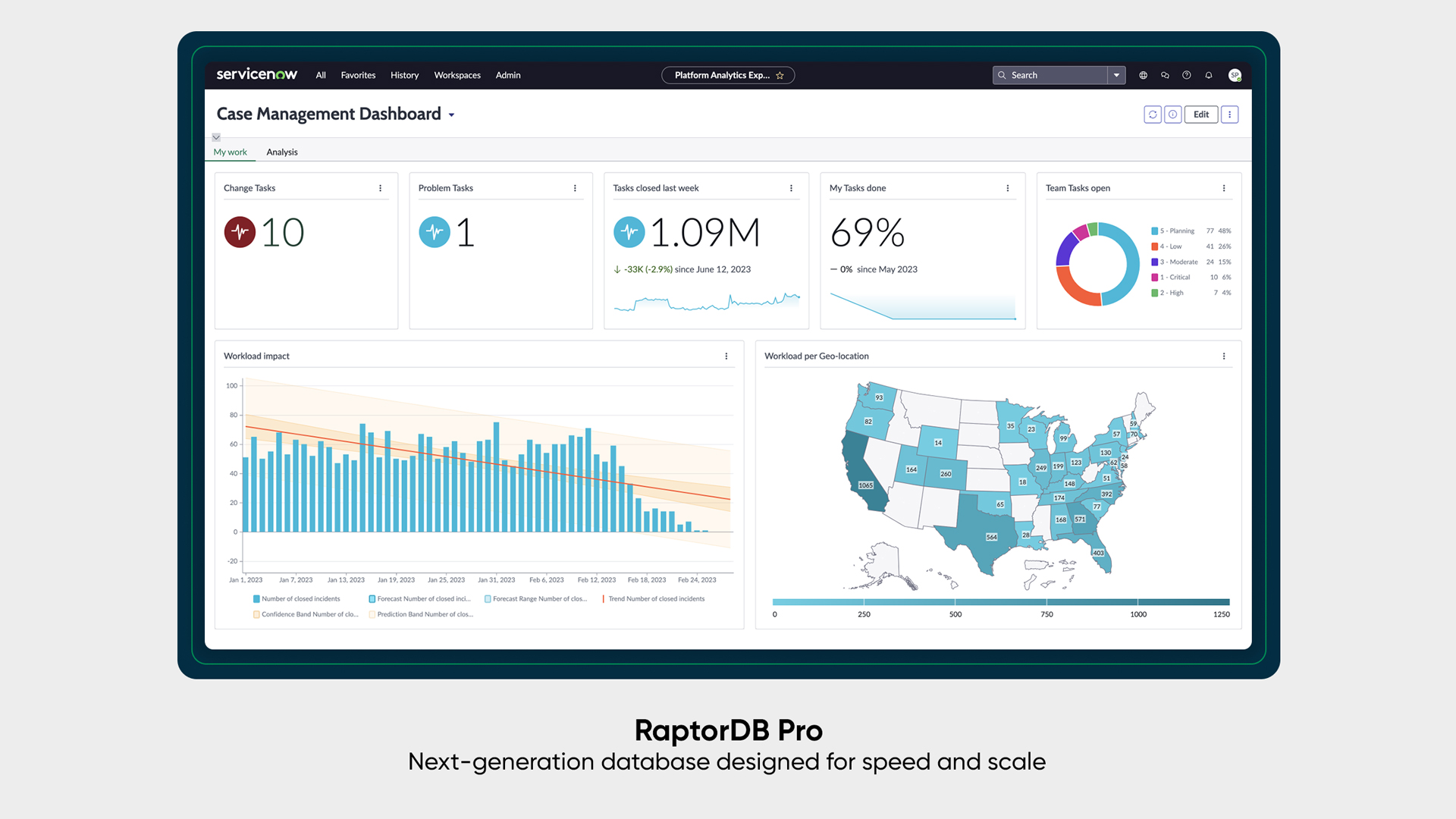
Xanadu will include RaptorDB Pro, which can improve transaction times by as much as 53% and deliver answers to queries 27x faster.

RaptorDB Pro adds a column data store architecture optimized for large datasets that improves speed and efficiency of querying data. ServiceNow said the addition of RaptorDB Pro is abstracted away from customers so they don't have to interact with the database or adjust workflows.

According to ServiceNow, RaptorDB Pro will include a unified Knowledge Graph that connects events, operations and people data. Pat Casey, CTO and executive vice president, DevOps at ServiceNow, said RaptorDB will be useful for data processing, AI inferencing and analytics. "Customers can scale their workflows with speed, connectivity, and personalization on the ServiceNow platform," said Casey.

Other key points:

  • RaptorDB Standard includes improvements to ServiceNow's current database and is available to new customers today and all customers next year.
  • RaptorDB Pro is the premium version of the new database and available to new and existing customers.
  • ServiceNow is rolling out the RaptorDB Lighthouse Program to select customers.
  • Early next year, ServiceNow plans to launch personalized workflows via Knowledge Graph with availability in March.

Industry enhancements

The Xanadu release will expand Now Assist into telecom, media and technology, financial services, public sector and retail.

Among the industry additions:

  • Now Assist for Banking integrates with Dispute Management.
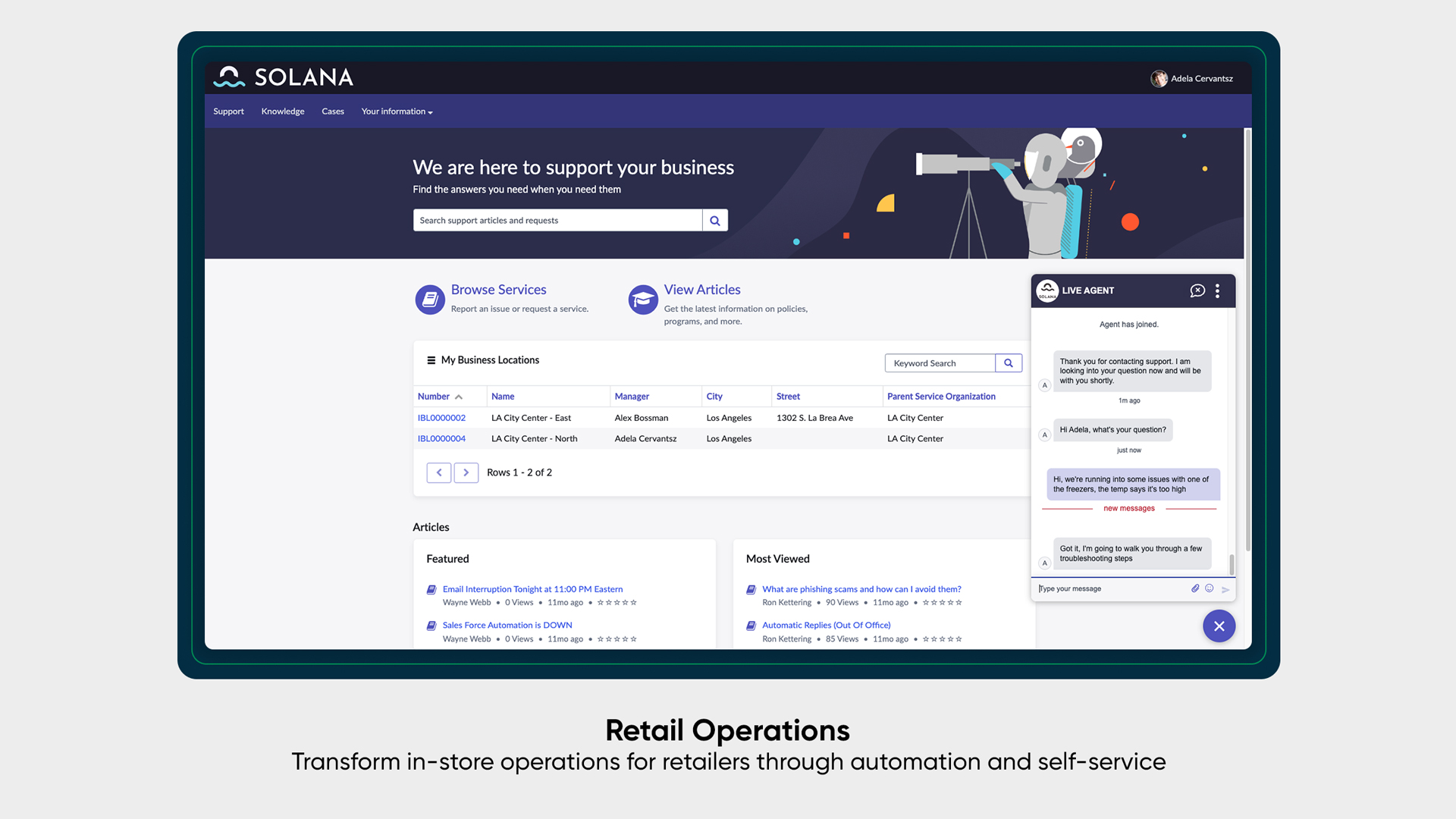
  • Retail Operations and Retail Service Management aim to unify workflows between store associates, corporate headquarters, customers and technicians.
  • Now Assist for Telecom, Media and Technology helps agents understand service problems quickly and resolve issues by using genAI to summarize issues and diagnose them.
  • Now Assist for Insurance summarizes claims, provides context and minimizes mistakes.
  • Now Assist for Public Sector Digital Services gives government employees relevant case history, summaries and insights to make decisions.

Productivity enhancements

ServiceNow's Now Platform Xanadu release adds more tools to streamline workflows and processes.

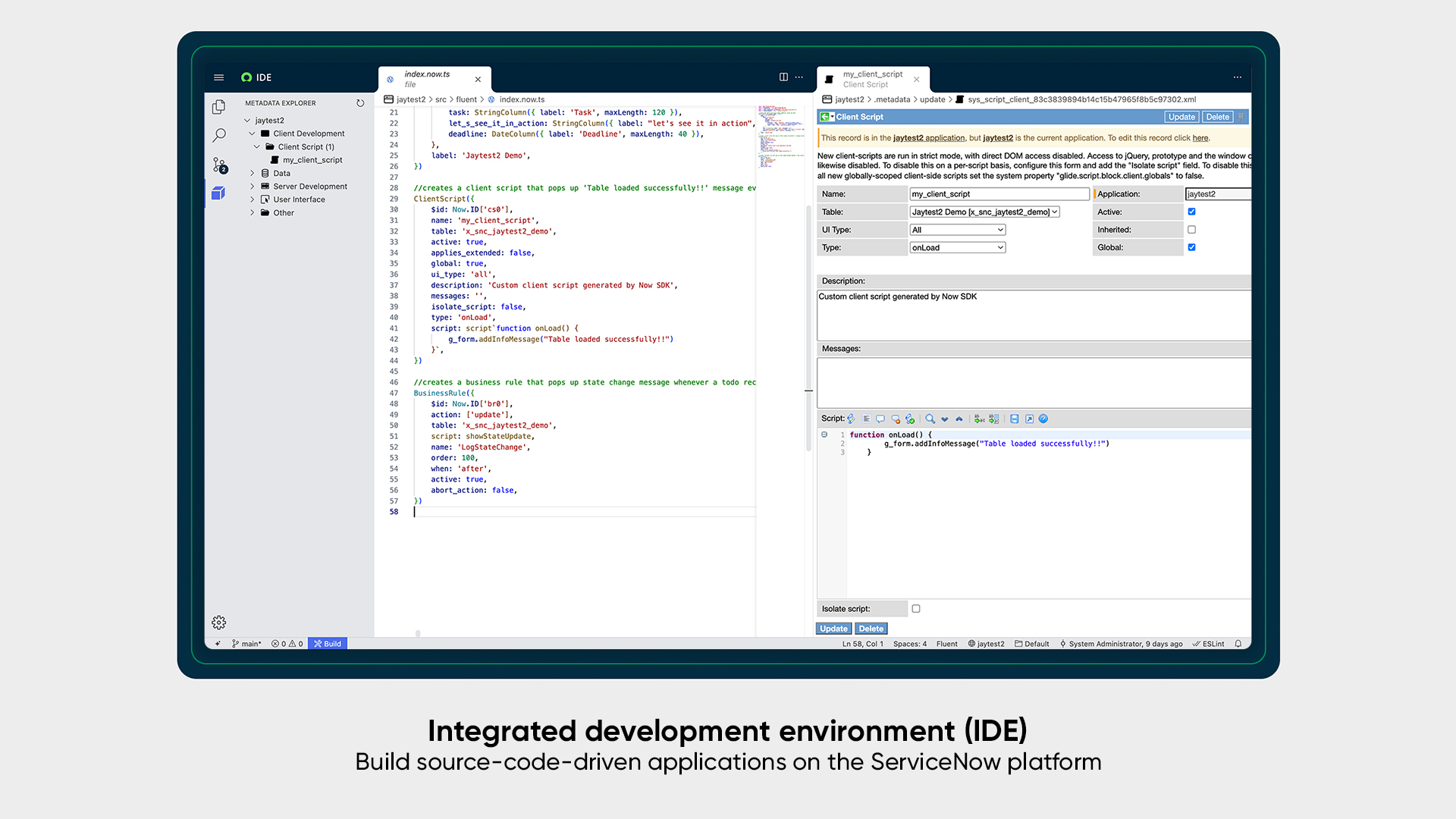
For developers, the Now Platform gets a new IDE that aims to enable developers to collaborate across teams. "This is a new way of developing on our platform and the IDE allows developers to easily create and modify ServiceNow applications in just minutes," said Amy Lokey, Chief Experience Officer.

In addition, Xanadu adds updates to AIOps and Service Reliability Management and Guided Self-Service in Employee Center.

Chris Bedi, chief customer officer and interim chief product officer at ServiceNow, noted that proactive service delivery can lower costs, reduce risks and scale business transformation.

Key items include:

  • The new IDE enables subject matter experts and developers to collaborate as applications are built.
  • ServiceNow launched Enterprise Architecture, an expansion of ServiceNow Application Portfolio Management, in a move to align IT teams and business owners to simplify operations.
  • AIOps in IT Operations Management now has Event Management to group and escalate alerts while accessing impact.


Data to Decisions Next-Generation Customer Experience Tech Optimization Innovation & Product-led Growth Future of Work Digital Safety, Privacy & Cybersecurity servicenow AI GenerativeAI ML Machine Learning LLMs Agentic AI Analytics Automation Disruptive Technology Chief Information Officer Chief Executive Officer Chief Technology Officer Chief AI Officer Chief Data Officer Chief Analytics Officer Chief Information Security Officer Chief Product Officer

Oracle databases everywhere with AWS partnership, strong Q1 results

Oracle databases everywhere with AWS partnership, strong Q1 results

Oracle and Amazon Web Services announced a strategic partnership to complete CTO Larry Ellison's multicloud trifecta. Oracle first partnered with Microsoft Azure, then Google Cloud and now AWS. Oracle also delivered strong cloud revenue growth in the first quarter. 

The two cloud providers launched Oracle Database@AWS, which allows customers to access Oracle Autonomous Database on dedicated data centers and Oracle Exadata Database Service within AWS.

Oracle said Oracle Database@AWS will unify Oracle Cloud Infrastructure (OCI) and AWS for database administration, billing and customer support. Enterprises will also be able to connect enterprise data in Oracle to applications running on Amazon EC2, analytics services and AI services including Amazon Bedrock. Procurement will be simplified through AWS Marketplace so enterprises can purchase Oracle Database services using their AWS commitments and existing Oracle licenses. Big software deals closing on AWS Marketplace, rival efforts

In addition, Oracle CTO Larry Ellison and AWS CEO Matt Garman will talk about the partnership on Tuesday at Oracle CloudWorld. The partnership is part of Oracle's broader multicloud strategy. Oracle Database@Google Cloud, which was announced last quarter, is now generally available. Multi-cloud computing isn't 'a bunch of separate clouds'

"We are seeing huge demand from customers that want to use multiple clouds," said Ellison. "To meet this demand and give customers the choice and flexibility they want." Garmin added that the partnership will give joint customers more flexibility and scalability.

Ellison said Oracle's cloud business is benefiting from its Nvidia GPU clusters as well as autonomous database. "Our large and loyal customer base understand and appreciate the many technical advantages of using the Oracle database, and those customers wanted us to find a way to make the very latest and best Oracle technology available on other cloud," said Ellison. "We believe our cloud partnerships with AWS and Microsoft and Google will turbocharge the growth of our database business for years to come."

The Universal Database Versus a Suite of Specialized Databases

Oracle Database@AWS will be available in preview later this year with broader availability in 2025. For Oracle, the AWS deal is big since it now can offer its database services across every hyperscale cloud.

Key items about the partnership include:

  • Direct access between Oracle database services and AWS will be provided via a low latency network connection.
  • AWS customers will be able to use Oracle Autonomous Database seamlessly.
  • Zero-ETL integration will run between Oracle Database services and AWS Analytics services.
  • Oracle database services will seamlessly be integrated with Amazon S3.
  • Oracle Database@AWS can be launched via the Amazon Management Console, Command Line Interface and AWS CloudFormation.

Fidelity, Best Buy and State Street were among the joint customers touting the partnership.

Ellison said the AI race is a marathon not a sprint and it requires all parts of the data center. 

"This race goes on forever to build a better neural network. And the cost of that training gets to be astronomical. When I talk about building gigawatt or multi-gigawatt data centers, I mean these AI models, these frontier models are going to -- the entry price for a real frontier model from someone who wants to compete in that area is about $100 billion. Let me repeat, around $100 billion. That's over the next four, five years for anyone who wants to play in that game. That's a lot of money. And it doesn't get easier."

"Let me say something that's going to sound really bizarre. Well, I probably -- you'd probably say, well, he says bizarre things all the time. So why is he announcing this one? It must be really bizarre. So we're in the middle of designing a data center that's north of the gigawatt that has -- but we found the location and the power place. We look at it, they've already got building permits for three nuclear reactors. These are the small modular nuclear reactors to power the data center. This is how crazy it's getting. This is what's going on."

Separately, Oracle announced first quarter earnings of $1.03 a share on revenue of $13.3 billion, up 7% from a year ago. Non-GAAP earnings in the first quarter were $1.39 a share, 6 cents a share better than estimates.

By the numbers:

  • First quarter cloud revenue was $5.6 billion, up 21% from a year ago.
  • Cloud infrastructure revenue was $2.2 billion, up 455 from a year ago.
  • SaaS revenue was $3.5 billion, up 10% from a year ago.
  • Cloud ERP revenue was $900 million, up 16% and NetSuite first quarter revenue was also $900 million, up 20%.

Oracle CEO Safra Catz said cloud services are now the company's largest business and operating income and earnings growth are accelerating.

Ellison added that Oracle now has 162 cloud data centers. In the first quarter, Oracle signed 42 additional GPU contracts valued at $3 billion. Oracle has 7 OCI regions live at Microsoft with 24 more being built and 4 with Google Cloud with another 14 on tap.

As for the outlook, Catz said Oracle's database business will accelerate with all of the hyperscalers in the mix. Catz said:

  • Oracle spent $2.3 billion in capital expenditures in the first quarter. Fiscal 2025 capex will be double 2024. 
  • "We remain very confident and committed to full year total revenue growth growing double digits and full year total cloud infrastructure revenue growing faster than last year."
  • Total revenue in the second quarter will 7% to 9%. Cloud revenue will grow 23% to 25%. 
  • Non-GAAP earnings in the second quarter will be between $1.42 a share to $1.46 a share. 

Constellation Research's take

Constellation Research analyst Holger Mueller said:

"Oracle had another very good quarter. Its Q1 is traditionally a sluggish quarter dating back in the on premises days, and the strength shows Oracle's transition to services and subscriptions. All regions grew as well which demonstrates the global appeal of the Oracle offering portfolio.  Oracle is building a lot of datacenters, buying a lot of GPUs and now partnering with AWS along with Google and Microsoft. All of those partnerships require CAPEX to put the Exadata machines where they need to be for an attractive customer experience.

Oracle invested close to $8 billion in CAPEX in Q1, but at a lower rate of using free cash flow (it was 47% now down to 41% - but Oracle added almost $1.5B to cash flow). With a build out of a total of 31 datacenters planned for Microsoft (7 live, 24 to be built), 18 planned for Google (4 live and 14 to be built), and an amount to be built for AWS, Oracle will have to keep investing. 

No wonder infrastructure revenue grows with 45%, with Oracle Cloud ERP growing a respectable 16% and NetSuite revenue growth at 20%. Those are very good growth rates during uncertain overall economic times. Oracle has never been closer to the original Larry Ellison vision of becoming the IBM of the 21st century and providing all that enterprises need across the stack – from the hardware to SaaS – with a strong commitment to compete in the multicloud. 

Lastly it is clear that competition to unseat Oracle as the leading transactional, mission critical relational database has folded, AWS was the last competitor standing. The future is coopetition now. Oracle can’t rest on its laurels, as it needs to keep enterprise data in its databases, delivering strong on vector search (bringing AI to the database) and strong and easy uptake of RAG (allowing data to stay in the database for validation)." 

Data to Decisions Tech Optimization Innovation & Product-led Growth Future of Work Next-Generation Customer Experience Digital Safety, Privacy & Cybersecurity amazon Oracle Big Data AI GenerativeAI ML Machine Learning LLMs Agentic AI Analytics Automation Disruptive Technology Chief Information Officer Chief Technology Officer Chief Information Security Officer Chief Data Officer Chief Executive Officer Chief AI Officer Chief Analytics Officer Chief Product Officer

Apple iPhone 16 event: How an AirPod Pro hearing aid stole the innovation show

Apple iPhone 16 event: How an AirPod Pro hearing aid stole the innovation show

Apple’s iPhone 16 event added a bevy of hardware upgrades in a bid to entice customers to upgrade devices even though Apple Intelligence will be delivered via software updates over the next year. Apple, however, does have a knack for useful killer apps and AirPod Pro as a clinical grade hearing aid will sell well.

Based on innovation, I'd rank the event this way.

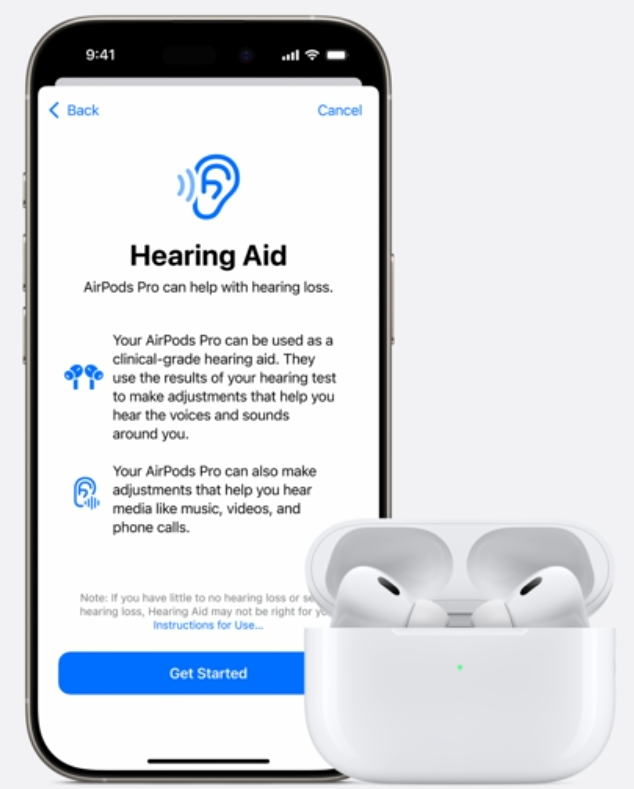
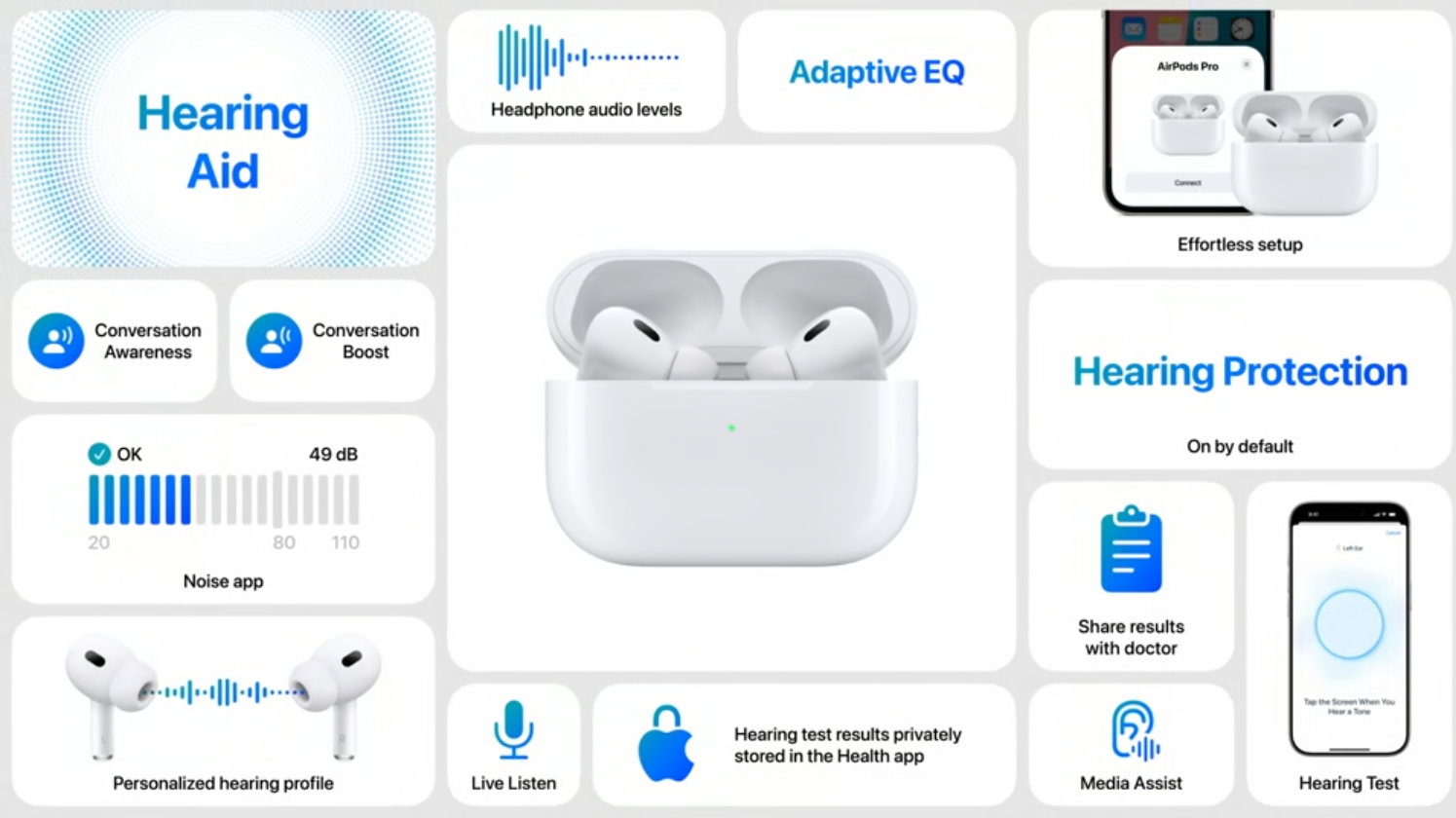
  • AirPod Pro becomes a hearing aid. Given the sheer number of people with untreated hearing loss looking to avoid stigma, Apple will quickly have a hit--once it gets FDA approval. 
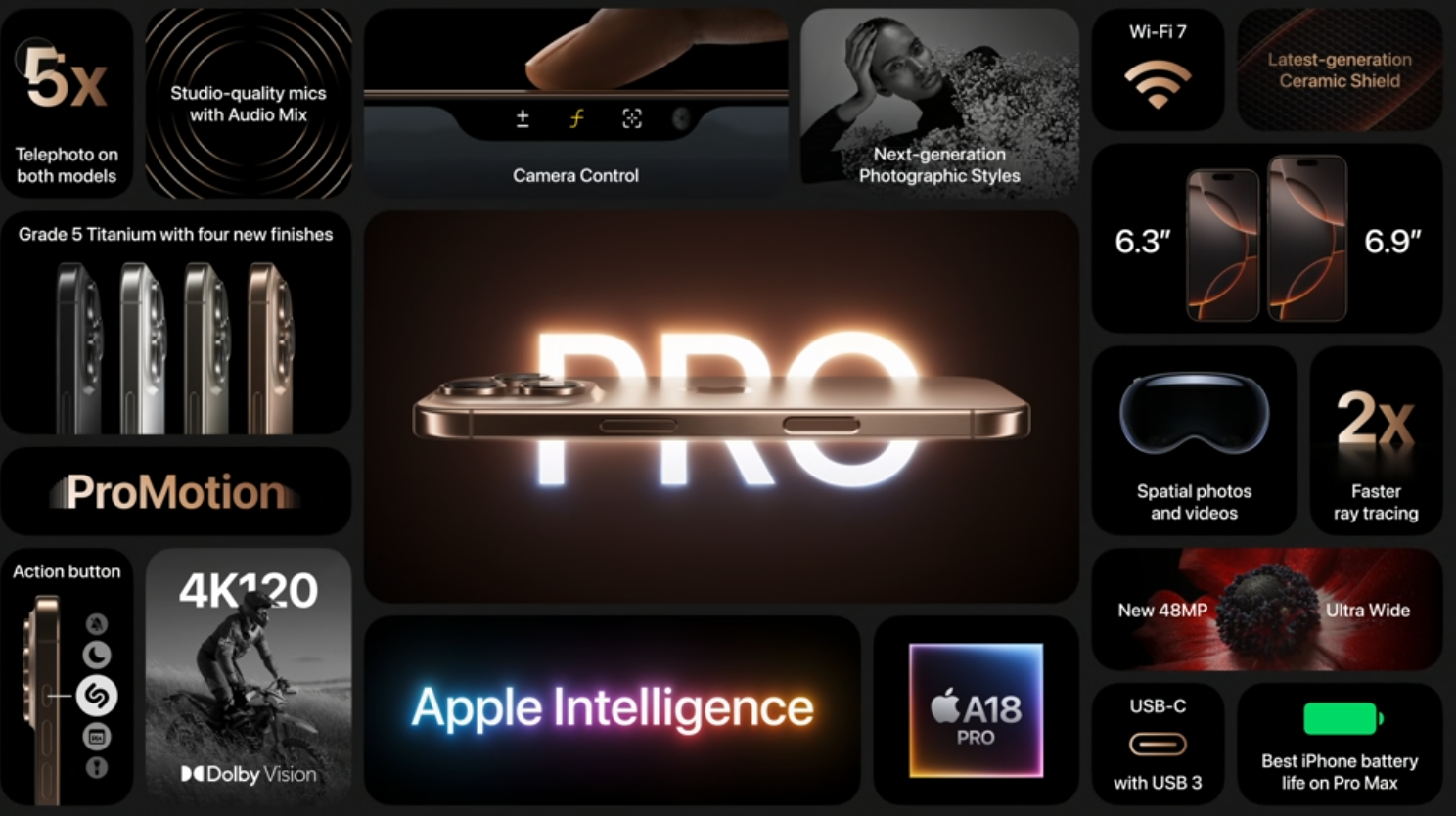
  • Apple launches A18 Pro, a chip that the company claims is the most powerful on any smartphone.
  • Apple launches A18 processor that is supposed to rival PC chips.
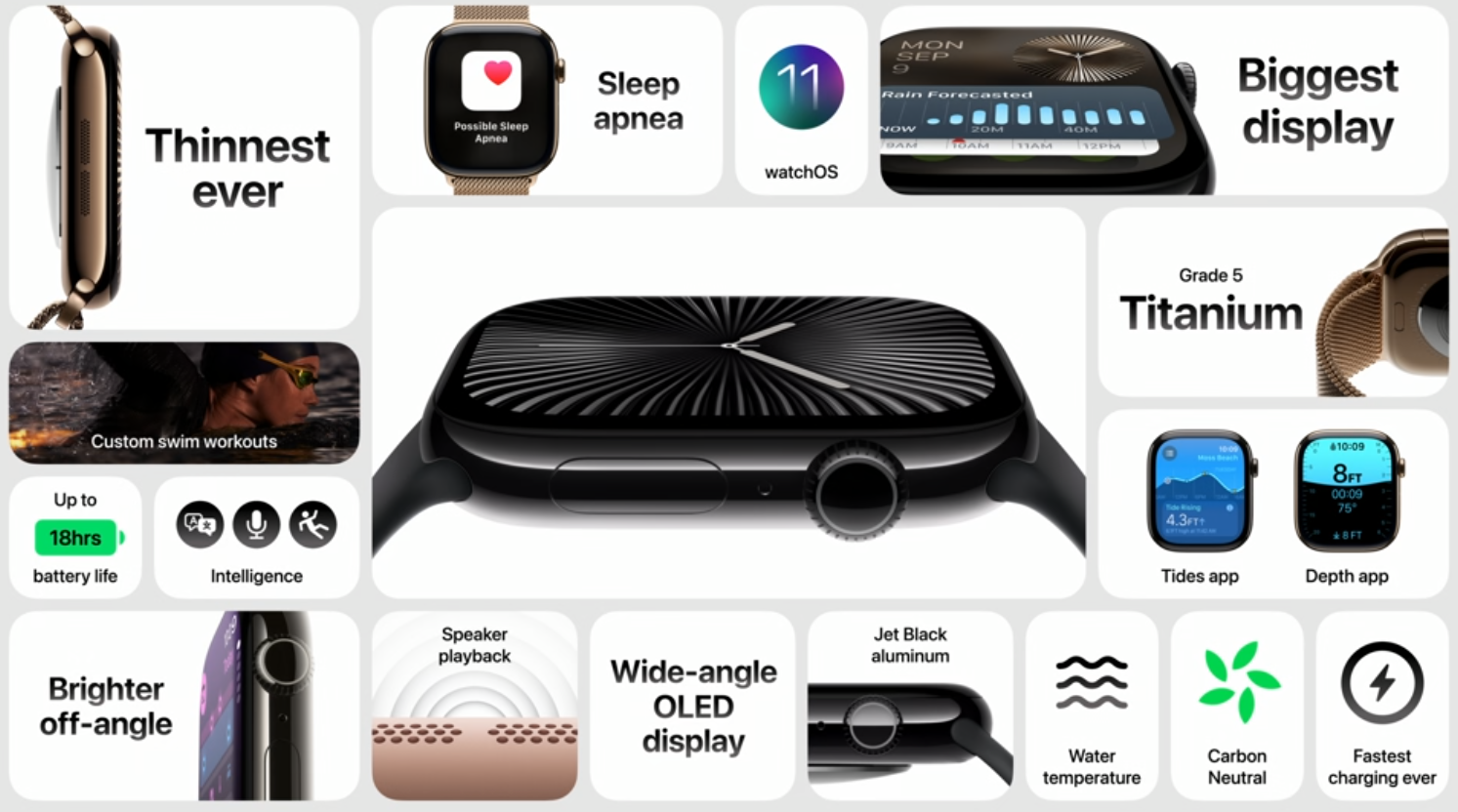
  • Apple Watch has new displays that are able to be viewed better at an angle.
  • Generative emoji creation. Not the most groundbreaking feature, but sticky for the base.
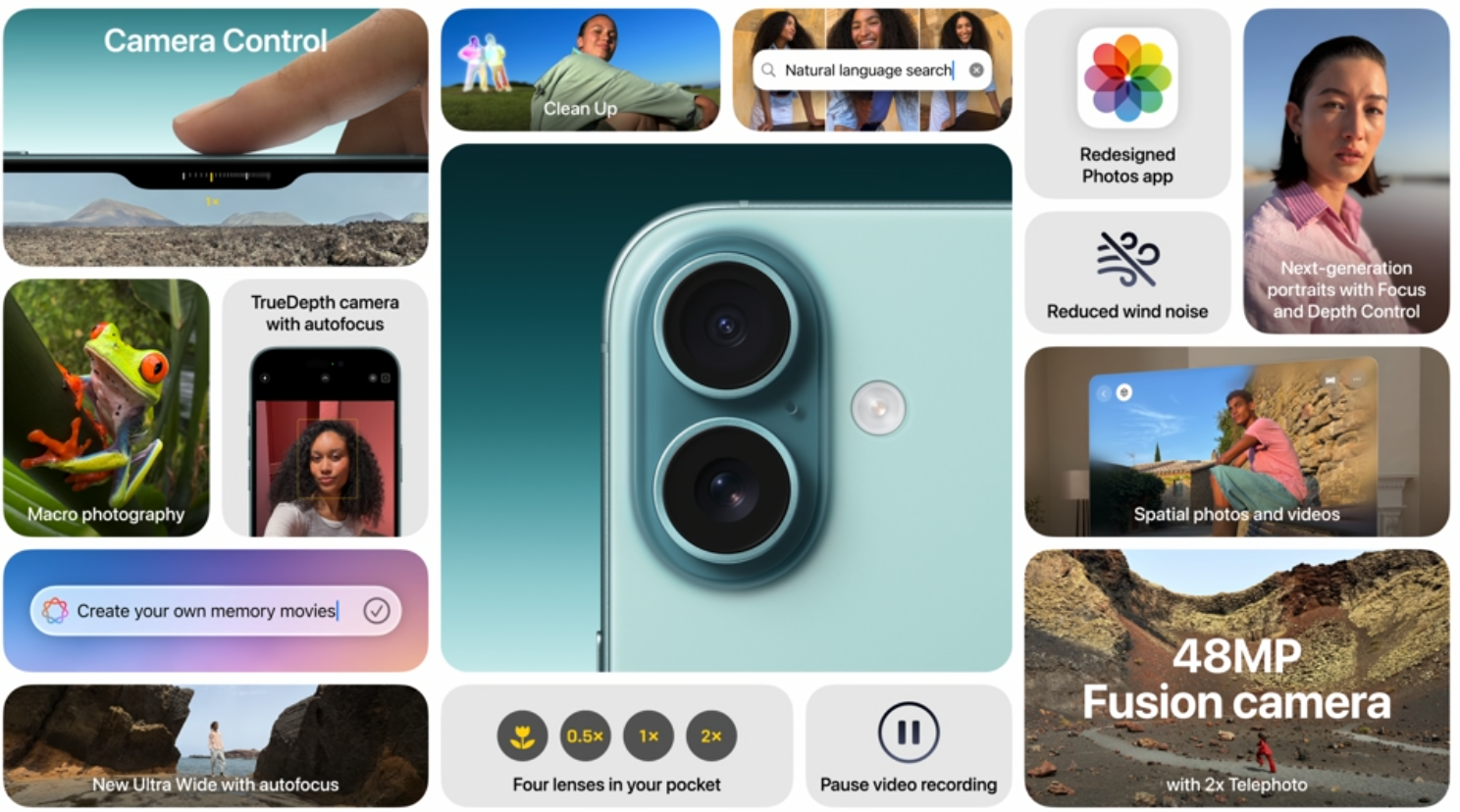
  • Camera control that has haptic features to enable framing of a shot, adjustments and access Visual Intelligence.
  • Spatial audio that will set Apple up for its Vision Pro ecosystem. Today, spatial audio will make mixing audio and video easier.
  • Satellite service on iPhone enhancements with roadside assistance, find device and other features across geographies.

Constellation Research CEO Ray Wang said the iPhone 16 cycle is a "significant release" that sets up "a super cycle of replacement that is shifting from 5G to AI." "We are halfway through the 5G cycle and the AI replacement cycle is driven by Apple Intelligence," said Wang. "We're seeing about 230 million iPhones a year replaced so year one for AI begins in 2025."

But innovation doesn’t necessarily pay Apple’s bills. What follows is a recap of the Apple iPhone 16 event by priority to the company's financials and most customers. Preorders start today on most products announced today with delivery Sept. 20. 

iPhone 16 Pro, A18 Pro

Apple CEO Tim Cook said the company's flagship has new enhancements including the largest displays at 6.3" and 6.7".

According to Apple, iPhone 16 Pro is designed for Apple Intelligence, leverages Siri for genAI tasks and personal semantic intelligence and provides suggestions for better photos. The device also has the longest battery life.

iPhone 16 Pro features A18 Pro, which is faster and more efficient than A18. It includes 3 nanometer technology, 16-core neural engine, 6-core CPU, 2x faster ray tracing, machine learning features, advanced media features, new image and video signal processors.

Spatial audio on iPhone 16 Pro will set Apple up for the future with Vision Pro, but today it will enable better audio and video mixing. Apple also added some fun features for voice memos.

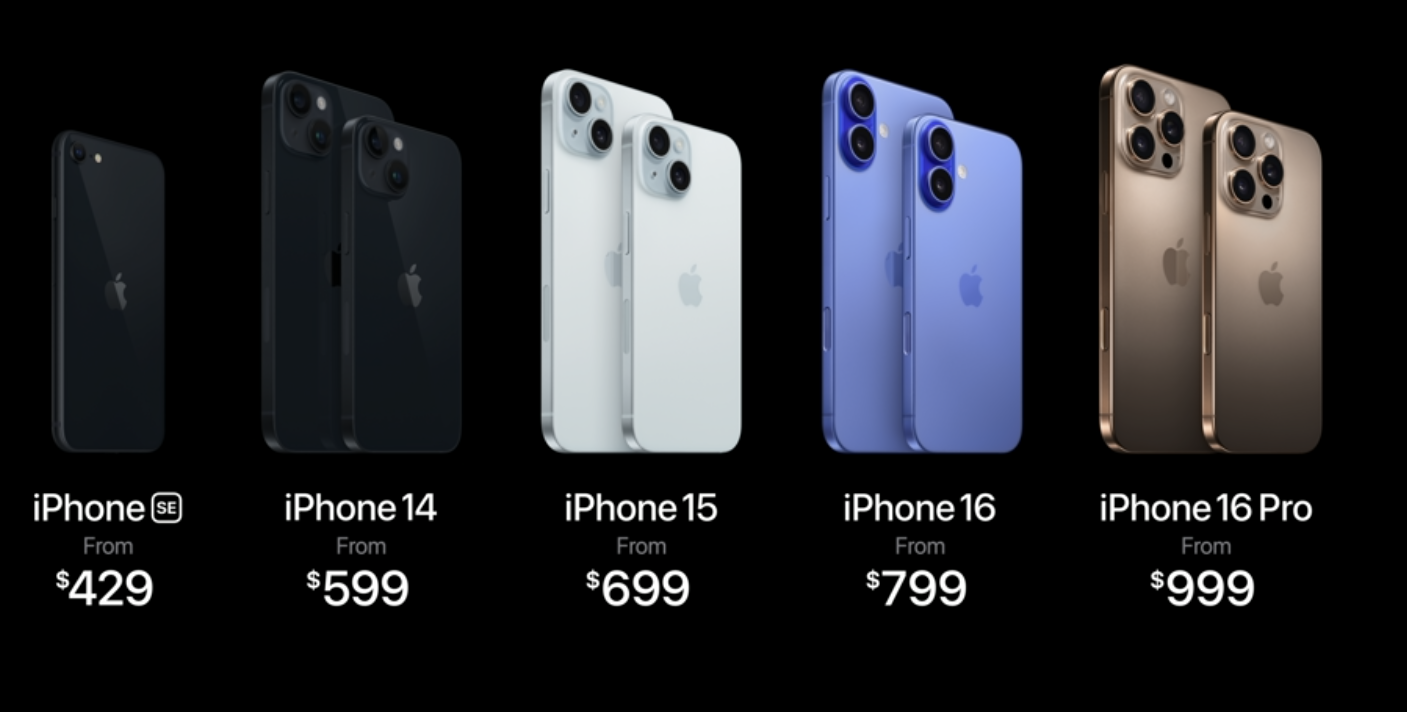
iPhone 16 Pro starts at $999.

iPhone 16, A18 and Apple Intelligence

Cook said the new iPhone has been designed from the ground up for Apple Intelligence, which isn't expected to fully roll out until 2025. iPhone 16 comes in 6.1" version and 6.7" version.

Biggest item in iPhone 16 is Apple Silicon for models, AI and machine learning. Apple launched A18 with 16-core neural engine, 16% more bandwidth to generative models, 3 nanometer technology, 6-core CPU and 30% more energy efficient. Apple A18 also includes a new GPU that uses 35% less power than A16.

Apple claimed that the A18 rivals high-end desktop processors.

The company touted Apple Intelligence integration throughout iPhone 16, but many features aren't expected to be available at launch. However, iOS will get writing tools, tone adjustment and proofreading. Apple Intelligence will be able to create new Emojis on the fly and new images.

Visual Intelligence will enable customers to take a picture and get contextual information for Google and ChatGPT data via iPhone 16's new camera control.

Next month, Apple Intelligence will be available for beta with a rollout in non-English languages next year. The upshot: Upgrade your phone and we'll give you Apple Intelligence later.

iPhone 16 starts at $799 and iPhone Plus starts at $899 and Apple said there are trade-in deals to be had.

Apple Watch

Apple Watch gets a larger screen, fast charging (80% charged in a 30 minutes), and wide-angle OLED display for brighter off-angle viewing. Apple claims that the screen size is now large enough to type on and 30% larger than Series 6 and bigger than the current Apple Watch Ultra.

Available Sept. 20 starting at $399.

Apple Watch Ultra 2

Apple Watch Ultra gets GPS enhancements, running zones and power meters for cycling as well as automatic stroke detection in swimming. Many of the features added to Apple Watch Ultra are already in Garmin watches.

Apple Watch Ultra 2 starts at $799.

Apple AirPods 4

AirPods will enable you to respond to Siri with a simple yes or no nod. The charging case is USB C with 30 hours of total battery life. AirPods will get active noise cancellation for the first time as well as adaptive audio that adapts to environmental noise around you. Other items include conversational awareness, wireless charging to the case and transparency mode. Apple also updated AirPod Max headphones at $549.

AirPod Pro

AirPod Pro will include features to prevent hearing loss and boost awareness of the health issue. AirPod Pro will have hearing protection via machine learning while preserving audio range. AirPod Pro will also include hearing tests with an app on the iPhone based on data from the Apple Hearing Study and a hearing aid feature. Apple said that it expects FDA approval for its Hearing Aid feature soon and the feature will be delivered via a software update.

Data to Decisions Future of Work Innovation & Product-led Growth Next-Generation Customer Experience Tech Optimization Digital Safety, Privacy & Cybersecurity apple AI GenerativeAI ML Machine Learning LLMs Agentic AI Analytics Automation Disruptive Technology Chief Information Officer Chief Executive Officer Chief Technology Officer Chief AI Officer Chief Data Officer Chief Analytics Officer Chief Information Security Officer Chief Product Officer

Enterprise security customers conundrum: Can you have both resilience, consolidation?

Enterprise security customers conundrum: Can you have both resilience, consolidation?

The parade of cybersecurity vendors looking to capitalize on the CrowdStrike and Microsoft outages has gone by, but it's unclear whether enterprises will be able to have both resiliency and vendor consolidation.

These conflicting goals are worth pondering as Microsoft meets with CrowdStrike and other security vendors Sept. 10 in Redmond.

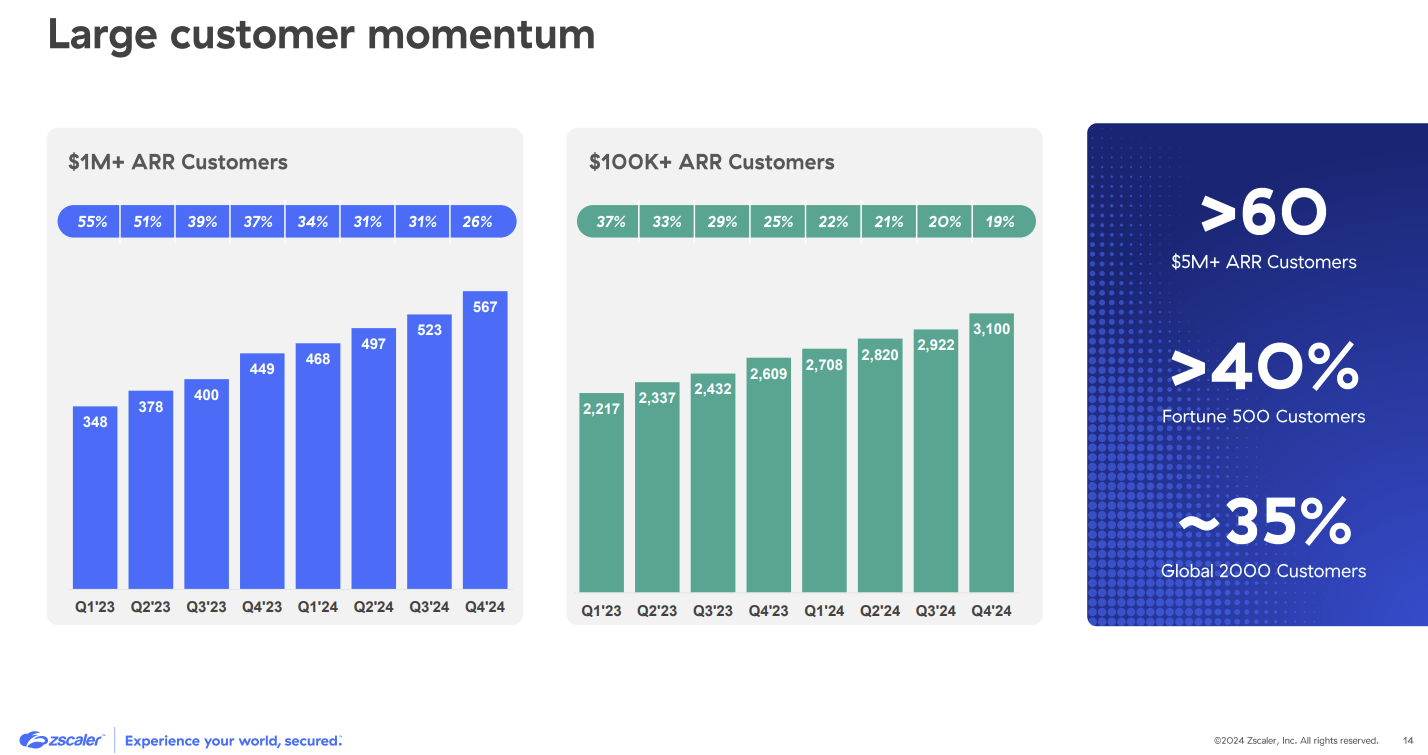
Zscaler CEO Jay Choudhury spent a lot of time talking about CrowdStrike's outage and the opportunities for his company. Those opportunities are compelling, but Zscaler cut its fiscal 2025 outlook as it overhauls its go-to-market and sales approach. Nevertheless, Choudhury had a lot of insights on what CIOs are thinking.

Speaking on Zscaler's fourth quarter earnings call, Choudhury said: "The importance of mission criticality has gone up significantly since the outage that was caused by CrowdStrike. While our customers want resilience, they also do want consolidation, but they do not want consolidation such that it makes them dependent on a single vendor."

In other words, enterprises are trying to thread a needle between consolidating security vendors and building resilience. Choudhury noted:

"Most of the CIO I talk to have been standardizing in-line access to three providers, one for EDR (endpoint detection and response), one for identity, and one for Zero Trust actions. I think that's a good combination because you end up getting a couple of extra layers, but you still have separation. So, in this environment, our customers aren't really pushing back on us because we tell them don't buy everything through Zscaler. You've got an EDR provider, you've got an identity provider and we'll do the rest of Zero Trust on activity."

Simply put, cybersecurity isn't likely to be the best-of-breed mashup it has been in recent years. Cybersecurity also isn't going to be this platformization nirvana that has been pitched by Palo Alto Networks. The reality is something in between and that means that CrowdStrike's moat around its business is largely intact.

This post first appeared in the Constellation Insight newsletter, which features bespoke content weekly and is brought to you by Hitachi Vantara.

A few themes that have emerged in the weeks since the CrowdStrike outage include:

Multiple vendors are capitalizing on the CrowdStrike outage. Zscaler noted increased interest, but SentinelOne had similar comments. SentinelOne CEO Tomer Weingarten said on the company's second quarter earnings call: "We've already seen customers choosing to move away (from CrowdStrike). Some of them have moved away already to SentinelOne, some of them are in the process, some of them will take time to assert, but I think everybody is considering their next steps. People are looking to diversify risk and not really concentrate more and more capabilities with one vendor."

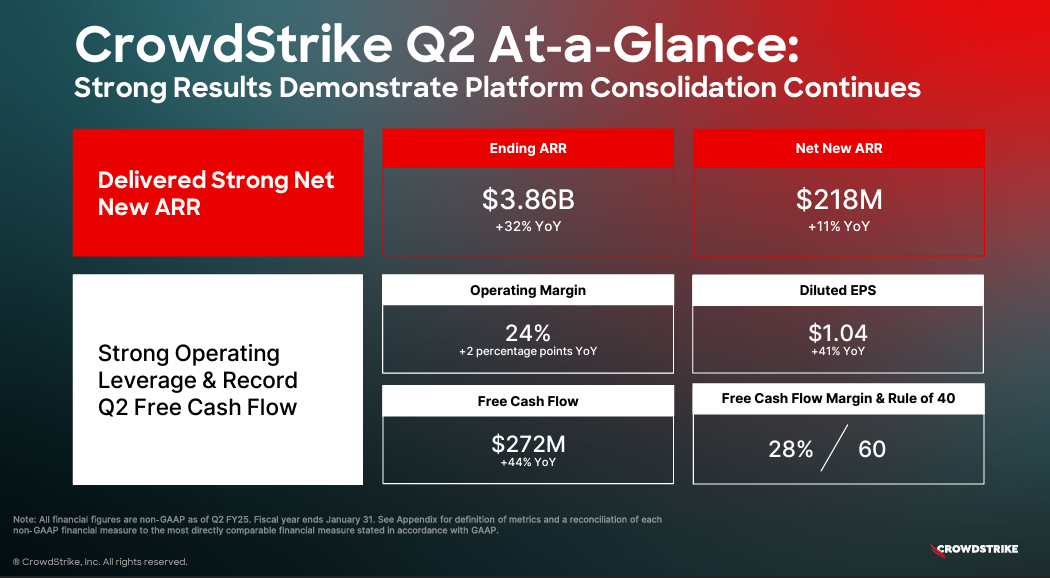
CrowdStrike will be fine and the outage will make the company better. Yes, CrowdStrike said it will take a subscription revenue hit for the remainder of its fiscal year due to its outage, but CEO George Kurtz said deals that were delayed during the July 19 outage remain in the pipeline. "Obviously, there's a lot of noise in the marketplace and we can only control what we can control, and I think the best way for me to articulate that is to just recount some of the conversations. I had two customer calls this morning and most of them start out the same. They talk about our response, how transparent we were, and how we dealt with the problem. We talked about some of the mitigating steps that we've taken and it generally ends with we want to do more with CrowdStrike."

Platformization is still a theme for enterprises. Palo Alto Networks CEO Nikesh Arora said his company's platformization play is resonating with enterprises. Palo Alto Networks delivered a strong fourth quarter and Arora steered his comments toward the intersection of AI and cybersecurity with a brief mention of CrowdStrike's outage. He did say that customers are asking about resiliency and update procedures. Palo Alto Networks also closed its acquisition of IBM’s QRadar SaaS business.

Enterprises will look to multiple platforms based on cybersecurity roles. It's likely that larger cybersecurity vendors are going to gobble up smaller players to build out platforms. Fortinet is one example as it has acquired its way to becoming more of a platform that resembles Palo Alto Networks. Also look for Google Cloud to make some more cybersecurity moves. Google Cloud recently partnered with Rubrik on data protection via integration with Mandiant and was reportedly in talks to buy cloud security startup Wiz.

We’ll leave you with the ShortLists you need to know:

Insights Archive


Digital Safety, Privacy & Cybersecurity I am Team Leader at the Nominee Organization (no vendor self nominations) Distillation Aftershots Security Zero Trust Chief Information Officer Chief Information Security Officer Chief Privacy Officer

HOT TAKE: Salesforce Furthers Autonomous AI Agent Development with xGen Concept & Tenyx Buy

HOT TAKE: Salesforce Furthers Autonomous AI Agent Development with xGen Concept & Tenyx Buy

Late last month Salesforce announced its first AI-powered agents, addressing business development and sales coaching use cases. Fast on that news is the release of new proprietary AI models, under the xGen moniker. These are essentially new libraries of large language models (LLMs) designed for generative text use cases supporting CRM processes. Think email and web content creation, document summaries, etc. 

The latest xGen release is xGen sales, which the company says is “a proprietary model trained and designed to power autonomous sales tasks with Agentforce, and xLAM, a new family of Large Action Models designed to handle complex tasks and generate actionable outputs.” In short, Salesforce is full steam ahead in entering the “autonomous” phase of AI development, at least on paper. Its pre-packaged SDR and sales coaching AI agents are a safe, and solid choice for a first foray - but now the company is opening up the tool set to allow customers and parters to build more autonomous and action-oriented use cases for AI virtual agents. 

It is a smart move. Putting both the onus on the customer and the partner to figure out the last mile of AI agent development allows for a wider proliferation of use cases, and also keeps Salesforce off the hook in some ways (but not all) when it comes to compliance and security. 

These new AI agent tools will get a boost in the near future, now that Salesforce has announced its plans to acquire Tenyx, a developer of AI-powered voice agents. The deal is expected to close by the end of October, and the company says Tenyx’s technology will enable innovation inside its AI agent offerings (yet to be GA) around customer service and support use cases. The AI voice agent technology can quickly augment chatbot and other AI multi-channel tools by offering more intuitive and actionable virtual agent experiences, where these agents can make more decisions and be injected into more workflows to complete more tasks to drive productivity, time to resolution, etc. 

As always, current Salesforce users should carefully inspect and evaluate these new LLMs and LAM offerings. Both for compliance and security, but also for alignment in terms of use case and expected business outcomes. The old adage “just because you can, does not mean you should” comes to mind this early in the development of these new AI agents. In short, proceed with optimistic caution. 

Next-Generation Customer Experience Data to Decisions Future of Work Innovation & Product-led Growth New C-Suite Marketing Transformation I am Team Leader at the Nominee Organization (no vendor self nominations) Distillation Aftershots Tech Optimization Digital Safety, Privacy & Cybersecurity ML Machine Learning LLMs Agentic AI Generative AI AI Analytics Automation business Marketing SaaS PaaS IaaS Digital Transformation Disruptive Technology Enterprise IT Enterprise Acceleration Enterprise Software Next Gen Apps IoT Blockchain CRM ERP finance Healthcare Customer Service Content Management Collaboration Chief Revenue Officer Chief Executive Officer Chief Information Officer Chief Technology Officer Chief AI Officer Chief Data Officer Chief Analytics Officer Chief Information Security Officer Chief Product Officer