Google Public Sector customers: Data foundation eases AI bottlenecks

The bottlenecks for agentic AI in government is the data underneath not the ambition or budgets. A set of data decisionmakers said making progress in AI depends on unified data foundations, governance, leadership from the top and a culture that'll move forward without waiting for perfect data.
At Google Public Sector Summit 2026, a panel of US federal department and agency leaders talked about their data plans and setting up architecture that can be leveraged by AI agents.
The panel included Dr. Neil Jacobs, Under Secretary of Commerce for Oceans and Atmosphere and Administrator at NOAA, Adarryl Roberts, CIO of the Defense Logistics Agency (DLA), and Andrew Mapes, Principal Deputy Chief Digital and AI Officer for the Chief Digital and Artificial Intelligence Office.
- Google Public Sector launches Gemini for Government Services, sees AI agents as integration accelerator
- Accenture Federal Services, Google Public Sector roll out Gemini Launchpads
Here's a look at the takeaways:
Data fragmentation comes in many forms and remains a big challenge. Jacobs said:

"We are the agency in charge of everything from weather, water, climate forecasting to deep sea exploration, space weather. We have an entire satellite program. We have ships. We have the hurricane hunters flying into the storms. So we collect a lot of data from a lot of different platforms. We've been doing it for years, and it's created a lot of challenges, but it's also created a lot of cool opportunities, particularly on optimizing data, big data sets. NOAA has data stored in multiple places and I'm not even sure NOAA knows where."
Mapes said The Department of War has an enterprise data platform that has more than 800 data sources and growing. He added that the department is using Gemini with new models on deck. The goal is to push insights down to those in the field. The consolidation of data means an AI agent can better make use of it.
Own and understand your data because it's an AI asset. Roberts said the Covid lockdown highlighted how much his agency had outsourced its data management. DLA is now building an authoritative AI-ready data source.
"We realized we didn't really understand our business processes because we had been automated in systems for so long that we need to take control of our data back," said Roberts.
In terms of seeing data as an AI asset, Roberts said the core theme is making sure the data sets can be used for analytics and AI not just transactions. "People don't really understand the difference between transactional data for the purpose of transacting versus data used for data analytics and AI enabled," said Roberts.
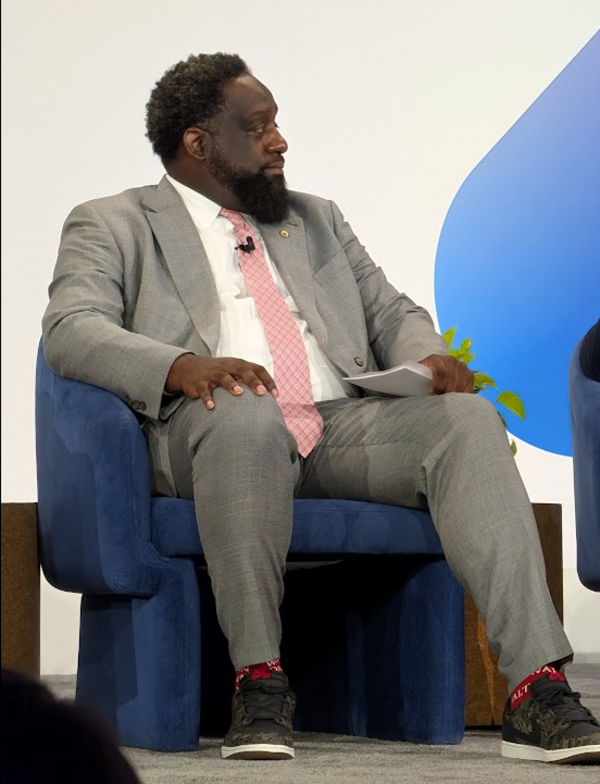
Jacobs said NOAA had its own models but is moving its data to the cloud so it can be leveraged by AI models.
Governance needs to be active and driven from the top. Mapes said the Department of War decided it didn't need a new data strategy and just needed to execute. Existing data decrees were sound, but mired in a process that required chief data officers asking for buy-in. The faster route to a solid data strategy is mandating it top down.
"Governance often turns into meetings without tangible progress and for us it's really focused on very deliberate sprints to achieve outcomes," said Mapes. "Historically, the chief data officer function was a person off to the side knocking on doors for buy-in. The doors are knocked down."
Roberts noted that data governance isn't an IT change, but a mission business change.
Steady progress over perfect data. Panelists as well as Scott Alfieri, Global Google Business Group Lead at Accenture, said it makes no sense to be perfect.
"Let's not wait for perfect. Let's just be 5% better than we were guessing and 10% better than we were the day before," said Roberts.
Alfieri said companies would spend an inordinate time on data migration, but now the focus in on agentic AI use of data.
The goal is to use data to react and act ahead of issues. Roberts said DLA wants predictive monitoring so it can buy weapon-system parts that take years before needed. "The data was available for us to really see what was going to happen, but you were in reactionary mode," said Roberts. "Some parts on the weapon systems take us anywhere from two to five years to procure."
In other words think ahead.
Being proactive also means your data platform can leverage old files. "The premise for us was bringing the model directly to the data," said Mapes. "You're now getting insights from legacy spreadsheets and products."
Adoption depends on training and trust more than access. Roberts said projects like GenAI.mil, which has 3 million users, built trust for other agencies and "accelerated the learning curve and acumen of our workforce."
Larry Dignan is Editor in Chief of Constellation Insights at Constellation Research, where he leads editorial coverage focused on enterprise technology, digital transformation, and emerging trends shaping the future of business. He oversees research-driven news, analysis, interviews, and event coverage designed to help technology buyers and vendors navigate complex markets with clarity and context. ...
Read morePublished
Author